Wednesday, October 12, 2016

SWEET LAMB OF HEAVEN


Shop Indie Bookstores


Sweet Lamb of Heaven, Lydia Millet, WW Norton & Company, 2016, 250 pp


Summary from Goodreads: Blending domestic thriller and psychological horror, this compelling page-turner follows a mother fleeing her estranged husband.

Lydia Millet’s chilling new novel is the first-person account of a young mother, Anna, escaping her cold and unfaithful husband, a businessman who’s just launched his first campaign for political office. When Ned chases Anna and their six-year-old daughter from Alaska to Maine, the two go into hiding in a run-down motel on the coast. But the longer they stay, the less the guests in the dingy motel look like typical tourists—and the less Ned resembles a typical candidate. As his pursuit of Anna and their child moves from threatening to criminal, Ned begins to alter his wife’s world in ways she never could have imagined.

A double-edged and satisfying story with a strong female protagonist, a thrilling plot, and a creeping sense of the apocalyptic, Sweet Lamb of Heaven builds to a shattering ending with profound implications for its characters—and for all of us.


My Review: (originally published at LitBreak)
 
-->
Earlier this year, as soon as I heard news of Lydia Millet’s newest novel, I diligently set about reading the last two novels of her recent trilogy (How the Dead Dream, Ghostlights, Magnificence). Even when this author writes a trilogy, it is more like three loosely connected novels, the way some novels are a collection of loosely connected stories. I finished the trilogy satisfied that she had given me three distinct examples of her worldview shown through the eyes of three related characters.

As I began to read some of the early publicity for Sweet Lamb of Heaven, I became somewhat alarmed. I got the impression that it was a type of thriller with a runaway mother and child being pursued by a creepy husband. Was she pandering? I mean, anyone who loves Millet will tell you she deserves to be better known. Had she lowered herself to write something possibly more commercially successful?

I will admit, sometimes I am a reader of little faith. I need not have worried. In fact, she has written the anti-Gone Girl. Surely you read that and can admit to doing so. Possibly you saw the movie. I did both and mostly felt annoyed, a bit insulted, though I had to admire the twist at the end.

Anna is an unhappy wife with a young daughter she decided to have even though her husband Ned “threw his hands into the air palms-forward” when she insisted on going through with her pregnancy. “Afterward his schedule got fuller, his long work hours longer, his attention more completely diverted.” Anna admits she began to give up on him from that point.

She has Lena on her own with only hospital staff attending. When she wakes up after the birth she begins to hear voices. It is a cacophony of overlapping voices and continuous whenever she is near Lena. Only when Lena is sleeping or when Anna in desperation gets a sitter and leaves the house, do the voices leave her in peace. Out of the babble she discerns a word (powa or poa) and a phrase (The living spring from the dead.)

A diligent researcher, she moves through possible causes. Delirium, post-partum depression, ear or neurology issues, hallucinations, demons. She calls it “the voice” and keeps a diary. On one of the rare evenings when Ned comes home for dinner, in one of the most eerie moments in the book, he hears the voice too!

The early chapters left me less than hooked though. There are clues that Ned is some sort of psychopath, some background on the marriage, the fact that Anna brought money to the union, and her views on religion. Anna had loved Ned in the beginning but had failed to see the warning signs, though she is clearly not stupid or crazy, just naïve. She soldiers on with the voice and her research, learning that powa or poa means a Buddhist meditation practice described as a “transference of consciousness” or “mind stream.” But once Ned heard it she stopped looking for its origin or cause.

On the day that one-year-old Lena says her first word, the voice falls silent. Anna realizes that the voice passes through those newly born and when they speak, it moves on. She and her daughter live blissfully through the girl’s toddler years with the presence or absence of Ned nothing more than a slight annoyance. Sadly, Anna had fallen once more into naiveté. Even when she knew that she had to leave him, it took her several years to do so.

By that time, Ned had decided to go into politics as an adjunct to his business ventures. He had had many lovers but suddenly became a “family values” man. Though Anna only took a portion of their assets, he began to stalk her. He needed the appearance of a happy family to support his campaign.

She is only mildly careful about keeping her whereabouts concealed and by the time he finds her, Lena is six and they are living in a remote and somewhat rundown seaside motel on the coast of Maine. Lena is a bright and happy child, very outgoing, alert and smart. In fact, she is one of the most endearing children I have met in a novel. She makes friends with everyone who stays at the motel and her most special grownup friend is Kay, a former nurse for newborns in a small hospital.

Ned snatches Lena with ease and there follow many chapters devoted to Anna’s anguish and anxiety. Nothing unusual except that by now you know the mother and the child so intimately, it is as if it has happened to you. So stealthily that I hardly noticed it though, the awareness of something strange going on with the other guests at the motel had been building. All of them have a personal affliction in common and all of them knew the motel manager before they came to stay.

Here, dear reader is where I leave you. The plot that wove back and forth from past to present but seemed to meander a bit too much suddenly becomes electric with the wizardry of Lydia Millet. Her themes of women who get a grip, of more than meets the eye, of how to live in our increasingly strange society, and of what really holds us together, coalesce. I can tell you that there is a happy ending, but the novel turned out to be a parable and I would not dream of spoiling that for you.

 Just recently, Sweet Lamb of Heaven was included on the fiction long list for the National Book Award. I sincerely hope Lydia Millet wins the prize she deserves.

(Update: The novel did not make the short list for the NBA. I feel it should have.)


Monday, October 10, 2016

WHISKEY RIVER


Whiskey River, Loren D Estleman, Bantam Books, 1990, 262 pp


Whiskey River begins in 1928 at the height of Prohibition. Jack Dance is an eighteen-year-old on the cusp of becoming one of the top (fictional) gangsters in Detroit. Connie Minor, a young reporter of Greek descent, has just begun his career as a newspaper reporter when the two meet in a blind pig on the night it gets tipped over by the bulls. (I had to look up all this early 20th century slang, so if you don't know those terms, you can too!)

The story is a case of the strange friendship between these two men. As Jack Dance's career, if you want to call it that, rises in the underworld, Connie Minor's follows in journalism due to his reporting on the activities of rum runners and the accompanying police corruption. Minor writes his pieces with all the insight of an inside story. Though he never commits a crime himself, he is often there when they happen. His fascination with Jack Dance, however, does eventually land him in some hot water.

It is a tale you can't put down. The writing is as good as anything by Raymond Chandler, creating the particular flavor of illegal liquor, speakeasies, crime, and violence over the course of about four years.

Reading this one on the heels of The Turner House was a whole experience in itself. Detroit was a mighty city in 1920, almost comparable to Chicago. The two novels are bookends on the rise and fall of a major American city.

My mom was born on New Year's Day in 1919 in a small Michigan town on Lake Huron. Detroit was the closest city. So the first 14 years of her life were the years of Prohibition. How I wish she were still around and I could ask her if she was aware of it and how it impacted her life. She was a very temperate drinker. My dad was not!

I don't remember how I discovered this author or his book. Estleman was born in 1952 in Ann Arbor, MI. Whiskey River is the first in a series of seven novels in which he set out to tell the story of America in the 20th century through the microcosm of Detroit. As he said, "Detroit is the one city whose history mirrors precisely the history of the United States of America." He also wrote many other books yet, despite winning awards, most of his work is out of print already. The Detroit series is now available in eBook form and I plan to read all of them.

Friday, October 07, 2016

THE TURNER HOUSE


Shop Indie Bookstores


The Turner House, Angela Flournoy, Houghton Mifflin Harcourt, 2015, 338 pp


Summary from Goodreads: The Turners live on Yarrow Street for over fifty years. Their house sees thirteen children get grown and gone—and some return; it sees the arrival of grandchildren, the fall of Detroit's East Side, and the loss of a father. Despite abandoned lots, an embattled city, and the inevitable shift outward to the suburbs, the house still stands. But now, as their powerful mother falls ill and loses her independence, the Turners might lose their family home. Beset by time and a national crisis, the house is worth just a tenth of its mortgage. The Turner children are called back to decide its fate and to reckon with how each of their pasts might haunt—and shape—their family's future. 


My Review:
Here we have another one of those stories where the grown children must decide what to do with the family home. Except this family is black and the house is in a section of Detroit, MI, decimated by the 2008 crash, by drugs, crime and homeless people, etc, etc. It is more similar to Loving Day than it is to The Past. Even so, families are families and the offspring always have issues with their parents and each other. 

Detroit was the closest city to me when I lived in Ann Arbor, MI, but when I moved to California in 1991 it was still a fairly vibrant city. Just a decade later the population began a steep downtrend as Ford Motor Company moved auto production to other cities causing a major loss of jobs. By 2013, the city declared bankruptcy.

The Turners had lived on an East Side street for over fifty years. From the boom years and through the bust, they raised 13 children in a three bedroom house on the earnings of truck driving Mr Turner. The novel moves back and forth from the present to the postwar past, telling the story of the parents' move to the city from the South in the late 1940s and exposing the fault lines in the family. 

Thirteen siblings and their spouses and children would have made an unwieldy character list but the author provides a family tree and focuses on four of the siblings as well as their aging widowed mother.  She had been the force behind the family but is now on her deathbed.

When most of the brothers and sisters gather to decide what to do with their now empty family home, the house is only worth a tenth of the refinanced mortgage still due. All of the disparate circumstances of their adult lives come into play and and an old tale about a ghost seen by Charles, the eldest son, when he was just a boy plays a large part in the story. (Loving Day had ghosts too!)

The novel is wonderfully constructed, very American in it scope of dreams chased, hopes dashed, and secrets kept, with the decaying city as a background. Racism is a situation but not the major one. What I got from it is a picture of how the changing fortunes of America have affected people who exist in the lower middle class tier of our society and that is primarily an economic story.

The dust cover blurb calls the novel "a celebration of the ways in which our families bring us home." I would call it a study in how the underside of the American Dream takes its toll on even the strongest of families while it prevents families from fully developing that fabled strength.


(The Turner House is currently available in paperback on the shelves at Once Upon A Time Bookstore.)


Wednesday, October 05, 2016

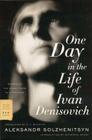
ONE DAY IN THE LIFE OF IVAN DENISOVICH


Shop Indie Bookstores


One Day in the Life of Ivan Denisovich, Aleksandr Solzhenitsyn, Farrar Straus and Giroux, 1991 (first published in Russia in 1962) (translated from the Russian by H T Willets) 182 pp


I have meant to read this for a long time. Though it was not published in English until 1963 (in a translation not authorized by the author) it was originally published in a Soviet literary magazine in 1962. I generally put books onto My Big Fat Reading Project lists in the years when they were first published. The translation I read, published by FSG in 1991, was authorized by the author. Solzhenitsyn went on to write many more novels as well as novellas, plays, and essays. In 1970 he was awarded the Nobel Prize in Literature.

Knowing that this story was set in a Soviet labor camp during the rule of Stalin, I was prepared for a grueling read. I keep a list of books I've read called Prison Camp Lit. None of them has made for pleasant reading. So I was surprised to find it almost lighthearted. 

 Of course, Ivan Denisovich and his fellow inmates are freezing half to death, starving half to death, and worked close to death. They are ill and have no idea when they will be released. Also, some are worse off than others due to various factors but often boiling down to a temperament that does poorly in such circumstances and probably in life as well.

Ivan is a canny fellow. He has figured out how to stay out of trouble, who to befriend, how to regulate the consumption of his precious bits of food and limited minutes of free time. So it is like when you are in a bad school or an oppressive work situation and you figure out how to play the game.

Except it is not like that because he cannot leave without the risk of being killed or actually dying of starvation or exposure in Siberia. Also, he survives with the gnawing uncertainty about what he has available to go back to once he is released.

The bottom line is that it is all seriously gruesome but every time Ivan was successful in navigating all the dangers, even to the smallest degree, I was happy for him. I kept visualizing a better existence for this man and I feel that was due to Solzhenitsyn's writing. It is predicated on the idea that as long as there is life in a person, there is hope. Also that you can take almost everything away from someone but as long as his spirit is not completely broken, you can't take that.

Instead of being depressed after reading about just one day in this man's life, I was uplifted. 

(One Day in the Life of Ivan Denosivich is available in paperback on the Classics shelf at Once Upon A Time Bookstore.)

Monday, October 03, 2016

OCTOBER READING GROUP UPDATE


Another good line-up of books for October. I know many of you, my faithful blog readers, are not in favor of reading groups and I understand your reasons. I am happy to say that I still enjoy all my groups and we keep picking great reads and having the most interesting discussions. I guess I am lucky. It is all about the members and about mostly everyone finishing the book. Also it has been great to see us all grow as readers and in our ability to have good discussions. 

Here are this month's picks:


Laura's Group:

Shop Indie Bookstores


Molly's Group:


Bookie Babes:

Shop Indie Bookstores


One Book at a Time:

Shop Indie Bookstores


If you are in a reading group, what are you reading and discussing in October? 
 

Saturday, October 01, 2016

BOOKS READ IN SEPTEMBER


Welcome to my summary of reading in September. Mostly here in the Los Angeles region it was hot, dry, and windy. Not for us the lovely cooling, the turning leaves, the harvest time. You just keep watering your property within allowed limits, run the air conditioner, and give thanks for earlier sunsets. Then there is the on-going insanity of my country's presidential election season which ramped up along with the heat. No wonder I have only read fiction for the past three months.

I read 10 books and liked them all.

Stats: 10 books read. 10 fiction. 6 written by women. 1 crime-historical. 3 from My Big Fat Reading Project. 1 Western-historical. 2 translated.

Favorites: Sweet Lamb of Heaven, Epitaph
Least favorite: None


Have you read any of these? If so, do you have a review other readers can link to? What good books did you read in September? 

Thursday, September 29, 2016

LOVING DAY


Shop Indie Bookstores


Loving Day, Mat Johnson, Spiegel & Grau, 2015, 287 pp


Summary from Goodreads: "In the ghetto there is a mansion, and it is my father's house."

Warren Duffy has returned to America for all the worst reasons: His marriage to a beautiful Welsh woman has come apart; his comics shop in Cardiff has failed; and his Irish American father has died, bequeathing to Warren his last possession, a roofless, half-renovated mansion in the heart of black Philadelphia. On his first night in his new home, Warren spies two figures outside in the grass. When he screws up the nerve to confront them, they disappear. The next day he encounters ghosts of a different kind: In the face of a teenage girl he meets at a comics convention he sees the mingled features of his white father and his black mother, both now dead. The girl, Tal, is his daughter, and she’s been raised to think she’s white.

Spinning from these revelations, Warren sets off to remake his life with a reluctant daughter he’s never known, in a haunted house with a history he knows too well. In their search for a new life, he and Tal struggle with ghosts, fall in with a utopian mixed-race cult, and ignite a riot on Loving Day, the unsung holiday for interracial lovers.


My Review:
If ever there was a year to read novels about racial issues in America, this would be it. So I am. I read The Sellout in March; Homegoing in July, and now Loving Day.

Set in Philadelphia and in some ways similar to The Sellout, this one is more focused on the mixed race experience. Of course, if we didn't suffer so severely from racism in this country, being racially mixed would not be a problem.

Mat Johnson is a versatile writer who can move effortlessly between humor and serious heartfelt stuff. Loving Day mostly pokes fun at the issues it raises but this author is not as relentless in his satire as was Paul Beatty in The Sellout.

Warren Duffy is an Irish/African American mix who does not look black. He is also a less than successful comic/graphic novel artist and recently divorced from his Welsh wife. His Irish father has died and left him a rundown mansion, once a historic landmark, that now lies in the heart of Philadelphia's ghetto.

He returns to the City of Brotherly Love with plans to complete the renovation his father started and sell the house, because naturally he is nearly broke. One thing you learn pretty early on is that planning is not Warren's strong suit. Soon enough he learns he has a half-Jewish teenage daughter he never knew he had. The disappointing wreckage of his life so far begins trending toward disaster.

As this confused guy decides he should be a responsible father to Tal, ensuring she learns about her black heritage and gets an education, he changes the plan to burning down the house and collecting the insurance. If you read the book, you will find out how that works out for him.

The plot takes off on the first page and never sags. However it is the nuanced particulars of his mixed race characters (the Sunflowers, the One-droppers, the Oreos, the multiracial humanists, and the militants) that give this novel depth as well as intelligence.

It also has ghosts! 


(Loving Day has just come out in paperback and is available by order from Once Upon A Time Bookstore.)

Tuesday, September 27, 2016

AURA


Shop Indie Bookstores


Aura, Carlos Fuentes, Farrar Straus and Giroux, 1962, 38 pp


Summary from Goodreads: Felipe Montero is employed in the house of an aged widow to edit her deceased husband's memoirs. There Felipe meets her beautiful green-eyed niece, Aura. His passion for Aura and his gradual discovery of the true relationship between the young woman and her aunt propel the story to its extraordinary conclusion. 


My Review: I loved this novella by an author I have also come to love. I read it on my Nook, as it is not currently in print except for the bilingual edition pictured above. At first it seemed a rip off to have to pay $9.94 for such a slim volume. About three pages in I did not care.

Written like a fable, it took me into a strange dreamlike story involving a starving writer, an old woman, the green-eyed Aura and a crumbling old house.

It is spooky. It is somewhat supernatural. It is almost a deal-with-the-devil tale. Not quite like anything else I have read by Fuentes but utterly enchanting.

Friday, September 23, 2016

THE GIRLS


Shop Indie Bookstores


The Girls, Emma Cline, Random House, 2016, 355 pp


Summary from Goodreads: Northern California, during the violent end of the 1960s. At the start of summer, a lonely and thoughtful teenager, Evie Boyd, sees a group of girls in the park, and is immediately caught by their freedom, their careless dress, their dangerous aura of abandon. Soon, Evie is in thrall to Suzanne, a mesmerizing older girl, and is drawn into the circle of a soon-to-be infamous cult and the man who is its charismatic leader. Hidden in the hills, their sprawling ranch is eerie and run down, but to Evie, it is exotic, thrilling, charged—a place where she feels desperate to be accepted. As she spends more time away from her mother and the rhythms of her daily life, and as her obsession with Suzanne intensifies, Evie does not realize she is coming closer and closer to unthinkable violence, and to that moment in a girl’s life when everything can go horribly wrong. 


My Review:
I was on the fence about reading this one. Would it live up to the hype? But I like to read novels set in the 1960s, (as well as ones written then), even if the author was not born yet when the story took place. So I broke down.

In the summer of 1969, my new husband and I turned our honeymoon into a cross-country road trip, camping our way from Ann Arbor, MI, to the West Coast. It was part homage to Jack Kerouac, part cliche (many midwestern kids our age made the trek west in those years), and part career choice.

Our goal was San Francisco where we intended to join a group of hippies who were starting a Free School in the Mission District. We arrived in the city just after the Manson murders had occurred and found that several of the parents involved in the Free School were junkies! In response to both I freaked out and demanded that we return to Ann Arbor. To this day, I have been afraid to read Helter Skelter. 

Emma Cline has done her research and she can write, though I found her style a little bit pretentious. I felt she tried to be literary and hip at the same time which did not always work for me.

What did work was her main character, Evie. Just out of ninth grade, on the cusp of turning 15, from a broken home, Evie is equal parts bored and horny. I remember that state well. When she meets Suzanne in a park that summer, she is immediately infatuated as only a young teen can be when meeting a slightly older, worldly, and mysterious girl. Eventually she is invited to the fictional hippy cult residence, created by Cline as a stand-in for the infamous Manson conclave.

They called it The Ranch and that whole scene worked for me too because I spent years hanging out with such people. I wasn't quite as wild as Evie but I was just as innocent.

Though Evie was not present when the murders were committed, her life is irrevocably changed. The author does an excellent job contrasting Evie's later adult life with that summer. Many of us were involved with happenings in the late 1960s that virtually poisoned the rest of our lives even while the goals and hopes of the times also blessed us with a unique view of life.

My favorite novel about this period is Dana Spiotta's Eat the Document. I don't think The Girls lives up to the greatness Spiotta created in her novel, but it is a worthy addition to the literature. As David Crosby said somewhere, "We were right about the peace and love, but we were wrong about the drugs."

I think I can read Helter Skelter now.


(The Girls is available in various formats by order from Once Upon A Time Bookstore.)

Wednesday, September 21, 2016

LETTING GO


Shop Indie Bookstores


Letting Go, Philip Roth, Random House, 1962, 630 pp


Summary from Goodreads: Newly discharged from the Korean War army, reeling from his mother's recent death, freed from old attachments and hungrily seeking others, Gabe Wallach is drawn to Paul Herz, a fellow graduate student in literature, and to Libby, Paul's moody, intense wife. Gabe's desire to be connected to the ordered "world of feeling" that he finds in books is first tested vicariously by the anarchy of the Herzes' struggles with responsible adulthood and then by his own eager love affairs. Driven by the desire to live seriously and act generously, Gabe meets an impassable test in the person of Martha Reganhart, a spirited, outspoken, divorced mother of two, a formidable woman who, according to critic James Atlas, is masterfully portrayed with "depth and resonance." 


My Review:
This was the fifth of books published in 1962 I read in August. I had set out to read 10 but a couple were as long as two or three books put together including this one. I enjoyed every page and found it easy to read. Letting Go was Roth's first novel, preceded by Goodbye Columbus (a novella and story collection.)

I know there is a contingent of readers who balk at reading novels by "old white men" and I sort of get it. But the fact is these old white men are still read because they could write well.

In Letting Go we again get a picture of life in 1950s America. This novel is from the perspective of two non-practicing Jewish men in their 20s and 30s who are carrying the weight of their upbringings including the expectations of their parents, and are perhaps the first generation from Jewish immigrant families to be moving into social assimilation in what was a deeply antisemitic society.

Gabe Wallach is a comfortably well off young man, teaching English on the faculty of the University of Chicago, though he has enough money left to him by his mother that he would not really need to work. He feels guilty about his relative good fortune, guilty about not wanting to spend much time with his aging father back in New York City, guilty about being attracted to the wife of his colleague Paul Herz; guilt is his driving force. Because of that, he keeps getting himself into ill-advised situations.

Paul Herz, another tormented character, is a Jew who married a Christian woman, though neither of them are religious in the least. Both sets of their parents cut off all support and connection due to the interfaith marriage. The couple is struggling financially and emotionally so Gabe tries to help them with devastating results.

I was reminded of Stoner by John Williams, especially by Paul's wife Libby, who in her own way is as neurotic as Stoner's wife was. Letting Go however has quite a bit more humor in between the pathos.

My favorite character is Martha Reganhart, the woman Gabe considers as a prospective wife. She is by far the strongest person in the story. While Roth is often charged with misogyny, I would say that he presents believable female characters from the viewpoint of a man who is clearly trying to figure them out.

All in all, one of the best novels I have read from 1962. 


(Letting Go is available in paperback by special order from Once Upon A Time Bookstore.)

Monday, September 19, 2016

IN EVIL HOUR


Shop Indie Bookstores


In Evil Hour, Gabriel Garcia Marquez, Harper & Row, originally published in Spain by Premio Literario Esso in 1962, (translated from the Spanish by Gregory Rabassa), 183 pp


Summary from Goodreads: Written just before One Hundred Years of Solitude, this fascinating novel of a Colombian river town possessed by evil points to the author's later flowering and greatness. 


My Review:
Book # 4 of those read from my 1962 list in August. Most of the time I read for pleasure and most of the books I read do give me pleasure. Sometimes I read because of learning goals I have set for myself. That second reason is why I read this one.

The great and wonderful Gabriel Garcia Marquez's first novel was not great or wonderful to me. If I hadn't already read and loved One Hundred Years of Solitude as well as Love in the Time of Cholera, this short one might have put me off the author for good. But in the interest of watching a great author develop it was a worthwhile read.

Originally published in Spain in 1962 while the writer was living in Paris, there is some lore associated with it. His first title was Este Pueblo de Mierda (This Town of Shit). He disowned the first version, rewrote it, and garnered a literary prize for La Mala Hora in his native Colombia.

In any case, I had a hard time with it. I could tell it was political in nature, a send-up of various troubles with the government of Colombia and its repressive policies in the 1950s. (In his memoir, Living to Tell the Tale, I learned that as a student Garcia Marquez was involved with radical politics.)

I found the story hard to follow even though I have read early novels by Jorge Amado that deal with similar periods in Brazil. Perhaps the difference is that Amado wrote "social realism" while Garcia Marquez preferred "magical realism." After I wrote that last sentence, I thought that possibly in this first novel, Garcia Marquez was trying to do social realism.

He does create some characters that show promise of better things to come, including a number of corrupt individuals. The plot involves attempts by the town mayor to put a stop to those who are posting broadsheets around town revealing the secrets of it inhabitants. There are both humor and intrigue.

Still, I didn't figure out the point of the story until the last few pages. It was a slog despite its short length. One Hundred Years of Solitude came just five years later and I look forward to rereading as it has been 17 years since I first encountered and loved it.


(In Evil Hour is available in paperback by order from Once Upon A Time Bookstore.)

Friday, September 16, 2016

THE CRADLE


Shop Indie Bookstores


The Cradle, Patrick Somerville, Little Brown and Company, 2009, 200 pp


Summary from Goodreads: Marissa is expecting her first child and fixated on securing the same cradle she was once rocked in for her own baby. But her mother, Caroline, disappeared when Marissa was a teenager, and the treasured cradle mysteriously vanished shortly thereafter. Marissa's husband, Matthew, kindly agrees to try to track down the cradle, which naturally means finding Caroline as well.

In another family, Adam has just joined the Marines and is off to Iraq. His mother, Renee, is terrified of losing him, and furious at both Adam for enlisting and her husband for being so mild-mannered about it all. To further complicate matters, Renee is troubled by the resurfacing of secrets she buried long ago: the memory of her first love, killed in Vietnam, and the son she gave up at birth.

Matt's search for the cradle takes him through the Midwest, and provides an introduction to a host of oddball characters who've been part of Caroline's life in the intervening years. When he finds the cradle, he also finds an unloved little boy, who will one day reunite a family adrift. A lovely debut novel, The Cradle is an astonishingly spare tale of feeling lost in the world, and the simple, momentous acts of love that bring people home.


My Review:
I loved this short and bittersweet novel. A young man, Matthew, and his wife, Marissa, are expecting their first child. I knew I was going to like Matthew when he thinks that he knows his wife is a little bit crazy but he loves her anyway.

Marissa is the daughter of a mother who took off. Matt is virtually an orphan because his mother gave him up at birth. Something about all this makes it understandable that Marissa asks him to find the cradle in which she slept as a baby and that Matt agrees to try.

Off he goes on a quest for said cradle with only an address for the aunt Marissa doesn't know she has. Her dad, Glen, a guy who hangs out with them and is prone to tearing up, gave that address to Matt. 

The Cradle is a first novel filled with that wonderful innocence a first novel sometimes has. Patrick Somerville shows himself already a master of character and of the odd detail that places the reader right in the location and action of the story.

Most of the characters are quirky, some in humorous ways and some who are clearly insane. Then there is the female children's author who writes poetry on the side and has a near breakdown when her son enlists to go fight in Iraq. She turns out to be Matt's birth mother.

As Matthew continues his search he meets all of Marissa's missing relatives including a half brother she also never knew of. Not one of these people is even remotely normal. Every time he decides he is done and can go home again, he finds another loose end he feels he must tie up. I truly began to worry something awful was going to prevent him from ever making it back to Marissa.

There is however a happy ending, though not without its own sorrows. That is why I call the novel bittersweet.

In my Bookie Babes reading group, we take turns compiling a list of books to be voted on for our next read. On my last turn, I decided to make a list composed of novels set in the hometowns of each member. One of those towns was Milwaukee where The Cradle is set. I discovered it while searching for novels set in Milwaukee, learning that not many are. Otherwise we may have never heard of this gem. Patrick Somerville has three other novels. I will be reading them.


(The Cradle is available in hardcover or paperback by order from Once Upon A Time Bookstore.)

Tuesday, September 13, 2016

GIDEON'S FIRE


Shop Indie Bookstores


Gideon's Fire, J J Marric (pen name of John Creasy), Harper, 1960, 208 pp


Another of the five books read from my 1962 list in August was this Scotland Yard mystery, winner of the 1962 Edgar Award. J J Marric was a pen name used by John Creasy, who was so prolific that he wrote under 18 different pseudonyms and published over 600 mysteries! Gideon's Fire is the eighth of 22 books in his Gideon Series.

George Gideon is the Commander of the Criminal Investigation Department at Scotland Yard. He has a wife and four children, all of whom he loves dearly and who also feature in the book, but it is his job that he devotes himself to and that defines him. Conscientious, honest, a good leader, but perhaps a bit overly hands-on with the cases.

He arrives at work an unusual 30 minutes late to learn that a terrible fire the previous night had killed an entire family, leaving many other tenants burned and in shock after their whole tenement building was consumed. Adding in the rape/murder of a 14-year-old girl and two other time sensitive investigations, the man has his hands full.

As the story progresses, the fire turns out to be one of many, probably set by a psychotic arsonist. One of the murder cases begins to look like the work of a serial killer. In fact, the plot blows up like a raging fire. By the third chapter the reader is living all the stress right along with Gideon.

Though it is a rather standard police procedural, Gideon's Fire has a couple unusual features. The criminals in each case are included as characters with their own actions and thoughts covered by the same third person narrator. Thus the reader gets the story from both sides, adding even more tension.

In the end the Yard's Criminal Investigation Department prevails but there are deaths and disasters along the way. Gideon feels bad about those, as any good law enforcement professional would. In fact, the author makes you feel bad too as he takes you into Gideon's mind.

Another different feature though is that this man is not cynical, he is not being beaten down by his job or any of his superiors or even by the prevalence of crime in the vast city of London. He knows what the odds are, he knows he is competent, and he stays on top of the game. Refreshing I thought.


(Gideon's Fire is available in paperback by order from Once Upon A Time Bookstore.)

Saturday, September 10, 2016

ALL THE UGLY AND WONDERFUL THINGS


Shop Indie Bookstores


All the Ugly and Wonderful Things, Bryn Greenwood, Thomas Dunne Books, 2016, 352 pp


Summary from Goodreads: As the daughter of a meth dealer, Wavy knows not to trust people, not even her own parents. Struggling to raise her little brother, eight-year-old Wavy is the only responsible "adult" around. She finds peace in the starry Midwestern night sky above the fields behind her house. One night everything changes when she witnesses one of her father's thugs, Kellen, a tattooed ex-con with a heart of gold, wreck his motorcycle. What follows is a powerful and shocking love story between two unlikely people that asks tough questions, reminding us of all the ugly and wonderful things that life has to offer. 


My Review: (Originally published at Litbreak.)
 
Wavonna Quinn, known as Wavy, born in the backseat of a car to drug addicted and drug dealing parents, is the heroine of Bryn Greenwood’s third novel. That she fell in love at the age of eight with a man who was twenty and pursued him through years of trial and trouble is the (some would say) inappropriate subject of a novel so full of ugly and wonderful things. The truth is the inappropriate people in Wavy’s life were her parents and while doing the best she could, she found the perfect person for herself.

Besides being a druggy, her mother also suffered from a form of OCD that included a horror of germs. Wavy did not eat, except in solitude where no one could watch her, she could keep a place clean, and due to other traumatic times with mom, she did not talk. The celestial bodies were her company and she knew all the constellations by heart from a young age. Whenever her parents got violent with each other, which happened regularly, she mostly kept her little brother from harm.

The love of her life, Joe Kellen, is no prince charming. He’s been in prison, he is an enforcer for Wavy’s father, meaning he has to do what he has to do when a deal goes off the rails, he is part Native American with no living parents, and he comes riding into Wavy’s life crashing his motorcycle.

If you haven’t heard of the novel yet (that in itself would hardly be believable because it is a hot summer release), I think you are getting the picture. Except you won’t have the essence of it until you read it. Yes, Wavy’s life was trash, yes it is a lot to swallow, but it is in the telling that you see how such a thing could happen and not be ugly but wonderful.

Bryn Greenwood was born and raised in Kansas. There was drug addiction in her family. She is living proof that such a beginning does not rule out making a good life. Her first two novels, published by an indie press, were notice to me that here was a unique kind of novelist. She does not sugar coat anything but moves through her plots and creates her characters with huge amounts of humanity because she looks beneath the surface. Though she has said in interviews that Wavy’s story is not autobiographical, she’s got the credibility and she also can write books that you want to read in one sitting.

Having worked as a bookseller, being a member of several reading groups, and having read thousands of book reviews, I know that people read novels for all different kinds of reasons. Some readers just don’t like anything that would upset them or offend what they think is right or moral. Such a reader would not like this one. But I have one question and would be happy to get feedback on it.

In light of what seems to be a never-ending Presidential election year, with all its vitriol, hatred, conflict, and sensationalism, I have come to realize that the country I thought I was living in is not the country I am living in. I know that democracy is hard to practice but it seems to me that possibly we Americans have been just a tad delusional about our country. If we really are one nation (under God or not), indivisible, with liberty and justice for all, wouldn’t it be a good idea to know at least a little about all our citizens? How they live, what they deal with day by day, and who these many varied people are.

For sure drug dealers, child abusers, murderers, and thieves are not admirable citizens. Wavy’s mother and her sister, Wavy’s aunt, came from the same family and circumstances but grew up to live lives that were polar opposites. We don’t actually know how that happens but it does, all the time. Wavy’s intelligence and courage bring her through every terrible thing as also happens perhaps more times than we realize. When Kellen finds Wavy to be a person he can truly protect and love, he still has to go through unthinkable anguish to reconcile what his self worth requires. Even if I hadn’t loved the novel, which I did in a huge way, I think I could have learned some new ways of looking at the problems confronting Americans every day.

Of course, I would never dream of forcing someone to read something they did not want to read. I just wish everyone would read All the Ugly and Wonderful Things.


Bryn Greenwood's earlier novels:


(All the Ugly and Wonderful Things is available by order from Once Upon A Time Bookstore.)

Thursday, September 08, 2016

A SHADE OF DIFFERENCE


Shop Indie Bookstores


A Shade of Difference, Allen Drury, Doubleday, 1962, 773 pp


Summary from Goodreads: The sequel to the Pulitzer Prize winning bestseller Advise and Consent. From Allen Drury, the 20th Century grand master of political fiction, a novel of the United Nations and the racial friction that could spark a worldwide powderkeg. International tensions rise as ambassadors and politicians scheme, using the independence of a small African nation as the focal point for hidden agendas. A cascade of events begun in the General Assembly Hall of the United Nations could lead to the weakening of the United States, the loss of the Panama Canal, and a possible civil war. 


My Review:
This endless tome was the #3 bestseller in 1962. This review is the second installment of the 1962 reading challenge I set for myself in August. (For background on why 1962, see My Big Fat Reading Project.) Finishing the novel also marked the completion of my list of Top Ten Bestsellers for that year. 

I read Drury's first novel, Advise and Consent, a couple years ago. That one was the #1 bestseller of 1960 and also won the Pulitzer Prize. In any case, I knew what I was getting into this time.

Drury practically invented the Washington, DC, political novel genre, though thankfully his successors have not written in such wordy and dense prose. A Shade of Difference adds the United Nations to the mix and, as foreshadowed by the title, has racism as the underlying theme, making it a timely read. It is set during a year when Civil Rights was a contentious issue in America and when many African nations were seeking independence from colonial masters. 

Since you might decide to read the book, I don't want to waste your time with a wordy and dense review. Believe me, you will need that time.

Of note to me was the tension Drury built between individuals who believed that change takes time and is best done within the systems of government as opposed to those who advocated force and violence to either achieve change or prevent it. One of the moderate characters is a Black member of the House of Representatives.

I was also interested in the author's portrayal of the United Nations. That made me want to learn more about both its history and current state. Any suggestions for good books, non-fiction or novels, about the UN would be welcome.

One other thing: both of Drury's novels were written a few years before their timescapes, so all the characters are fictional, including the POTUS. I find that somewhat disorienting and have to make myself stop trying to relate the novels to actual historical events. It is eerie though how prescient he was.

In 1962 I was beginning my sophomore year in high school. Though I was mostly interested in boys, it was a time when I began to be aware of political issues, especially Civil Rights. Reading books from the 1960s that deal with what was going on, particularly behind the scenes in government, is compelling and is also filling in gaps for me, showing me the issues that have loomed so large in my adult life.

Saturday, September 03, 2016

SEPTEMBER READING GROUP UPDATE


I am beyond excited about what my groups are reading this month. Aside from LaRose, which I have already read and reviewed but am looking forward to discussing with real live people, all the rest are books high up on my TBR lists. I want to read all of them. Here goes:


Laura's Group:

Shop Indie Bookstores


Tina's Group:

Shop Indie Bookstores


One Book at a Time:

Shop Indie Bookstores


Bookie Babes:

Shop Indie Bookstores


Tiny Book Club:

Shop Indie Bookstores


Have you read or discussed any of these books? If you are in a reading group, what are you discussing in September? 


Wednesday, August 31, 2016

BOOKS READ IN AUGUST


My image this month is a photo of my own. That weird lump on the tree is a swarm of bees that visited us for three days in August. We studied up and learned that honeybees swarm when their hive is compromised in some way. They bring the Queen, keeping her in the center of the swarm while the workers search for a new location. They have only three days worth of food in their bellies, so the pressure is on. True to form, exactly three days later the swarm was gone and we knew they had founded a new hive. It was the most exciting thing that happened all month!

I made a plan for my August reading that was to include 10 books from the 1962 list of My Big Fat Reading Project. Well, I read 5 of those. It was actually kind of great to spend hours out of the present madness of 2016, but I also feel that despite how much different life seems now, not that much has changed politically, socially, or otherwise for us humans. Well, except for climate change and media.

Stats: 8 books read (two were incredibly long), 8 fiction, 0 written by women (oh boy, that explains a lot), 1 mystery, 2 thrillers, 5 from 1962.

 
Shop Indie Bookstores


Shop Indie Bookstores


Shop Indie Bookstores


Shop Indie Bookstores


Shop Indie Bookstores


How did your reading go in August? Is there anything I missed and must read now! 


Monday, August 29, 2016

GINGER, YOU'RE BARMY


Ginger, You're Barmy, David Lodge, MacGibbon and Kee, 1962, 215 pp
 
 
Summary from Goodreads: Conscription has made Jonathan Browne and Mike 'Ginger' Brady prisoners of the British Army. But reckless, impulsive Mike and pragmatic Jonathan adopt radically different attitudes to this. Then one day Mike goes too far, with consequences that threaten to overturn Jonathan's cultivated detachment from the idiocies of military life.
 
 
My review:
My plan for August was to read primarily books from the 1962 reading list of My Big Fat Reading Project. This was the book with which I began said marathon.
 
When I was formulating that Big Fat Project back in 2002 (have I really been working on this for 14 years already?) I consulted a 1998 book, The Reading List: Contemporary Fiction, a compilation of 110 authors who were both commercially and critically acclaimed at the time. That is how I learned about David Lodge, British novelist, professor, and critic.
 
Between 1960 and 2011, he published 15 novels and this one is his second. It is a bit better than his first (The Picturegoers.) I decided after finishing it, there is benefit in reading him because his novels give a glimpse into middle-class British life in the odd and boring decade that was the 1950s. It was a time that included the last gasps of the British Empire as well as the final years of the dominance of the aristocracy.
 
Jonathan, the main character, is relaying the incidents of his time in the National Service, a postwar development meant to keep the British military going during peacetime. All males were required to put in two years of training and busywork as soldiers.
 
Conscripted just after his college graduation, Jonathan ran into an acquaintance from school on the train to his first day of basic training. Mike carries the nickname Ginger because of his Irish red hair. They form a friendship just because when you are ripped out of your life by something as soul killing as the army, you've got to have a buddy. 
 
Although Jonathan is a quiet, methodical and self-centered type, he becomes strangely devoted to the anti-authoritarian Ginger. However, he also manages to steal the guy's girlfriend and to figure out how to get around the inconveniences of National Service while Ginger butts up against the whole setup and lands in terrible trouble.
 
I have read plenty of books about American servicemen during this reading project and only a few about their British counterparts. While the United States was having a boom in the 1950s, England was still mostly in tatters from the war. Much of the story in Ginger, You're Barmy is spent on tales of army life with its drilling, regulations, shoddy quarters and inefficiency, and those parts are humorously done.
 
The misadventures of Jonathan, Ginger, and Pauline (the girlfriend) are fraught with guilt and the competition between the two men. Pauline is not religious but insists on refraining from intercourse until marriage, making for quaint scenes and occasionally more humor.
 
In the end, the dashed dreams, the settling for less than any of these characters hoped for, makes it a melancholy book. I didn't find it great, but David Lodge paints a realistic picture of life in that time and seems to be saying that no matter what people go through, character doesn't change much.
 
I wonder what he will do next. 

Saturday, August 27, 2016

THE KILL ARTIST


Shop Indie Bookstores


The Kill Artist, Daniel Silva, Random House, 2000, 423 pp


Summary from Goodreads: Gabriel Allon is an art restorer persuaded out of retirement by Ari Shamron, Israeli spymaster, to kill Palestinian Tariq before he assassinates old comrade Yasir Arafat.

Tariq's role in the murder of Gabriel's wife and son draws in Gabriel and his mistress, French model Sarah Halevy. Sarah infiltrates Tariq's inner circle. Before Gabriel can rescue her, tables turn.


My Review:
I learned about Daniel Silva from my blogger friend Carmen at Carmen's Books and Music. She has read and reviewed his entire Gabriel Allon series and since all the books are connected in some way with Israeli intelligence, I was curious. My husband is the thriller reader in our house, so I initially tried out this first book in the series on him and he liked it. 

Gabriel Allon's work as an art restorer brings him income and peace of mind, but is actually a cover for his assignments carrying out assassinations of Israel's enemies. He has been away from the spy work for some time due to having lost his wife and son during an act of Palestinian revenge. The irresistible and indestructible Ari Shamron has called him back for another act of revenge and help in restoring the credibility of the Israeli intelligence office.

Though the novel took a while to get going, it turned quite tense and exciting, then raced to the end. Like most fictional spies, Gabriel is a troubled man with plenty of baggage including a former bat leveyha. This was a new term for me and means a female agent who poses as the lover or spouse for a field agent. She is also called back to assist Allon in his assignment, providing romantic interest, but is maybe an even more interesting character than the spy himself.

Because the action takes place during the Middle East Peace Talks of the Bill Clinton administration, it makes for a good piece of historical fiction, if you think of the 1980s as history. I feel that Daniel Silva writes under a heavy John le Carre influence and at least in this first of a 16 book series did not quite measure up. 

For providing non-Israeli readers a look into the Israel/Palestine conflict though, it is quite good. Husband and I decided to keep reading the series.


(The Kill Artist is available in various formats by order from Once Upon A Time Bookstore.)


Wednesday, August 24, 2016

BEFORE THE FALL


Shop Indie Bookstores


Before the Fall, Noah Hawley, Grand Central Publishing, 2016, 390 pp


Summary from Goodreads: On a foggy summer night, eleven people—ten privileged, one down-on-his-luck painter—depart Martha's Vineyard on a private jet headed for New York. Sixteen minutes later, the unthinkable happens: the plane plunges into the ocean. The only survivors are Scott Burroughs—the painter—and a four-year-old boy, who is now the last remaining member of an immensely wealthy and powerful media mogul's family.  


My Review:
I began my August reading with this bestselling mystery/thriller, read for one of my reading groups. It seems to me that books written by TV writers (Hawley wrote the Fargo series) have similarities: lots of action and dialogue makes them page turners and are so entertaining I forgive them certain literary lapses.

Before the Fall features uber rich people, financial crime, the horrors of our now commonplace 24 hour news cycle, a plane crash, and an anti-hero who is also a painter. Another painter!

There were eleven people on the private jet that mysteriously crashed after only 16 minutes in the air. The painter and a seven-year-old boy were the only survivors. An investigator for the National Transportation Safety Board, the FAA, the FBI, and the Treasury Department all get involved in solving the mystery. The painter, who rescued the boy, is tormented by most of the investigators as well as by a crazy right wing cable TV commentator. 

You also get more or less extensive back stories on all the passengers and personnel on the plane. The tangled threads of all these individuals provide plenty of tension and juicy details. I felt like my life is tame in comparison.

It was an entertaining read all the way up to an unexplained ending which pretty much ruined the book for me. All I could think was, what? But I have to hand it to Noah Hawley for creating an accurate picture of life in America in the 21st century.