Tuesday, January 31, 2012

A VISIT FROM THE GOON SQUAD


Shop Indie Bookstores


A Visit From the Goon Squad, Jennifer Egan, Random House Inc, 2010, 340 pp


I am probably the last person in the world to read this book. I made a mistake. I read too many reviews of it before I read it. So then I waited a whole year, thinking that possibly all those reviews, all the hype and awards, would slide back deeper into my memory banks. But still, the expectations were there.

When I read The Keep, I had never heard of Jennifer Egan. I was unprepared for how much I was going to love that book. I did like, maybe even love Goon Squad, but not as much.

I liked all the stuff about the music business, in which I played a small part in my earlier life. I am of the opinion that the music industry is second only to the banking business in nefarious wickedness (yes, I meant to be redundant.) The musicians and other related characters were dead on.

I didn't like so much the construction of the novel as a collection of interrelated stories, rather than a continuous narrative, though I could understand why she chose that method. I just felt that she was trying a tad too hard to be terminally hip and that makes me worry. Because I love Jennifer Egan as a novelist and, as she clearly shows in Goon Squad, not many of the terminally hip survive.

Having said all that, I recommend the book to anyone. It is part of the chronicle of the world in which we live, she does not resort to any cheap tricks, and she tells the truth.


(A Visit From the Goon Squad is available in paperback and ebook by order from Once Upon A Time Bookstore. To find it in your nearest indie bookstore click on the cover image above.)

Sunday, January 29, 2012

MAMA HATTIE'S GIRL


Mama Hattie's Girl, Lois Lenski, J B Lippincott Company, 1953, 182 pp

THE SUNDAY FAMILY READ


The ninth book in Lois Lenski's American Regional Series is about Lula Bell, who lives on Hibiscus Street in a Florida town with her mother, her grandmother Mama Hattie, and various other family members. Lenski brings this Black neighborhood to life with incidents involving the neighbors and their relationship to Lula Bell and Mama Hattie.

Lula Bell's father is up north trying to make money. In fact, "up north" is like a promised land to these people, full of riches, opportunity and other good things. Lula likes to brag to her friends about how she is going up north soon. Eventually she and her mother do go north and join her father. The conflict in this story concerns the good and the bad in both locations. Lula Bell goes through some tough experiences in New York City.

Lenski portrays the lives of these people and the subtle differences between southern and northern racism. She refrains from any judgment but just tells it like it is. I now have a new favorite Lois Lenski book and my admiration for what she achieved in this series continues to grow.


(Like all of the volumes in the American Regional Series, Mama Hattie's Girl is out of print but can be found in libraries and through used book sellers.)


Saturday, January 28, 2012

THE CALL


Shop Indie Bookstores


The Call, Yannick Murphy, Harper Perennial, 2011, 223 pp


With a sigh, I picked up this selection for one of my reading groups and was glad to see it was short. "The daily rhythm of a veterinarian's family in rural New England" would not be something I chose to read about.

Then I read the first page and sighed more deeply. It is written as a sort of log of the vet's day: what he was called for, how it went (gruesome), and some comments on the family. I thought it might take a couple bottles of wine to get me through.

Luckily, happily, and admiringly, I had been fooled. The family in this story is mundane the way that most families are but they are unique and deep and spirited in the way most of probably wish our families were. When the 13 year old son gets shot and knocked out of a tree in a hunting accident, leaving him in a coma for months, the family's idyllic but rather dull life turns into a Greek tragedy. And then other stuff happens.

It all turns out OK. This is not one of those melodramatic Oprah novels. But I was so in tune with the vet, the wife, the two younger daughters. God, I was even in tune with the dog. I am not sure I would have dealt with their situation as gracefully as they did. That's where that awkward adverb (admiringly) came from in the third paragraph of this review.

Yannick Murphy performed some kind of alchemy here, turning the dross of daily life into something of great value. It is not always a bad thing when others pick books for me to read.


(The Call is available in paperback on the shelf and in ebook by order from Once Upon A Time Bookstore. To find it in your nearest indie bookstore click on the cover image above.)

Thursday, January 26, 2012

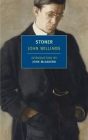
STONER


Shop Indie Bookstores


Stoner, John Williams, Viking Press, 1965, 278 pp

For someone such as myself, who believes in fiction with almost religious zeal, Stoner was an ideal novel. William Stoner, raised on a small family farm in Missouri, only child of exhausted parents who rarely even spoke, sent to the University of Missouri to study agriculture, gets his first taste of literature, is redeemed and never looks back. He goes on to get his degrees, including a PhD in literature, and works as an instructor and then a professor of literature at that same university for the rest of his days. Not a single aspect of his life turns out well, yet he plows that field of literature with the same stoicism that kept his parents farming.

Though Stoner is one of the saddest, most tragic novels I have read, it revealed to me a basic belief that I cherish but hadn't known I carried with me through life: If I stay true to what I am passionate about I will be alright.

John Williams, himself a professor of literature and creative writing at the University of Denver, also wrote poetry. He only wrote four novels. His last, Augustus, won the National Book Award in 1973. Like most novelists I've read who publish infrequently, his writing kept me moving inexorably through the story, fully entertained and completely emotionally involved. Yet the writing is plain and as natural as speaking.

As Stoner grapples with marriage, fatherhood, a lethal enemy in his department, as he finds and loses his true love, I cared more about what would become of him than I do about many people that I know. The man marries disastrously. His wife is insane in the ways women brought up in the early 20th century with all sexuality suppressed did become insane. Somehow Williams causes you to pity them both, as well as the daughter who becomes their battleground.

Will Durant, whose The Life of Greece I was finishing during the time I read Stoner, gives a summary of the Greek version of stoicism:

"The Stoic...will shun luxury and complexity, economic or political strife; he will content himself with little, and will accept without complaint the difficulties and disappointments of life...He will seek so complete an...absence of feeling, that his peace of mind will be secure against all the attacks and vicissitudes of fortune, pity or love."

I am more of an Epicurean in temperament, but I was raised by a stoic and a depressive. After reading the story of William Stoner, who was a perfect embodiment of Stoicism, I understand the Stoic parent. I even understand the philosophy and that it does not preclude a sense of joy.


(Stoner is available in paperback by order from Once Upon A Time Bookstore. To find it in your nearest indie bookstore click on the cover image above.)


Monday, January 23, 2012

CHILDHOOD'S END


Shop Indie Bookstores


Childhood's End, Arthur C Clarke, Harcourt Brace & World, 1953, 220 pp


Wow! All I knew about this book was people considered it a Clarke classic. From the dustcover blurb I learned that some aliens called The Overlords came to Earth and created a sort of utopia: no arms race, war, disease, or poverty. But then...

If you have read it, you know. If you haven't, I am not going to tell you. This is a most thought provoking story about the fate of the human race. Was he telling us to be careful what we wish for or was he terribly prescient about mankind?

Well, you could say it is just science fiction. But Arthur C Clarke covers a span of ideas that shoots all the way to the present day. Here we are still using an arms race as an excuse to go to war and still arguing over what is to become of our species.

That is why this author is still read. Could we force our political candidates to read stuff like this as a prerequisite to running for office?


(Childhood's End is available in paperback by order from Once Upon A Time Bookstore. To find it at your nearest indie bookstore click on the cover image above.)

Sunday, January 22, 2012

HENRY AND BEEZUS


Shop Indie Bookstores


Henry and Beezus, Beverly Cleary, William Morrow and Company, 1952, 192 pp

THE SUNDAY FAMILY READ


In her third book for middle-grade readers, Henry Huggins returns. This time he wants a bicycle, another icon of 1950s suburban life. His adventures and efforts to procure the bike are shared with Beezus and her little sister Ramona, who feature in some of the later stories.

A third grade boy being forced into hanging out with a girl is the issue here. Funnily enough, I don't recall it being a big deal if you played with boys or girls when I was that age, but there was only one boy among several girls in my neighborhood, so it could have been more of a problem for him.

Henry's dog Ribsy as much of a character as the kids. The neighborhood bully gets what's coming to him and everyone has fun. Cleary makes it clear that a kid's problems are as real and important as any adult's.

I am still mystified as to how I missed these books when I was that age. I can only figure that I was living that life instead of reading about it.


(Henry and Beezus is available in paperback on the shelf at Once Upon A Time Bookstore. It is also available as an eBook by order. To find it in your nearest indie bookstore, click on the cover image above.)

Friday, January 20, 2012

MAUD MARTHA


Shop Indie Bookstores


Maud Martha, Gwendolyn Brooks, Harper & Brothers, 1953, 180 pp


I learned about Maud Martha from Elaine Showalter's excellent overview of American women writers, A Jury of Her Peers. Gwendolyn Brooks was primarily a poet and this was her only novel.

The novel is short, composed of vignettes in Maud Martha's life from childhood through courting, marriage and motherhood. The tone is lighthearted but Brooks spares no aspect of what life was really like for a young black woman in 1950s Chicago.

The writing is indeed poetic; in fact consummately so. She tells it to us, without censure or preaching, but man, do we get it: black, female, mother and wife. So well done.


(Maud Martha is available in paperback by order from Once Upon A Time Bookstore. To find it in your nearest indie bookstore, click on the cover image above.)

Wednesday, January 18, 2012

GO TELL IT ON THE MOUNTAIN


Shop Indie Bookstores


Go Tell It On The Mountain, James Baldwin, The Dial Press, 1953, 253 pp


I had always heard of this book but somehow never read it before. It is a powerful story about a young man raised in Harlem by his stepfather who is a preacher. The family are all members of a fundamentalist church and while racism plays a part in their lives, it is the religious angle that Baldwin emphasizes.

John is fourteen, in fact it is his birthday. Throughout the course of the day, when his birthday seems to have been forgotten by the family (not for the first time), we are taken through the early life of his parents in a series of flashbacks during which we learn how each came to be believers. Later in the day, the family goes to church and John feels the possibility of belief for the first time in his life.

The structure of the novel is a bit clunky but the scenes of religious conversion are possibly the best written of any I have ever read. Literature in the 1940s and 1950s is saturated with Christian novels. The Robe, by Lloyd C Douglas, (a bestseller in 1942, 1943, 1944 and 1945) made a comeback in 1953 due to a movie version having been released that year. However, as far as I know there had not been a novel specifically about the Christian theme amongst Black people.

John's stepfather is a hypocrite, a child beater, a religious fanatic. This theme of the fundamentalist who harbors his own sins can be found in any race, any culture. Baldwin takes it apart with ruthless sensitivity, including its effect on the children of such a man.

John's mother is a complete believer in Jesus Christ, in the rewards of the afterlife, and in giving up all one's sorrows to God. She is fully confident that her son will benefit from being "saved."

Between the flashbacks we are taken step by step through John's night of spiritual journey, full of anguish and fear; hours he spends lost outside of his body. Only someone who has lived the experience could have written such a harrowing account. Baldwin did become a believer in his teens, but later rejected religion. In this novel however, he presents a cogent explanation of religious belief and conversion. Whether one is a believer or not, one cannot deny that he makes the connection between human life and religion plain and comprehensible.

At the end, as John walks home with his family, he sees clearly that nothing around him has changed, especially regarding his stepfather, but inside himself he feels changed. That pretty much says it all as far as I am concerned.


(Go Tell It On The Mountain is available in paperback by order from Once Upon A Time Bookstore. To find it in your nearest indie bookstore, click on the cover image above.)


Sunday, January 15, 2012

CAMILLA


Shop Indie Bookstores


Camilla, Madeleine L'Engle, Simon and Schuster, 1951, 278 pp

THE SUNDAY FAMILY READ


This was my least liked book by Madeleine L'Engle. She began writing romances suitable for a young adult audience and Camilla is one of those; another tale about a teenage girl having trouble with her parents. Camilla lives with these parents in an apartment in New York City. She loves them both though her father is a distant, undemonstrative sort and her mother is childlike.

When Camilla discovers her mother kissing another man right in their living room, she falls into confusion. She has to learn that her parents are people too who have their own troubles and are not perfect. Her best friend and an older boy help her through and she comes out older, sadder, and wiser.

The weaknesses here are a slow moving plot and a bit of a preachy tone about what is important in life. I had not found those weaknesses in any of L'Engle's other early novels.

In any case, I have now read most of those early novels. When I get to 1960 in My Big Fat Reading Project, I will be reading the books that made her famous, beginning with A Wrinkle in Time.


(Camilla is available in paperback, audio and eBook by order from Once Upon A Time Bookstore. To find it in your nearest indie store, click on the cover image above.)

Thursday, January 12, 2012

THE DIARY OF A YOUNG GIRL


Shop Indie Bookstores


The Diary of a Young Girl, Anne Frank, Doubleday & Company, 1952, 283 pp


I don't remember when I first read this or how many time I have read it before--at least two times I think. I probably first read it as a young teen, when it was a shocking book for me. I'm quite sure it was the first book I read about the holocaust.

It held up this time as a good and interesting read. There seems to be a backlash against holocaust lit these days, but to me that is one of those whole earth events, so huge and horrid, that the stories must be told over and over.

I hadn't remembered how much it is a coming of age tale or how much Anne Frank captured the emotional and intellectual development of a teenage girl. Also, even though the circumstances are so different, having recently read I Capture the Castle, also written in diary form, I couldn't help but compare them.

When I first read Anne Frank's diary, I was mostly interested in her developing relationship with Peter. This time I was fascinated by her fractious interactions with her mother, her growth from Daddy's girl into aware young woman, and her attempts at being a writer. Had she survived, she would have been a literary force I am sure. Because she did not survive and because her obviously admirable father got the book published, she became immortal.

I remember the movie "Freedom Writers" from 2007. Hilary Swank plays a new teacher in a gang-ridden school who gets to the kids by having them read Anne Frank, then getting them to write their own diaries. I need to watch that again.


(The Diary of a Young Girl is available in paperback on the shelf or by order at Once Upon A Time Bookstore. To find it in your nearest indie store click on the cover image above.)

Wednesday, January 11, 2012

BLACKLIST


Shop Indie Bookstores


Blacklist, Sara Paretsky, G P Putnam's Sons, 2003, 415 pp


I have been reading my way through Sara Paretsky's novels and have now read everything she wrote prior to Fire Sale, 2005, the one I read first. Her books are a journey through the major issues of the past 20 years, as well as an in depth look at the best features of a true liberal.

In Blacklist, the intrepid V I Warshawski is missing her boyfriend, the journalist Morrell, who is on assignment in Afghanistan and mostly out of touch. Meanwhile she finds herself tracking down the murderer of an African American journalist in the unlikely neighborhood of some of Chicago's richest residents. Soon enough she is embroiled in the fallout from the depredations of the HUAC in the 1950s.

What I like most about Paretsky are the layers and complexity in her stories. She is able to embrace the big picture and tie together the societal elements that make up an issue, showing us that no single one is isolated but interweaves with many tendrils.

So in Blacklist you get rich people in their suburban enclaves, the old and the young, black and white, as well as communism and the Red Scare as it relates to the Patriot Act and the War on Terror. Warshawski must sort through the personal secrets of men and women of advanced age at the same time as she deals with the ill-advised shenanigans of a teenage girl trying to protect an Egyptian boy suspected of terrorism.

This novel is a smart and deep look into American life as we now live it since the attack on the Twin Towers. A page-turner that eschews any cheap tricks of sensationalism while it admits there are many ways to approach a bad situation. Since 9/11 our society has fractured into as much polarization as we had during the Vietnam War years. Paretsky's view is that a good liberal, fighting for justice, must be able to see and understand both sides of the issues.


(Blacklist is available in paperback and on CD by order from Once Upon A Time Bookstore. To find it in your local indie bookstore, click on the title image above.)

Monday, January 09, 2012

THE SEA AROUND US


Shop Indie Bookstores


The Sea Around Us, Rachel Carson, Oxford University Press, 1951, 243 pp


Without reservation I can say this is one of the most amazing reading experiences I have ever had. I rarely read non-fiction in book form. When I do, I read memoirs, biographies (usually of writers and artists), and occasionally history, but never science. I decided to read The Sea Around Us because it was a non-fiction bestseller in 1951, a year that falls within my Big Fat Reading Project, but also because Rachel Carson is one of my heroines.

She is an eloquent and inspiring science writer. She writes about scientific information better than some sci fi authors I could mention. As far as my interactions with the sea go, I have always loved sitting on a beach and watching waves. But I do not enjoy swimming or boating. I like to keep my feet on solid ground.

Now I have realized that I had little to no idea about more than half of the planet I live on. I read the book slowly, a chapter at a time over several weeks, with a globe and the Internet close by. It was like taking a tour of the world and getting oriented in a whole new way.

I learned about the history of planet Earth, at least as far as what was known by 1951 plus new developments up to 1961 when the book was revised. I learned about currents, winds, tides, and oceanic wild life; about the ice ages and the relationship of continents to oceans. Most importantly I learned that what we do on land ends up in the seas; that though we keep learning more about the seas we still keep doing our best to use them to spread radioactivity and toxins.

All that learning was excellent and good for me but what I loved most was a feeling I got in every chapter. It was as if I were in a spaceship far out from the earth's surface, looking down and seeing the whole big picture. This was a better high than any substance has ever given me; almost better even than music has ever given me.

Second to that effect was a suspicion that while it is crazy to use up natural resources faster than they can be replaced and stupid to toxify our world and ourselves, the oceans will outlast us and possibly transmute mankind's insanity and stupidity into more life and future. We are racing ahead at an almost incomprehensible speed but still the earth, its continents and oceans are almost eternal. When it comes to material existence, the closest thing I have to faith is that the cycle of life goes on. Rachel Carson's book renewed that faith for me.


(The Sea Around Us is available in paperback by order from Once Upon A Time Bookstore. To find it in your local indie bookstore, click on the cover image above.)

Thursday, January 05, 2012

LAST TRAIN TO MEMPHIS


Shop Indie Bookstores


Last Train to Memphis, Peter Guralnick, Little Brown and Company, 1994, 488 pp


I read this Elvis Presley biography as research on the 1950s for my memoir. When Elvis had his first big hit, "Heartbreak Hotel", in 1956, I was a nine-year-old in 4th grade. Today I know that kids that age are already up on pop music, the hits and the stars, but it was not like that in middle-class Princeton, N J. By the time I got interested in pop music, it was Bob Dylan and then the Beatles. So I never became an Elvis fan.

Subtitled The Rise of Elvis Presley, Last Train to Memphis covers his life from birth to his army induction in 1958. He was already a huge star by then and had made four movies under the management thumb of the infamous Colonel Tom Parker. It is a good old American rags to riches story and basically the original template for all those VH1 Behind the Music features.

Elvis was in the right place at the right time. The 1950s were the beginning of the era of teenage rebellion, paving the way for the sexual revolution in the 1960s. Civil Rights was a hot new item after Rosa Parks did her thing on the bus. Elvis, with his mix of country, bluegrass and Beale Street blues, his pelvis-centered moves, and his James Dean stance was the complete package. He encapsulated it all and his screaming female fans showed the Beatles' fans how to do it.

Peter Guralnick is clearly a complete Elvis fan and the entire book sings his praises without a hint of criticism or censure. He certainly brings to life the whole Memphis recording and radio scene as well as everyday life in a small Southern city and the day to day performing grind of a rising pop star. The slightly skewed family dynamics of Elvis and his parents are covered in depth, including how Elvis became the owner of Graceland.

At some points, I grew weary of reading about every gig, recording session, TV appearance, and movie set. But I can't deny the thoroughness and depth of the account. By the end, I felt I knew Elvis Presley and his world.


(Last Train to Memphis is available in paperback by order from Once Upon A Time Bookstore. To find it in your local bookstore, click on the cover image above.)

Tuesday, January 03, 2012

PRAIRIE SCHOOL


Prairie School, Lois Lenski, J B Lippincott Company, 1951, 196 pp


Prairie School is the eighth novel, for readers 8-12 years old, in Lois Lenski's "American Regional Series." It is a standout. Set in South Dakota, it tells of a one-room school in the Great Plains during one of the worst winters in recorded history as of 1950.

Blizzard after blizzard hits the area, temperatures are well below zero and most mechanical devices are shut down. Students can only get to school by walking or horseback and some afternoons they can't get home again. But they come to school almost every day.

Delores and Darrell are children of a cattle ranching family. Darrell is worried about their cattle and torn between keeping them from freezing and going to school. Their father is so busy dealing with his ranch and helping his friends that he forgets to bring coal for both their home and the school. When Delores gets seriously ill while staying overnight with the teacher, the drama is intense.

The non-stop action, the very real dangers and the courage of the kids all make this an exciting read. Miss Martin is the brave and resourceful school teacher who saves Delores' life. I was reminded again of how easy and relatively uneventful life is for most modern American kids. These prairie children are tough!

Prairie School would make a great winter read for both boys and girls. It is truly a shame that these books are out of print, but they can be found in libraries.


Sunday, January 01, 2012

TOP 25 BOOKS READ IN 2011


TOP 25 BOOKS READ IN 2011


2011 was an average reading year for me. I read 127 books. My best year ever was 2010 when I read 160. This past year my husband and I bought a house, moved, did a bit of redecorating and I created a new yard. Also my elder son and his family moved to Los Angeles bringing me the wonderful distraction of three grandchildren just a few miles away. It is all good.

Still, books never let me down. Whether I am enthralled from the first page to the last; learning about history, science, or other cultures; or just plain discovering how not to write a book, I am always enriched.

I have not gotten an eReader yet. I have not even tried reading on one. I do love holding a book in my hands and I have a weird thing about how every book has a different smell inside the pages. I still use my local libraries, shop at indie bookstores and used bookstores, all for the sense of discovering something I didn't know about despite my hours on the Internet. Sometimes I fear that Amazon will eventually usher in a kind of 1984, when our reading choices are determined by what is available there, but I have decided that is a foolish worry. The urge to write down one's thoughts, giving them permanence and wide distribution, has been interfered with throughout history but never has it been stopped.

Despite a shorter total of books read, I was as usual hard pressed to limit my Top Books to 25. These are books I read this year, not books necessarily published this year. All are reviewed on this blog. I would enjoy hearing about your year in reading.

THE LIST

Anthill, E O Wilson
The Astounding, The Amazing, and the Unknown, Paul Malmont
The Barbarian Nurseries, Hector Tobar
Crooked Letter, Crooked Letter, Tom Franklin
Doc, Mary Doria Russell
Embassytown, China Mieville
The Forgotten Waltz, Anne Enright
The Girl Project, Kate Engelbrecht
The Girl Who Fell From the Sky, Heidi W Durrow
The Illumination, Kevin Brockmeier
The Immortal Life of Henrietta Lacks, Rebecca Skloot
The Likeness, Tana French
The Lotus Eaters, Tatjana Soli
Luminarium, Alex Shakar
A Million Nightingales, Susan Straight
Nightwoods, Charles Frazier
The Ordinary Seaman, Francisco Goldman
Prospero Regained, L Jagi Lamplighter
Say Her Name, Francisco Goldman
The Sea Around Us, Rachel Carson*
Sea of Poppies, Amitav Ghosh
State of Wonder, Ann Patchett
West of Here, Jonathan Evison
When the Killing's Done, T C Boyle
Zazen, Vanessa Veselka

*Review coming soon.


Wednesday, December 28, 2011

WHEREVER YOU GO


Shop Indie Bookstores


Wherever You Go, Joan Leegant, W W Norton & Company, 2010, 253 pp


I have always had a fascination with Israel and the whole history and idea that Jews should have their own country. Trying to understand the seemingly endless conflict in Israel by reading the news never fails to leave me hopelessly confused. I've gotten much better results reading novels.

Wherever You Go is set in contemporary Israel, mainly in Jerusalem. Joan Leegant has tackled two gigantic though related aspects of the conflict in her short and rather light novel. One is the relationship of American Jews to Israel and the other is the debate about Jewish terrorism versus political attempts to structure some form of peace between Israelis and Arabs.

Employing the device of three American characters who are in Jerusalem to work out personal issues is a thin disguise for Leegant's views which are clearly anti-extremist. The characters themselves are well drawn however.

Yona is an unfulfilled promiscuous young woman who seeks reconciliation with her estranged sister, a radical proponent of the Jewish state. In fact, the sister, raising her five children under extreme duress in a small Israeli town, is the most intriguing character in the novel.

Mark Greenglass, former drug addict in New York, son of a domineering businessman, turned to Orthodox Judaism but has doubts and conflicts about his teaching life in Jerusalem. Then there is Aaron, a failure at the age of 20, who comes to Israel for specious reasons and ends up in a terrorist cell.

It sounds overly dramatic and somewhat cliched but Leegant is skilled enough as a writer to draw the reader into these lives and tell a good story. She paints a clear picture of life in Jerusalem today.

So it was an interesting read; better than Leon Uris' Exodus as literature goes, not as exciting as Herman Wouk's The Hope in its dramatic arc. What I appreciated most was her attempt to put individual human faces on the conflicts. Leegant's novel is one of the few I have read to avoid the pitfall of ideology. In fact, in her own way, she exposes ideology as the potentially destructive role that it plays in human interaction whether on a personal or political level.


(Wherever You Go is available in paperback, hardcover and eBook by order from Once Upon A Time Bookstore. To find it in your local indie bookstore, click on the cover image above.)

Tuesday, December 27, 2011

THE INVENTION OF HUGO CABRET


Shop Indie Bookstores


The Invention of Hugo Cabret, Brian Selznick, Scholastic Press, 2007, 533 pp


I kept putting off reading this book, winner of the Caldecott Award in 2008. A few days before the movie ("Hugo") came out, I picked it up and read it in a couple hours. It is astonishingly good and speaks to adults as well as children.

Hugo Cabret has had much sorrow and loss in his young life. Orphaned, then abandoned, he lives a secret, lonely life in a Paris railroad station, keeping the clocks running and stealing food. His fascination with an automaton, a mechanical man who can write messages, and his technical skill are the only means Hugo has of making sense of his life.

The story of how he solves the mysteries and problems besetting him is full of danger, chance encounters, determination and wonder. Hugo is a child hero in the spirit of Harry Potter, David Copperfield, and Nobody Owens. While courage and intelligence are essential to his survival, it is imagination which drives him.

Brian Selznick's illustrations are sublime. In a unique arrangement that transcends both picture books and graphic novels, those illustrations tell parts of the story in the place of text. Somehow the transitions from pictures to text and back again are seamless.

I had started to read The Invention of Hugo Cabret to my granddaughters this past summer but we never finished it. The ten-year-old read it on her own, also in anticipation of the movie. Then we all saw "Hugo" together. It was so cool to sit next to Emma and whisper about what was just like the book and what was changed. The film completely captures the wonder of the book and enhances the story with clips from the silent movies that are integral to it.

Read the book!

See the movie!


(The Invention of Hugo Cabret is available on the children's book shelves at Once Upon A Time Bookstore. To find it in your local bookstore click on the cover image above.)

Sunday, December 25, 2011

MERRY CHRISTMAS, ETC


Merry Christmas or Happy Whatever Sacred Event you celebrate. My wish for you and all mankind is that illusive thing called Peace On Earth. At least for today we could practice Good Will Towards Men. It is a start.

Thank you to all of you who read my blog or just stop by. As I told some friends the other night, literature is my religion. In America it is still possible for writers to tell their truths in the books they write. In all parts of the world, you can kill or imprison the writer, you can burn the books, but you cannot kill the ideas. They always get out and circulate eventually.

My gift to you today is a song. I wrote these lyrics to what I call "The Christmas Song" many years ago when we had a family feud going between some members and that was making some other members sad. Today feuds abound in every land. This may be the age of feuding. So the words are for all.

On a cold winter night in the desert a light did shine
From the silky black sky on a baby and mother so fine
Mary looked down on that innocent face and feared
Shepherds looked as they wondered what brought them there

Can a child of love live in this evil world
Can he change the hearts of men
Will we make it safe for him to enter in
Can we live in peace again?

Look all around, there are reasons a'plenty to hate
Do you ever wonder if the time comes when it's too late
Can you see the gift comes to those who can love friend or foe?
Look to yourself for it's only there that you know

Can a child of love live in this evil world
Can he change the hearts of men
Will we make it safe for him to enter in
Can we live in peace again?


Friday, December 23, 2011

ELLEN TEBBITS


Shop Indie Bookstores


Ellen Tebbits, Beverly Cleary, William Morrow & Company, 1951, 160 pp


Continuing my reading of Beverly Cleary's books as research on the 1950s, I read her second novel for middle-grade readers. Ellen Tebbits is a third grader with two main problems in life. She needs a best friend and she wants her teacher to like her so she can get picked to clap the erasers. Interesting to me because those were my main problems in third grade. She also has an over-protective mother who is a neat freak.

The story opens with a chapter about ballet class. Ellen has been made to wear long underwear because it is winter but she doesn't want anyone else to know and tries to hide it under her ballet outfit. It is funny but also captures those things that were so important yet made you feel so squeamish at the age of eight.

Despite all those points of similarity to my eight-year-old life, I didn't find this one as exciting as Henry Huggins. The girls in the story were so girly girl, while the boys seemed to have more fun. I suppose that is an accurate picture of how things were for us females in the 1950s.


(Ellen Tebbits is available in paperback on the shelf at Once Upon A Time and in other formats by order. To find it at your local bookstore click on the cover image above.)

Tuesday, December 20, 2011

THE BARBARIAN NURSERIES


Shop Indie Bookstores


The Barbarian Nurseries, Hector Tobar, Farrar Straus and Giroux, 2011, 422 pp


I read this wonderful novel simply because the author lives in Los Angeles. Hector Tobar, son of Guatemalan parents who immigrated to Los Angeles in the 1960s, is an LA Times columnist. The Barbarian Nurseries is his third book; his second novel. He has created a unique hybrid: a factual portrayal of a city and its immigration woes couched in fiction and driven by characters who surprised me at every turn.

Araceli is an undocumented Mexican immigrant working for an affluent family inside a gated community in Orange County. Scott Torres made his money in the days of the dot com boom but now holds down an uninspiring IT job while trying to maintain the standard of living he overspent to attain. In an effort to economize, he and his wife have laid off their full-time gardener and nanny, leaving Araceli to pick up dropped hats in addition to her job as maid. She cooks and cleans, is paid in cash, lives in a tiny guest house and has one day off every two weeks. Now she is expected to also help with the three children.

Back in Mexico City, Araceli had studied art in college while she dreamed of el norte. She has not a motherly bone in her body. When Scott and his wife both vanish after a violent argument, Araceli is left with the two older children, with no news of or contact from the parents, and not much food in the house.

So begins a journey to and through Los Angeles using public transportation, a picture of the boys' grandfather and what turns out to be a long outdated address. Naturally various types of hell break loose.

I have lived in LA for twenty years but Hector Tobar and Araceli took me to places I have never been; pockets of neighborhoods populated by all levels of Hispanic society from the homeless to educated politicians. We have a Mexican gardener who mows and blows once every other week. We eat Mexican food in restaurants regularly. And that is all I know except for when immigration issues get enough press to penetrate my virtually complete neglect of the news media.

At first I was put off by Hector Tobar' writing style. I have read enough novels by former journalists to be wary. But this author uses his reportorial chops to create places, occurrences, and characters, making it all so real that you feel you are there yourself. He lets us into his characters' minds and souls by chronicling their thoughts and then describing their actions. By the end of what became a more gripping story page by page, I was in a fever of anticipation to learn how it would all turn out. I never could guess or predict the fate of Araceli or the family she ultimately saved until the last few pages.

Did I mention the kids? The eleven-year-old son who reads like crazy and processes his experiences in LA by relating them to all the fantasy novels he devours? The homeless boy taken in by a single mom and made to serve her and her children to the point that the OC kids think he is a slave? Tobar knows kids.

As any avid reader of fiction has found, many and various are the high points, disappointments, and sometimes slogging boredom involved. The Barbarian Nurseries is a shining high point. Except for Native Americans, every American citizen is ultimately a descendent of an immigrant. We are a country of immigrants built on the backs, the labor, and the hopes of other immigrants. Despite the hardships, the ridiculous prejudices, the exploitation, the immigrant story may be the most romantic story our country has to tell. Hector Tobar certainly made it so.

If you only get through a novel a month, or less, I highly recommend you squander some reading time on this one.


(The Barbarian Nurseries is available in hardcover on the shelves at Once Upon A Time Bookstore. It is also available by order as an eBook. To find it at your local bookstore, click on the cover image above.)