Showing posts sorted by relevance for query memoirs of a dutiful daughter. Sort by date Show all posts

Thursday, June 23, 2011

MEMOIRS OF A DUTIFUL DAUGHTER


Memoirs of a Dutiful Daughter, Simone de Beauvoir, The World Publishing Company, 1959 translation, Librairie Gallimard, Paris, 1958, 360 pp


I looked forward to this first volume of Simone de Beauvoir's autobiography with much anticipation, but had no idea how wonderful it would be. Memoirs of a Dutiful Daughter covers the first twenty-three years of her life beginning with her earliest childhood memories. I loved the way she explained the early tantrums that came over her whenever adults attempted to block her efforts to act in an independent, self-realized fashion. Apparently she was born with the sense that she was an individual who mattered and had the right to follow her own ideas.

Her upbringing was bourgeois Catholic, though her family was by no means wealthy. She went to Catholic schools, was trained and guarded as a young girl by a devout, socially conservative mother, yet stimulated by her father's love of the theater. Although she was kept close to home and inculcated with fears about bodily functions, passion, men and sex, Simone had always a brilliant inquiring intellect. She read and studied incessantly all throughout grade school, high school and college, entering the Sorbonne as one of the few female philosophy candidates. Every drive she had was sublimated into mental activity. She was almost twenty before she went out on her own to bars, plays, movies, at which point she went a bit wild but never experienced more than a kiss from a male.

As she relates her female friendships, her infatuation with her cousin Jacques, her quest to understand life through philosophy, I was enthralled by the combined emotional, spiritual and intellectual fervor which imbued every minute of her coming of age. The loss of her Catholic faith and her attempts to understand her own mind, passions and aspirations were as exciting to me as her tortured relationship with her best friend Zaza.

I doubt that I will ever reach the intellectual heights of this amazing woman, but I have always dreamed of doing so. As I mentioned in my review of The Second Sex, it blows my mind that Simone de Beauvoir was of my own mother's generation yet our mothers were so much alike. It is almost true that she went through my life a generation earlier in another country, in Paris of all places. I am lucky that she always kept a journal and could write so movingly about her life.


(Memoirs of a Dutiful Daughter is available in paperback by order from Once Upon A Time Bookstore.)

Tuesday, March 27, 2012

TETE A TETE


Shop Indie Bookstores


Tete A Tete (The Tumultuous Lives & Loves of Simone de Beauvoir & Jean Paul Sartre), Hazel Rowley, HarperCollins Publishers, 2005, 353 pp


I have been abducted! The tale goes like this: Two years ago I read Beauvoir's incredible account of her investigations into womanhood: The Second Sex. I had already read her four novels: She Came to Stay, The Blood of Others, All Men Are Mortal, and The Mandarins. The novels were intriguing but The Second Sex tempered my feminism in ways that changed me forever.

Last month I acquired a copy of a memoir by Claude Lanzmann (The Patagonian Hare) with the agreement that I would review it for BookBrowse. How could I turn this book down after learning that Lanzmann was one of Beauvoir's lovers and in fact had lived with her from 1952 to 1959? Even though she was in an intimate relationship with Jean Paul Sartre from 1929 until his death in 1980, they never lived together.

My only problem was I knew nothing of Lanzmann. I had read Beauvoir's first volume of autobiography, Memoirs of a Dutiful Daughter, but it ends in 1929 just as she first meets Sartre. I knew Beauvoir as a novelist, as a young girl up to her 20th year and as a feminist philosopher but not as a grown woman. It may seem odd to some but for me I could only approach the Lanzmann memoir from the world of Simone de Beauvoir.

I made myself a reading list. I already had Tete A Tete on my own book shelves so that went to the top of the list. Hazel Rowley was an accomplished biographer when she decided to tackle this dual biography. She published Christina Stead: A Biography in 1994, followed by Richard Wright: The Life and Times in 2001. Unlike Deirdre Bair, whose Beauvoir biography was published in 1990 and who had interviewed her subject many times between 1981 and 1986, Rowley worked from Beauvoir and Sartre's letters as well as interviews with their still living lovers and associates. (And isn't it amazing how many viewpoints it takes to encompass these larger than life figures?)

Tete A Tete is fascinating, addictive, and revealing. Rowley says, in the interview at the back of the Harper Perennial paperback edition, that she did not want to write another big fat doorstop of a book on this famous couple. "The answer, I realized, was selectivity. I had to trim my narrative with a sharp razor: sublime detail, but no superfluous detail."

She accomplished her goal beautifully. I tore through pages in which both of these passionate intellectuals came to life as persons with high ideals yet sometimes petty natures, who did their best to live by their ideals as they personified their natures. Beauvoir and Sartre, from the first hours of their relationship, vowed to tell each other everything and kept that vow for over 30 years.

All of Beauvoir's novels are fictionalized accounts of her own affairs: romantic, philosophical, and political. Her memoirs are partial revelations because she chose not to hurt anyone who was still alive when she wrote them. But in their letters, they told all, so that Hazel Rowely could tell us more, not excusing them but giving a picture of two hardworking, prolific public intellectuals who developed their views by living them.

By the end of the book, having been through all the relationships of both, the secrets, the lies, the passion and the heartbreaks, the highs and lows of career, the travel, disillusionment, aging, and death, I was weeping as uncontrollably as Beauvoir often did. But I was still hungry for more. I opened Beauvoir's second volume of memoirs, The Prime of Life and continued to read.


(Tete A Tete is available in hardcover, paperback or eBook by order from Once Upon A Time Bookstore.
To find it at your nearest Indie bookstore, click on the cover image above.)

Friday, August 12, 2011

BOOKS READ FROM 1958


I am engaged in a self-directed study of 20th century literature. I call this My Big Fat Reading Project. Today's post is my reading list for 1958. Most of these books have been reviewed here on my blog. If a title has a star you can search the blog and find the review.

The first 10 books are the top bestsellers of the year, according to Publisher's Weekly as compiled in an out of print book I found in my local library years ago but which is no longer there. Currently you can find these lists in Making the List by Michael Korda, (also out of print but available from used book sellers.)

The next section of my list covers award winners from the year, in the order that those awards were founded.

The final section is my own curated list made up of authors I have decided to follow during the Project, giving myself a full overview of their development as authors. These books are listed alphabetically by title.

If you know of an important book from 1958 that I missed, please mention it in the comments or send me an email (my email address can be found on my profile page. )


BESTSELLERS
1. Doctor Zhivago, Boris Pasternak*
2. Anatomy of a Murder, Robert Traver*
3, Lolita, Vladimir Nabokov*
4. Around the World With Auntie Mame, Patrick Dennis*
5. From the Terrace, John O'Hara*
6. Eloise at Christmastime, Kay Thompson*
7. Ice Palace, Edna Ferber*
8. The Winthrop Woman, Anya Seton*
9. The Enemy Camp, Jerome Weidman*
10. Victorine, Frances Parkinson Keyes*

AWARD WINNERS
PULITZER: A Death in the Family, James Agee
NBA: The Wapshot Chronicle, John Cheever*
NEWBERY: Rifles for Watie, Harold Keith*
CALDECOTT: Time of Wonder, Robert McCloskey*
EDGAR: Room to Swing, Ed Lacy*
HUGO: The Big Time, Fritz Leiber*

OTHERS
1. Balthazar, Lawrence Durrell*
2. The Bell, Iris Murdoch*
3. The Best of Everything, Rona Jaffe*
4. Boulevard, Robert Sabatier
5. Breakfast at Tiffany's, Truman Capote*
6. Dharma Bums, Jack Kerouac*
7. The End of the Road, John Barth*
8. Gabriela, Clove and Cinnamon, Jorge Amado*
9. A Game for the Living, Patricia Highsmith*
10. The Ginger Man, J P Donleavy*
11. Have Spacesuit, Will Travel, Robert A Heinlein*
12. The Long Dream, Richard Wright*
13. The Lost Traveler, Sanora Babb*
14. The Luckiest Girl, Beverly Cleary*
15. Memoirs of a Dutiful Daughter, Simone de Beauvoir*
16. Methuselah's Children, Robert A Heinlein*
17. Mount Olive, Lawrence Durrell*
18. Nine Coaches Waiting, Mary Stewart*
19. Nip the Buds, Shoot the Kids, Kenzaburo Oe*
20. Our Man in Havana, Graham Greene*
21. Playback, Raymond Chandler*
22. A Ripple From the Storm, Doris Lessing*
23. Robinson, Muriel Spark*
24. The Suffrage of Elvira, V S Naipaul*
25. The Sundial, Shirley Jackson*
26. Things Fall Apart, Chinua Achebe
27. Where the Air is Clear, Carlos Fuentes*
28. The White Witch, Elizabeth Goudge
29. A World of Strangers, Nadine Gordimer*


Tuesday, July 16, 2019

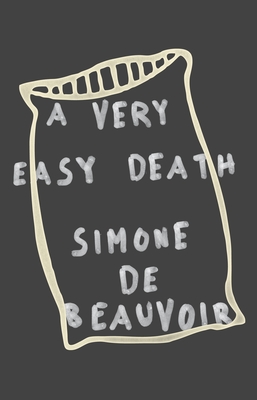
A VERY EASY DEATH


Support Independent Bookstores - Visit IndieBound.org

A Very Easy Death, Simone de Beauvoir, G P Putnam's Sons, 1966, 106 pp (originally published in France by Libraire Gallimard, 1964, translated from the French by Patrick O'Brian)
 
Have you ever spent the last days of your mother's life by her side? I have. This memoir of that experience by my much read and much admired Simone de Beauvoir hit me hard but not unpleasantly.
 
In the first volume of de Beauvoir's memoirs, Memoirs of a Dutiful Daughter, written when she was in her forties, covered the first 23 years of her life. Her experiences and insights helped me understand my relationship with my mother. We both fought against our mothers' protective and restraining methods of raising a girl.

Simone's mother fell dangerously ill in 1963 when Simone was 55 years old. Her mother went to hospital, nursing home and finally into hospice care when inoperable cancer was found. Mine had two major strokes from which she could not regain enough strength to care for herself and eventually passed away 10 years ago, also in hospice though not due to cancer. She declined any sort of life support and my sisters and I honored her wishes. I was with her everyday for 3 months, the last 5 weeks of which I was her primary caregiver at her home.

Reading A Very Easy Death was like going through it all again: my mom's bewilderment at being so reduced, watching over her in the hospital and rehab facility where some bad things happened with doctors, nurses and techs, then feeling I had failed to save her when she finally passed. 

However, the other thing I shared with Simone is a coming to peace with who my mother was and understanding her so much more deeply. We were no longer at odds in those final months, a huge gift to both of us. 

Simone de Beauvoir is a brilliant writer. She made the concerns, the exasperations, the humorous moments, the grief and relief, so real. This book captures the details, the essence of that passage in life with complete honesty. I know it is honest because I have been there.

I wish I had had this book with me in 2009.