Showing posts sorted by relevance for query oppenheimer. Sort by date Show all posts

Thursday, April 06, 2017

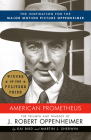
AMERICAN PROMETHEUS: THE TRIUMPH AND TRAGEDY OF J ROBERT OPPENHEIMER


Shop Indie Bookstores


American Prometheus: The Triumph and Tragedy of J Robert Oppenheimer, Martin J Sherwin & Bird Kai, Alfred A Knopf, 2005, 591 pp


Another long, sometimes dry, but always informative biography about a huge American figure. It took me over a month, while reading other books along with it, but was worth every minute spent.

It is truly an American tragedy. Oppenheimer, son of Jewish immigrants from Germany, a genius indulged by his parents, as complex a man as you will ever meet in history, became the "father of the atomic bomb" and thereafter spent his life in a desperate attempt to advise the American government as to how a nuclear arms race could be avoided. He failed spectacularly in that second endeavor while simultaneously being revered as the most famous scientist of his day.

His life and times from 1904 to 1967 were an embodiment of the horrors of the 20th century. He lived and added to several conundrums. Can science and progress save mankind? Can the richest and most powerful democracy in the world bring about world peace? Can intelligence, dedication, and persistence win over power and evil?

I could say much more, but if you are interested, American Prometheus will take you on a journey through American history you likely have not taken before. Communism, WWII, FDR, Truman, Eisenhower, JFK, the Cold War, and the incredible community of Nobel winning scientists, are all brought together in a monumental effort by the two authors of this book. The research and writing took over 25 years. It won the Pulitzer Prize for Biography in 2006 as well as the NBCC Award in 2005.

Why did I read it? When I was a teenager living in Princeton, NJ, another German immigrant, a female photographer, friend of my parents, a woman who would have a huge influence over my life, took me to meet Robert Oppenheimer. He was in the final years of his life, still the head of the Institute For Advanced Study in Princeton, but a fairly broken man, so I was told. What I remember is my sense that I was in the presence of a great man, that he looked ill and beaten. I was told he was suffering from a great sense of guilt over what he had helped create: the atom bomb.

In the biography I learned there was much more to the story. He was not broken by his guilt because he did all he could to atone. He was broken by the Military Industrial Complex and the hysteria of men who so feared communism that they figured having the world's biggest arsenal of atomic weapons was the only solution. God and saints preserve us. 


(American Prometheus is available in various formats by order from Once Upon A Time Bookstore.)

Sunday, February 08, 2015

THE GODDESS OF SMALL VICTORIES


The Goddess of Small Victories, Yannik Grannec, Other Press, 2014 (translated from the French by Willard Wood), 464 pp


Another great read for The Tiny Book Club! What is it like to be the wife of a genius? Not that great.

Adele Porkert was working at a cabaret and living with her parents in Vienna. In 1928, she was beautiful and in her early 20s. Early one morning walking home from work she noticed a man walking slowly on the other side of the street. Alarmed because of rumors about gangs that snatched young women from the streets and sold them to brothels in Berlin, she bolted for her door.

But eventually, after seeing the same man at that same time and place for over two weeks, she decided he was harmless and became curious. Then one night he appeared with some friends at the cabaret. Adele met Kurt Godel, who was destined to become one of the most renowned mathematicians in the world. She finds him good looking and intriguing, so she seduces him and becomes his lover. Little does she know she has attached herself to a troubled genius. This is a fictional account of the marriage between them.

Yannick Grannec is French, this is her first novel, and she calls herself a math enthusiast. Researching Godel's life out of curiosity, she came across some scanty information about his wife and wanted to know how a woman could have loved such a difficult (paranoid, anorectic, depressed) man for fifty years. In an interview with her publisher she gives an account of writing the novel and the challenges she faced rendering concepts of advanced mathematical theories into simple words. 

The book is a fascinating study of love, devotion, and the painful interaction of two individuals driven from their beloved Vienna by Hitler's antisemitism and forced to assimilate into academic life in Princeton, NJ. Yes, my home town!

I grew up always aware of Princeton University, the Institute for Advanced Study (where Godel researched and taught) and the high intellectual status of my town. Einstein, Oppenheimer, Godel, and many others of genius proportions, all featured in the novel, lived and taught there, contributing to a sort of Golden Age of science in America in the 1940s and 1950s, though that was tarnished by the atom bomb. It was a time and place where great brains developed the foundations of the modern world as we know it in all its technical wonders as well as horrors.

It was not a good time for women. Adele was not lacking in intelligence and was well endowed with energy and courage. She poured all of that into Kurt and grew old, fat, tired, and discouraged. A woman today has to wonder how she could have been so devoted to a man whose mental difficulties overtook him as his genius burned away. (It is a well documented fact that most math geniuses burn out early.) Godel became more and more eccentric, more of a hypochondriac, subject to depression and he refused to eat. 

Because of a lack of biographical data about Adele, we will never really know but Yannick Grannec supposed a probable story of a relationship based on love, commitment, and mutual admiration even as these two drove each other to distraction. They are portrayed as a couple who needed each other, he for Adele's caring and protection, she for the fascination of his esoteric mind. Would they have been happier if they had parted? They never did until Godel died and then Adele was devastated. She lived on still caring for his destiny and proper place in the world.

I found the novel believable, entertaining, and informative. I loved that she called Adele a goddess. Now I need to find and read about some female geniuses and the men who took care of them.

Friday, August 04, 2017

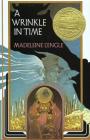
A WRINKLE IN TIME


Shop Indie Bookstores


A Wrinkle In Time, Madeleine L'Engle, Farrar Straus and Giroux, 1962, 203 pp


This classic won the Newbery Award in 1963. I just read it for the third time and discovered new layers to the story. 

In 1994, I wrote in my reading journal: "Three children travel through time and the universe to rescue their father by overcoming evil with love." A slight inaccuracy there is that he was the father of only two of the children, the third one being a friend of the kids. 

In 2010, I wrote about the Christian influence being much lighter than that in the Narnia books by C S Lewis and about how Meg, the daughter, was a fine female character right up there with Lara from The Golden Compass. I found both the parents and the children to be more true to life than those in many other Newbery winning books from earlier years.

Each time I read the book, I was enchanted by Mrs Whatsit, Mrs Whosit, and Mrs Which. Who can resist the younger brother Charles Wallace? This time I recognized him as a kid somewhere on the Autism spectrum. Also I was suddenly aware that the father had been involved in the Manhattan Project and the science behind the atom bomb. I can only assume that my reading over the past several years, including both the President Truman and the Oppenheimer biographies, gave me enough knowledge to recognize this as a concern and a manifestation of evil in 1962! And then there is the tesseract!!

I have read and loved four of L'Engle's early novels written for adults. (The Small Rain, A Winter's Love, And Both Were Young, and Camilla.) Her writing for children loses something that is especially wonderful in those novels, though some of that remains. A Wrinkle In Time saved her writing career, dying due to low sales. Even so, this children's novel requires a high reading level for 8-12 year olds.

I hadn't realized that there is a Wrinkle In Time series. I have four more books to look forward to. Then there is the movie coming out next March! 


(A Wrinkle In Time is available in paperback on the shelves at Once Upon A Time Bookstore.) 

Friday, April 21, 2017

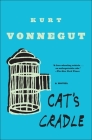
CAT'S CRADLE


Shop Indie Bookstores


Cat's Cradle, Kurt Vonnegut, Holt Reinhart and Winston, 1963, 192 pp


Summary from Goodreads:
Dr Felix Hoenikker, one of the founding 'fathers' of the atomic bomb, has left a deadly legacy to the world. For he's the inventor of 'ice-nine', a lethal chemical capable of freezing the entire planet. The search for its whereabouts leads to Hoenikker's three ecentric children, to a crazed dictator in the Caribbean, to madness. Felix Hoenikker's Death Wish comes true when his last, fatal gift to humankind brings about the end, that for all of us, is nigh...

My Review:

This is the fourth Vonnegut I've read and his fourth novel published. According to Wikipedia, "After turning down his original thesis in 1947, the University of Chicago awarded his master's degree in anthropology in 1971 for Cat's Cradle." I don't quite know what to make of this except that Vonnegut was 25 when he first wrote the story, that it is hard to imagine him in college, and that a writer's life is usually less than smooth.

In any case, I think this is my favorite novel of his so far. It made me laugh on a day when I needed to laugh. One of the main characters, Newton Hoenikker, is a son of the fictional co-inventor of the atom bomb, so that fit nicely with my recent reading of J Robert Oppenheimer's biography and helped dispel some of my atomic gloom.

Except it didn't really because this is an apocalypse tale, the world almost ends due to the mysterious substance ice-nine, and the underlying tone is gloom and hopelessness. These days people seem to be getting weary of apocalyptic novels but they have been around for decades. As a matter of fact, we and the planet are still here. Chicken Little? Or is it just taking longer to destroy the planet than was originally predicted? 

(Cat's Cradle is available in paperback by order from Once Upon A Time Bookstore.) 

Tuesday, May 25, 2010

THE MIND-BODY PROBLEM


The Mind-Body Problem, Rebecca Goldstein, Random House Inc, 1983, 275 pp


 I was so impressed by Rebecca Goldstein's recent 36 Arugments for the Existence of God, which I reviewed for BookBrowse, that I wanted to read her earlier novels. (She has five of them.) The Mind-Body Problem is her first and I found it great.

  Goldstein has a PhD in philosophy and is a professor of the subject. In this novel, as in her latest, she uses a story to demonstrate various philosophical views, which might not please a majority of readers but makes me very happy. I tried to take philosophy in college but gave up, finding the texts assigned incomprehensible. Forty years later, due to hard work on building my vocabulary, reading Will Durant's The Story of Philosophy and just living life, I am finally getting a clue about this huge subject.

 I am not sure a person could get much out of philosophy at age 20 and indeed Renee, the heroine of this novel, finds that to be so. She has been both brainy and beautiful in her young years but arrives at Princeton University in the 1980s for graduate work in philosophy and falls on her face. Her solution? She marries a math genius twenty-eight years her senior.

  That also goes badly but at least provides her  with a real life laboratory in which to work out her issues and her thesis: the mind-body problem. She is actually a fairly troubled young woman, due to her Jewish upbringing and her need for recognition and praise in order to feel like she matters. Luckily she is young and the sexual playing field is quite free and loose, being after the sexual revolution and before AIDS.

 Having grown up in Princeton, in awe of the university scene while I was in high school, having visited The Advanced Institute as a child, meeting Robert Oppenheimer and hearing tales about Albert Einstein, it was pure pleasure to be in that locale while reading the book. Goldstein describes it all so well, including the faculty parties, wives and rivalries. I also love stories about geniuses and the challenges of living with them.

  Somehow, even though Renee is hopelessly self-centered and stupidly reckless in many ways, I never disliked her as a character. I trusted that she would figure it out because she was so smart and actually did know her philosophy, if only intellectually. Living with a genius is tough as well as humorous. Renee suffers, grows up, and in a surprising climax, acquits herself well.


(The Mind-Body Problem is available in paperback, 36 Arguments for the Existence of God in hardcover, and The Story of Philosophy in mass market paperback, all by order from Once Upon A Time Bookstore.)

Friday, July 14, 2006

READING FOR MY LIFE: 1945

1945 is just two years away from the year of my birth: 1947. I have parents now, since they got married last year. I have two sets of grandparents, aunts and uncles and even some cousins. Three of my cousins are older than I am and we visited them every summer of my life, until I went away to college.

1945 is the war, the war, the war. This is not much different from the last two years, except that it is like March in a temperate climate. No matter how much it snows or how strong the bitter winds, you know that it is almost over and that spring is around the corner. At least, that is how I felt as I read book after book about THE WAR.

But I suspect for Americans, not to mention Europeans and Japanese, it was an exercise in hanging in there, being short of almost everything and dreading to find out that another one of your loved ones was dead. There was good news for the Allies as the year went by. Hitler had pretty much lost in Russia and was losing right there in Germany. FDR died on April 12 and Vice President Truman took over, but Generals Patton, Eisenhower and MacArthur were on a roll and didn't miss a beat. By April 30, the defeat of Germany was so complete that Hitler committed suicide and the remains of the German Army surrendered unconditionally on May 7. War ended in Europe on VE Day, May 8. The United Nations Charter was signed on June 26, excluding Spain. This had been FDR's main concern in the last months of his life: planning for peace and finding a way to prevent another world war.

In July, the first atom bomb was tested in the New Mexico desert, proving that we had the ultimate weapon. Less than a month later an atom bomb was dropped on Hiroshima, Japan, on August 6 and three days later on Nagasaki, wiping out both cities and killing over 100,000 people. World War II ended on August 14 as the Japanese capitulated, signing an unconditional surrender on September 2.

There were 45 million dead including 10 million from the Nazi camps. Even now, 61 years later, I feel a sensation of dread. Victory is victory, but I don't feel that it was sweet. Having created the hugest, most destructive war in the history of earth, having created a weapon capable of wiping out mankind, the peoples of earth destined themselves to live under a cloud of potential annihilation. I have lived my whole life under that cloud.

Most of the books I read from 1945 were about World War II in some way or about war and imperialism in other times. There were also books about women getting a new awareness of themselves as human beings and Blacks getting a new awareness of needing rights. These are both products of the war, because women went to work and Blacks went to war. Actually, women also went to war and Blacks also went to work making war materials.

In film, "Going My Way" won Best Picture, Best Director (Leo McCarey) and Best Actor (Bing Crosby.) "Gaslight" took Best Actress (Ingrid Berman.) Popular songs included "Sentimental Journey," "Rum and Coca Cola," "There! I've Said It Again," and "On the Atchison, Topeka and the Santa Fe." "Carousel" was the top musical comedy and bebop was the latest jazz craze.

Vitamin A was synthesized, but the big news in science and technology was the first atom bomb being successfully detonated outside Alamogodo, NM. At some point in my childhood, growing up in Princeton, NJ, I was taken by a German friend of my parents to meet Oppenheimer. I remember a very sad and troubled man, who had no idea how to atone for what he had helped create.

The United States federal government tried to make the transition from a war-time to a peace-time economy less drastic than after WW I, but according to my parents, it was still tough and economics were confused. My dad was discharged from the army in the spring of this year, right after the war in Europe was won. His last duties involved renegotiation of government contracts and traveling to companies around the US.

When my parents left Philadelphia, where my dad had been stationed, they moved their belongings to his parent's home in Pittsburgh, PA, and then took a trip in the family car to visit old friends at Valparaiso University, their alma mater, and in Grand Blanc, MI where my mom used to teach. Then Daddy went back to work for US Steel in Pittsburgh and they moved in with his parents. My dad missed out on all pay raises while he was in the service and returned at his former salary.

My mom began the battle with her mother-in-law, which went on for as long as they lived in Pittsburgh. They ran the house together while my dad and grandfather went to work and brought home the income. I have a feeling that those four years of living with her in-laws were some of the unhappiest years of my mom's life. It was a classic case of no woman being good enough for my grandma's first born son, plus the fact that my dad was very close to his mother. My grandma and grandpa were alcoholics after 5:00 pm every day, which was shocking to my mom. The two women had differences about cleaning, cooking and raising babies. But more about that later.

I get the feeling that there was plenty of confusion in American life in this year and the next, as soldiers came home and re-entered civilian life. In the literature of 1945 there is nothing about the bomb, but I predict that will come in the next few years along with all the Holocaust literature. Though Americans must have generally felt that they did the right thing in putting a stop to Hitler and fascism and Japanese aggression, though they must have been proud of helping to win the war, already in meetings of world leaders it was becoming apparent that though Russian was one of the Allies during the war, they had a different plan for the future than the United States did. The Cold War, which will be a major topic in the 1950s, began right away even if it was not yet called by that name.

The stage is set for rapid change. Never again will the United States practice isolationism. The map of Europe was changed once again, but the countries, no matter what they were called, were in ruins. Other strong issues were prejudice against Jews and Blacks, fear of Communism and economic reorganization. My dad and possibly my mom were aware of antisemitism and racism and not in favor of either. Especially my dad had picked up plenty of ideas about these areas of life in college from reading several liberal Christian publications. My sisters and I were raised to abhor intolerance of other religions and racial prejudice. I found these ideas in the books of 1945.

The big question was, where do we go from here? It has been the question of my lifetime and many have come up with possible solutions and scenarios. I have been involved in several of these. Having now read the fiction from 1940 to 1945, I am beginning to see the ways that history and my parents' views set me on such a path.

Monday, March 27, 2017

READING LIST FOR 1962


Last night I completed my reading list for 1962! Including some books I read earlier, I read a total of 60 books published in that year. My lists keep getting longer as I find more authors to follow. The 1940s lists averaged 25 books; 1950s averaged 35; and then the lists explode in the 1960s. I also have become a reading fool since I retired, joining reading groups, reading more current books, and participating in challenges. It took me two years to read the 1962 list. If I am ever going to complete My Big Fat Reading Project, some changes will have to be made.

The project is essentially research for an autobiography I have been working on for many years. So far I have covered 4 years of my parents' life before I was born in 1947 and the first 12 years of my life. I try to keep ahead a bit on the reading lists and it is equal parts fun and hard work. Since I will turn 70 this year, I have a long way to go and who knows how far I will get. I love the whole endeavor and I feel I am getting the education I always wanted and did not get in school. Because my purpose in writing the autobiography is to leave a record for my descendants rather than to publish, it suits my independent spirit!
 
If you know of any important books I missed for 1962, please leave those titles in the comments.

As I have done (sporadically) since I started this blog, I hereby post the list in full. Most of the books on the list are reviewed on the blog. You can use the search function in the upper left corner to find those reviews.
 
PS: I just did a search of the blog and discovered that I have not posted all the lists for all the years I have read so far. It seems I am a somewhat careless blog administrator. One of these days I will fix that, so stay tuned.

READING LIST FOR 1962
BESTSELLERS

1.    *Ship of Fools, Katherine Anne Porter
2.    *Dearly Beloved, Anne Morrow Lindbergh
3.    *A Shade of Difference, Allen Drury
4.    *Youngblood Hawke, Herman Wouk
5.    *Franny and Zooey, J D Salinger
6.    *Fail-Safe, Eugene Burdick and Harvey Wheeler
7.    *Seven Days in May, Fletcher Knebel and Charles W Bailey II
8.    *The Prize, Irving Wallace
9.    *The Agony and the Ecstasy, Irving Stone
10.                  *The Reivers, William Faulkner

OTHERS

1.    *PULITZER: The Edge of Sadness, Edwin O’Connor
2.    *NEWBERY: The Bronze Bow, Elizabeth George Speare
3.    *CALDECOTT: Once a Mouse, Marcia Brown
4.    *NBA: The Moviegoer, Walker Percy
5.    *HUGO: Stranger in a Strange Land, Robert A Heinlein
6.    *EDGAR: Gideon’s Fire, J J Marric
7.    *Another Country, James Baldwin
8.    *Ararat, Stella Wilchek
9.    *Aura, Carlos Fuentes
10.                  *The Autobiography of Upton Sinclair, Upton Sinclair
11.                  *Autumn Quail, Naguib Mahfouz
12.                  *Big Sur, Jack Kerouac
13.                  *The Bull From the Sea, Mary Renault
14.                  *A Clockwork Orange, Anthony Burgess
15.                  *Cover Her Face, P D James
16.                  *The Cry of the Owl, Patricia Highsmith
17.                  *The Death of Artemio Cruz, Carlos Fuentes
18.                  *The Drowned World, J G Ballard
19.                  *Fire on the Mountain, Edward Abbey
20.                  *The Foragers, Ben Haas
21.                  *Ginger, You’re Barmy, David Lodge
22.                  *The Golden Notebook, Doris Lessing
23.                  *Henry and the Clubhouse, Beverly Cleary
24.                  *In Evil Hour, Gabriel Garcia Marquez
25.                  *King Rat, James Clavell
26.                  *Letting Go, Philip Roth
27.                  *The Lonely Girl, Edna O’Brien
28.                  *A Long and Happy Life, Reynolds Price
29.                  *Love and Friendship, Alison Lurie
30.                  *The Moonflower Vine, Jetta Carleton
31.                  *The Moon Spinners, Mary Stewart
32.                  *A Murder of Quality, John le Carre
33.                  *One Day in the Life of Ivan Denisovich, Alexander Solzhenitsyn
34.                  *One Flew Over the Cuckoo’s Nest, Ken Kesey
35.                  *Pale Fire, Vladimir Nabokov
36.                  *The Planet Savers, Marion Zimmer Bradley
37.                  *The Pyramid Climbers, Vance Packard
38.                  *Reinhart in Love, Thomas Berger
39.                  *Restless Spirit, Edna St Vincent Millay, Mirian Gurko
40.                  *Sex and the Single Girl, Helen Gurley Brown
41.                  *Silent Spring, Rachel Carson
42.                  *The Slave, Isaac B Singer
43.                  *Something Wicked This Way Comes, Ray Bradbury
44.                  *A Summer Birdcage, Margaret Drabble
45.                  *The Sword of Aldones, Marian Zimmer Bradley
46.                  *The Time of the Doves, Merce Rodoreda
47.                  *Travels With Charley, John Steinbeck
48.                  *An Unofficial Rose, Iris Murdoch
49.                  *We Have Always Lived in the Castle, Shirley Jackson
50.                  *The Wolves of Willoughby Chase, Joan Aiken

MISC: Nobel: John Steinbeck
Research: American Prometheus: The Triumph and Tragedy of J Robert Oppenheimer, Martin J Sherwin and Kai Bird