Showing posts sorted by relevance for query here comes the sun. Sort by date Show all posts

Monday, December 31, 2018

HERE COMES THE SUN


Support Independent Bookstores - Visit IndieBound.org


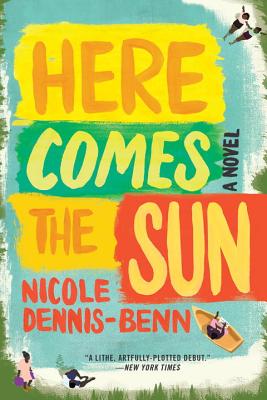
Here Comes the Sun, Nicole Dennis-Benn, WW Norton & Company, 2016, 345 pp
 
 
For my last review of 2018, I bring you this amazing debut novel. It was the September, 2016 selection of the Nervous Breakdown Book Club, a subscription and a case for why I continue to subscribe there, because I get books I might otherwise not have heard of let alone read. 
 
I went from reading The After Party directly to Here Comes the Sun, only to find that it is another novel about a mother trying and failing miserably to protect her daughter, in this case two daughters. This time though the setting is Jamaica and the social strata is near the bottom instead of the top. Also, the older sister tries and fails to protect the younger though in different ways than the two best friends in The After Party. Those similarities made me think about how human frailties show up just about everywhere and in many kinds of lives.

For many upscale Americans, Jamaica is a tourist destination and that fact plays a part in the story. For many indigenous Jamaicans their island country, still part of the British Commonwealth, is a mix of those involved with a growing economy and those struggling to move out of poverty. The family in the novel represents that same mix.

Margot, the older sister, was taught by her single mother to trade sex for survival. She has a mid-level job at a resort hotel but her main earnings come from late night sexual encounters with hotel guests. At that she is supremely successful and she uses those earnings to ensure her younger sister Thandi finishes at her private Catholic high school and goes to college and beyond to become a doctor. No one asks Thandi if she wants this but it seems to be the best way to give her a chance at life, higher social status and security.

The plan goes right off the rails. Here Comes the Sun is a tragedy of large proportions. Not one of these three females gets what she wants despite Herculean effort. Not a novel for those who like happy endings where hard work, intelligence and talent pay off for women. It is however another true picture of the failure of post-colonial globalism and interference by foreign governments.

Why read it? Because the writing is incredibly good and it is a microcosmic story showing the shameful underside of our supposedly wonderful, prosperous, democratic macrocosmic world. 

Yet Nicole Dennis-Benn is so far having a happy ending. She was born and raised in Jamaica but emerged from the underside and now lives, writes and teaches in Brooklyn, happily married to her wife. Her second novel, Patsy, will be published in 2019. I will read it!


(Here Comes the Sun is available in paperback by order from Once Upon A Time Bookstore.)

Wednesday, July 19, 2006

BOOKS READ FROM 1946, PART ONE

The King's General, Daphne duMaurier, Doubleday & Company Inc, 1946, 369 pp
I started my reading for 1946 with the #1 bestseller of the year. It is historical fiction which concerns war. The time is 1640s and Parliament in England has created a Civil War in an effort to oust King Charles I. Basically merchants have risen up against the landed gentry and with Cromwell as their leader, want reforms.

The characters in this book are Royalists, fighting for the King and are mostly inhabitants of Cornwall. The main character, Honor, written in first person, takes the viewpoint that war has ruined their way of life. She had been betrothed to Richard Grenville, a wild and uncontrollable fellow, who becomes a general in the King's army. But Honor is crippled in an accident and refuses to marry him because of it, thought their love is true and strong. Ah, romantic fiction.

As the story progresses, she remains his "woman", a scandal in those times. She learns that his character is quite flawed and of course they are doomed. It is a good story and kept me reading. The tone is sadness and loss and duMaurier puts you right there in the period. The message is that war solves nothing, only creates destruction and it is definitely from a woman's point of view.


This Side of Innocence, Taylor Caldwell, The Sun Dial Press, 1946, 499 pp
This was the #2 bestseller of 1946. I am not a big fan of Taylor Caldwell because her books are long, wordy and very melodramatic. This one was no exception. The story revolves around a family in New York State from 1868 to 1888. They are a banking family in the small town of Riversend. Jerome (son of William) and his cousin Alfred (who was adopted into the family) have been rivals and enemies from childhood. They fight over a woman and though Jerome wins her, they remain enemies to the end.

The characters are stereotypes, the descriptions are endless and the resolution of it all is somewhat improbable. The author has truths to tell: about personalities, insanities, the state and character of the United States as it grows and changes. They are sound truths, but I wondered why the book was so popular. The melodrama must have appealed to women readers. I read The Emperor of Ocean Park, by Stephen L Carter around the same time that I read this book. Carter's book was a bestseller in 2002 and I think This Side of Innocence was its 1946 equivalent.


The River Road, Frances Parkinson Keyes, Julian Messner Inc, 1945, 622 pp
Overall I had a very good time reading the books for 1946 and this book, at #3 on the bestseller list, was one of the reasons. It took a long time to read. The print was very small, so it was probably more like 1200 pages, and the writing is loaded with description and historical data, but it was an incredibly good story.

The River Road runs along the Mississippi River between New Orleans and Baton Rouge, Louisiana. It was originally a long series of sugar plantations, mostly owned and worked by Creole people, who became a kind of aristocracy in the region with fixed customs and social pretensions.

As the story opens, it is 1918. A son of one of these families comes home from World War I a hero and marries a "common" girl. The grandmother, a neurotic hypocondriac and matriarch of the family, rules with an iron will but cannot prevent social changes in the world. The sugar industry has a couple of disastrous decades between the two world wars and if it hadn't been for new blood marrying in, this plantation would have died away like most of those around it did. So it is the story of the struggle to hold on, what that struggle does to the various characters and how the next generation carries on. This IS the story in the 1940s.

The book ends as World War II is ending. Merry, the "common" girl who married into the family, has an entire story herself. She is very talented and really the woman behind the man, but after too many heartbreaking experiences, she leaves the man and has eight years in Paris and New York as an executive in a department store chain.

In the end, she returns to her family and takes up her wifely, motherly and womanly duties, but she never has happiness again. Thus it is also the story of youth, starting out with hopes and loves, getting beaten down by life and passing the torch to the new generation.

This author writes most of her novels in a New Orleans setting and in this book, she brought the River Road to life so completely for me that I wanted to go to Louisiana and drive it. It is still on the map in my road atlas. I did not follow up on my impulse and how sad is that, because I am sure that after Hurricane Katrina, the River Road is not the same.


The Miracle of the Bells, Russell Janney, Prentice-Hall Inc, 1946, 511 pp
Here we have the #4 bestseller of the year and although it is sappy and melodramatic beyond belief, the author pulled it off and had me loving every minute. It is a story of hope, of the power of God working through human beings to better conditions and about the basic goodness of man.

A young girl from a coalmining town in Pennsylvania, makes it to Hollywood, films a highly successful picture and then dies of TB, which she had contracted in her youth in Coaltown. Her friend, Bill Dunnigan, a publicity man for New York and Los Angeles entertainment, takes her body home to be buried. Using his PR skills, he basically remakes the town. People cross all religious and class lines to work together, the villains get transformed into heros and everybody wins.

The story is told so well, it is almost believable. It is the hope of man and I think that is what America was dreaming of after World War II.


The Hucksters, Frederic Wakeman, Rinehart & Company Inc, 1946, 307 pp
Now at #5 comes the other side of the picture as far as public relations goes. The book is contemporary for 1946. The war is going on, but Victor Norman has just left the Office of War Information and come back to New York. He is a radio promotion man, very confident and competent. His biggest asset is that he doesn't give a damn, while everyone else in the business kisses ass continuously.

He gets a great job in an advertising firm which takes him to Hollywood, where he falls in love with a married woman whose husband is off fighting the war. It was a good portrayal of the industry, showing how radio is driven by the sponsors and how crazy that world is. It was a good tale about a hard-boiled man finding love and almost losing his free-spirited approach to life.

The love affair was the weakest writing in the book, but is probably what made it a bestseller because it was undoubtedly racy for its time.
Sunday, January 27, 2019

DIRTY BLONDE AND HALF-CUBAN


Support Independent Bookstores - Visit IndieBound.org


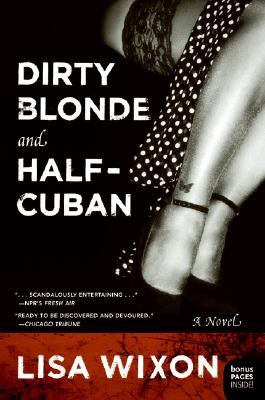
Dirty Blonde and Half-Cuban, Lisa Wixon, HarperCollins, 2005, 298 pp
 
 
I read this for my One Book At A Time reading group. We all mostly are drawn to a Cuban setting but due to some reviews I read, I had my doubts this time. So much so that I almost skipped the whole enterprise. I am glad I didn't.
The writing is not great, at least for a novel format. As it turns out, the author had a series on Salon.com called "Havana Honey," loosely based on her experiences in Cuba. She developed that into a novel which explains the writing style to me.

Alysia Briggs, a privileged American young woman, bound for college and a career in diplomacy, had made a death bed promise to her mother to find her real father, who is Cuban. The summer before starting college she decides to go and fulfill her promise. At the time, travel between America and Cuba is heavily restricted but her American "father" pulls some strings.

Alysia arrives in Cuba and all the cash she brought with her is promptly stolen. Because she is on a two month student visa, she is not allowed to have a job. She quickly learns that not much in Cuba is as it seems, that many women (and men) have a second job as sex workers, and she ends up joining them as a way to make some cash. She makes a friend who is a surgeon by day, earning less than $100 a week, and is one of the "jineteras" on the side. The woman becomes her mentor. Their clients are wealthy tourists.

In some ways the novel is a companion to my recently read Here Comes the Sun by Nicole Dennis-Benn. Except while that book was sad this one is more lighthearted. Eventually I got involved in all of Alysia's adventures as she learned the trade while continuing to search for her real father.

Most of all I liked the story for its look into what life in Cuba was like in the early 2000s. It was eye-opening! I also learned that not all sex workers are abused slaves, as the news would suggest. Not that I don't abhor the practice of indentured women; I do. However, since the beginning of time, women have practiced prostitution as a solution to making a living. I have decided that the distinction is worth making. In any case, what has happened to the Cuban people is the bigger crime.

Once again I took a chance on a book and came away with new knowledge about the world.

Sunday, March 05, 2006

BOOKS READ FROM 1942, PART FOUR

The High Window, Raymond Chandler, Alfred A Knopf, 1942, 265 pp
This is Chandler's next book after Farewell, My Lovely. It is good but lacking in the tension and danger in the earlier books. It is as if Chandler has become world-weary and just has a job to do as a writer. There is less biting sarcasm and Marlowe drinks less. But it is still a good mystery about a missing coin, a dark family secret and the usual tie-in between the rich and the underworld in Los Angeles.


Dragon's Teeth, Upton Sinclair, The Viking Press, 1942, 631 pp
Here is the third in the Lanny Budd series. Lanny moves on through his life. At the end of the last volume, Lanny had married an heiress named Irma. Dragon's Teeth starts with the birth of their daughter. The book is slow at first but then picks up and is good to the end. It covers the rise of Hitler and his persecution of the Jews; one of the first books I read in the 40s that addresses this subject. Lanny has been a friend of Johannes Robin, a Jew, for many years. The Robin family lives in Germany and real trouble besets them in this book. Lanny finally takes action and gets the whole family out of Germany, almost at the cost of his marriage. So the final section is full of danger, excitement and suspense. This series of books did not continue the fame Sinclair had in the 1930s for his muckraking book, although Dragon's Teeth did go on to win the Pulitzer Prize in 1943. Ultimately there will be 10 volumes and it is the best education I've ever had about American and European history in the early 20th century.


Go Down, Moses, William Faulkner, Random House, 1942, 384 pp
This is a collection of related short stories and one novella, all of which take place in Faulkner's invented county. The stories move through time and generations and most of the characters are related, one set on a line of white descendants, one black. But of course the black is mixed with white and even Indian. It is a complex web of relationships: man to woman, white to black, master to slave/free negro.

Much of the book has to do with hunting in an area of shrinking wilderness. In his inimitable way, Faulkner deals with these relationships which also include man's relation to animals and places. He is trying to make sense of a place created by God, peopled by God, but essentially destroyed by people. Somehow, I found this volume the most accessible of all the Faulkner I've read so far.

Now for the prize winners:
Pulitzer Prize:
In This Our Life, Ellen Glasgow, Harcourt, Brace and Company, 1941, 467 pp
I was looking forward to this book because I had loved Barren Ground, the earlier book by this author, and this one won the Pulitzer. It turned out to be an OK story but the writing was really bland.

Asa Timberlake is a middle-aged man in a bad marriage with a low paying job and two daughters approaching their twenties. He feels trapped and emasculated because they live off handouts from his wife's rich uncle. The daughters have all kinds of trouble with men. One of them is like Asa and one is selfish like Asa's wife. Much of the book is endless, bad dialogue about it all.

Finally in the end Asa stands up for what he thinks is right and you are left with a bit of hope for him and for the one daughter. The message is that most people are either weak or greedy; that the ones who are a little stronger take care of the weak at the expense of themselves. That would perhaps be a bearable message if the writing were better.


Newbery Medal
Adam of the Road, Elizabeth Janet Gray, The Viking Press, 1942, 317 pp
A very fine book. Adam is the son of Roger the Minstrel in England, 1294. During one year of his life, Adam is traveling on the road with Roger, their horse and their dog Nick, a red spaniel. They meet up with many adversities including losing the horse and Nick. An evil minstrel won the horse off of Roger, who has an unfortunate gambling habit. After riding the horse until he is lame, the evil minstrel then steals the dog.

Adam, in running down his beloved spaniel, gets separated from his father and has more adventures before they are all reunited. Adam is eleven years old and has the attributes of a boy that age but he is also brave and determined: a budding hero.

I thrilled to life on the road and the minstrel's craft, having done some touring myself as a singer/songwriter. I loved this quote, spoken by Roger the Minstrel: "A road's a kind of holy thing. That's why it is a good work to keep a road in repair, like giving alms to the poor or tending the sick. It's open to the sun and wind and rain. It brings all kinds of people and all parts of England together. And it's home to a minstrel, even though he may happen to be sleeping in a castle."


Caldecott Medal
The Little House, Virginia Lee Burton, Houghton Mifflin Company, 1942, 40 pp
This is the story of a house, which is built in the country by a man who wants it to stay in the family for generations to come. The house enjoys the seasons but wonders what the city is like. Eventually the city grows and encroaches on the country until the little house is surrounded by the city, abandoned and run down.

Finally a great-granddaughter comes along, has the house moved out into the country again, restores it and lives there. The message that the country is better than the city is a nostalgic theme in the 1940s. This is the type of picture book that was read to me as a child and in my 20s I would become a hippy and live in old houses in the country.

Saturday, February 15, 2020

READING LIST FOR 1964


I finally finished my reading list for 1964. As most of you know, in 2005 I began what I call My Big Fat Reading List. It entails reading the top 10 bestsellers, the award winning novels, and a selection of authors I chose to follow through the years. It is a huge, possibly impossible to complete, project which is the major part of my research for writing a book about my life as it relates to the literature of the years I have lived.

This list is one of the longest so far and it took me from April 2018 to January 2020 to get through it. I post the list for you here because I know some of my followers are interested in my project. In 1964 I finished my junior year of high school and began my senior year. It was a momentous year in the United States as well as around the world, but fiction tends to lag behind the news because it takes longer to write. So, no books about the Beatles yet!

BESTSELLERS

1.    The Spy Who Came in from the Cold, John le Carre
2.    Candy, Terry Southern and Mason Hoffenberg
3.    Herzog, Saul Bellow
4.    Armageddon, Leon Uris
5.    The Man, Irving Wallace
6.    The Rector of Justin, Louis Auchincloss
7.    The Martyred, Richard E Kim
8.    You Only Live Twice, Ian Fleming
9.    This Rough Magic, Mary Stewart
10.                  Convention, Fletcher Knebel and Charles W Bailey II


OTHERS

1.                 PULITZER: No award
2.                 NEWBERY: It’s Like This, Cat, Emily Cheney Neville
3.                 CALDECOTT: Where the Wild Things Are, Maurice Sendak
4.                 NBA: The Centaur, John Updike
5.                 HUGO: Way Station, Clifford Simak 
6.                 EDGAR: The Light of Day, Eric Ambler
7.                 Arrow of God, Chinua Achebe-Nigeria
8.                 Black Hearts in Battersea, Joan Aiken
9.                 The Bloody Sun, Marion Zimmer Bradley
10.             The Book of Three, Lloyd Alexander
11.             Charlie and the Chocolate Factory, Roald Dahl
12.             Clans of the Alphane Moon, Philip K Dick
13.             The Drought, J G Ballard
14.             Encyclopedia Brown Boy Detective, Donald J Sobol
15.             Farnham’s Freehold, Robert A Heinlein
16.             Flight of a Witch, Ellis Peters
17.             Flood, Robert Penn Warren
18.             For the Good of the Cause, A Solzhenitsyn
19.             The Garrick Year, Margaret Drabble
20.             Girls in Their Married Bliss, Edna O’Brien
21.             The Glass Cell, Patricia Highsmith
22.             Harriet the Spy, Louise Fitzhugh
23.             If Morning Ever Comes, Anne Tyler
24.             The Italian Girl, Iris Murdoch
25.             Julian, Gore Vidal
26.             A Kind of Anger, Eric Ambler
27.             Last Exit to Brooklyn, Hubert Selby, Jr
28.             Little Big Man, Thomas Berger
29.             The Little Girls, Elizabeth Bowen
30.             A Moveable Feast, Ernest Hemingway
31.             The Old Boys, William Trevor
32.             The Old Man and Me, Elaine Dundy
33.             A Personal Matter, Oe Kenzaburo
34.             Queen’s Play, Dorothy Dunnett 
35.             The Ravishing of Lol Stein, Marguerite Duras
36.             Ribsy, Beverly Cleary
37.             The Shadow of the Sun, A S Byatt
38.             Shepherds of the Night, Jorge Amado
39.             The Silence of Herondale, Joan Aiken
40.             Sometimes A Great Notion, Ken Kesey
41.             The Spire, William Golding
42.             Star Watchman, Ben Bova
43.             The Two Faces of January, Patricia Highsmith
44.             A Very Easy Death, Simone de Beauvoir
45.             The Wapshot Scandal, John Cheever
46.             Web of the Witch World, Andre Norton
47.             With Shuddering Fall, Joyce Carol Oates
48.             The Woman in the Dunes, Kobo Abe


What were you doing in 1964? Were you even born yet? Have you read any of these books? 

Wednesday, March 01, 2006

BOOKS READ FROM 1942, PART TWO

Windswept, Mary Ellen Chase
This book was on the 1941 list at #10. This year it was at #6. You can read my comments on it at Books Read From 1941, Part Two, posted on February 18, 2006.


The Robe, Lloyd C Douglas, Houghton Mifflin Company, 1942, 556 pp
I read this book when I was younger, possibly college age, but only vaguely remembered it. Here it is at #7 on the list for 1942. It is fairly well written but a little too obviously a Christian polemic disguised as an adventure/love story. A Roman soldier comes by the robe that Jesus wore on his way to Calvary and it has an inexplicable power which leads the soldier to become a Christian. At times the story moved well, at other times it dragged and the dialogue was only mediocre.

Similar to other books of this time, it is a call to peace, to goodwill and a picture of the destructive results of power-mad imperialist rulers. For that, I applaud Douglas.


The Sun Is My Undoing, Marguerite Steen.
This one was also on the 1941 list at #4. In 1942 it came in at #8. I wrote about it in Books Read From 1941, Part One on February 18, 2006.


King's Row; Henry Bellamann; Carroll & Graf Publishers, Inc; 1940, 674 pp
At #9 on the bestseller list of 1942, this was a big favorite of the year for me. King's Row is a town somewhere in the southern midwest. The book is long, it is completely gripping, the characters are real and get into your head. Parris Mitchell comes of age in the novel. He is raised by his grandmother, an independent, European woman. He becomes a doctor and an early type of psychiatrist, though Bellamann never uses that term. Parris suffers many loses, but has great teachers. He is a loyal friend, an honorable person (what I would call a fine human being) and influences many lives for the better.

Also running through the book is the concept of how a town takes on a life apart from the lives of its individual residents and this group life is powerful, carries its own history and is hard to kill. Parris is one of those heros I have found so often in the literature of the 1940s. I find these characters so admirable and in such short supply in today's world. I wonder if such heros really lived and breathed in those days or were only an ideal found in fiction.


The Keys of the Kingdom, A J Cronin
One last holdover from 1941, this year at #10, down from #1 in 1941. This will be the last year that so many books stayed on the bestseller list from one year until the next, because by the end of the 1940s, the book business was changing along with everything else. You can find my comments on this one in Books Read From 1941, Part One posted on February 18, 2006.

In my next post I will take up several of the other books I read from 1942, though they were not necessarily bestsellers.