Tuesday, August 29, 2017

THE TRESPASSER


Support Independent Bookstores - Visit IndieBound.org


The Trespasser, Tana French, Viking, 2016, 469 pp
 
 
For much of Tana French's latest Dublin Murder Squad mystery, I was worried she was going to let me down for the first time. Antoinette Conway, who was introduced in the previous book, The Secret Place, has such a huge chip on her shoulder about being the only woman on the squad, relegated to the night shift with its domestic cases and drunken brawls as the usual cases.
 
It is true she is the brunt of much male derision including practical jokes, but any woman learns all the way back on the playground that if you let the bullies know they are getting to you, they will only go after you harder. Antoinette tries to stuff it, but her attitude spills out all over and you just want to give her some good feminist advice.

One night the case she has been waiting for ever since she began her career in law enforcement comes straight from the gaffer (Irish slang for boss) though at first it looks like another murder due to domestic violence, has a scarcity of provable evidence and her nemesis, the slimy Breslin, is assigned as "back up." Despite the unfailing cheerfulness and patience of her partner Steve, the two of them go running down so many blind alleys until it looks like Ms Conway will end up losing her job.

Like any Tana French mystery the twists and turns seem endless, even including possible corruption within the squad. I was not let down, only tested. Clever of her to test her readers as much as the case tested Antoinette. In fact, I think the final pages of The Trespasser are above and beyond anything she has done before.

(For Tana French geeks, I found this killer link with a chart of the investigators featured in each book, as well as thoughts about whether or not they need to be read in order.


(The Trespasser just came out in paperback this month and is available by order from Once Upon A Time Bookstore.)

Sunday, August 27, 2017

LEAVING CHEYENNE


Support Independent Bookstores - Visit IndieBound.org


Leaving Cheyenne, Larry McMurtry, Harper & Row, 1963, 253 pp
 
 
I love Larry McMurtry. He can get as sentimental as Charles Dickens does and it never bothers me. This was his second novel. Gideon Fry loves Molly, but so does his best friend Johnny McCloud. Molly loves them both but marries someone else. Meanwhile she sleeps with both of them on the side and bears each one a son.

Gideon, son of a rancher, stands to inherit his father's place. Johnny doesn't like to work for anyone else, styling himself as a free-ranging cowboy, but whenever he is out of money he works on the Fry ranch. He and Gideon have been best friends since they were kids. Molly loves men, loves sex, yet is stuck on her drunk of a father's farm taking care of him.

The story follow these three from birth into their sixties and each has a turn at telling how their lives
intertwined. Nothing turns out the way they planned but they are always connected. Each one in various ways is about as lonely as a person can get. 

I started the Tales of Texas theme with News of the World and it continues. The state is so big it could probably hold all the stories of the world and so big that possibly everyone in it is lonely to some degree or other. The stories of these three lives in the first half of the 20th century in north Texas, where the work and the heat and the wind and the dust were continuous, where electricity and cars came late, happen in a place where a person could live pretty much by his or her own inclinations. It has a bit of everything; humor, tragedy, friendship, adventure and some of the best conversations you will ever read. Most of all it is about love in all its oddity.
 
I laughed, I cried, I wanted to take each character and give them a good shaking, but each one would have done what they wanted anyway. I loved each one equally and I think they loved each other equally, so the love triangle could only be broken by death. Somehow the book was good for me, as all of McMurtry's books have been.


Thursday, August 24, 2017

ILL WILL


Support Independent Bookstores - Visit IndieBound.org


Ill Will, Dan Chaon, Ballantine Books, 2017, 458 pp
 
 
Summary from Goodreads:
Two sensational unsolved crimes—one in the past, another in the present—are linked by one man’s memory and self-deception in this chilling novel of literary suspense from National Book Award finalist Dan Chaon.

“We are always telling a story to ourselves, about ourselves,” Dustin Tillman likes to say. It’s one of the little mantras he shares with his patients, and it’s meant to be reassuring. But what if that story is a lie?

A psychologist in suburban Cleveland, Dustin is drifting through his forties when he hears the news: His adopted brother, Rusty, is being released from prison. Thirty years ago, Rusty received a life sentence for the massacre of Dustin’s parents, aunt, and uncle. The trial came to symbolize the 1980s hysteria over Satanic cults; despite the lack of physical evidence, the jury believed the outlandish accusations Dustin and his cousin made against Rusty. Now, after DNA analysis has overturned the conviction, Dustin braces for a reckoning.

Meanwhile, one of Dustin’s patients gets him deeply engaged in a string of drowning deaths involving drunk college boys. At first Dustin dismisses talk of a serial killer as paranoid thinking, but as he gets wrapped up in their amateur investigation, Dustin starts to believe that there’s more to the deaths than coincidence. Soon he becomes obsessed, crossing all professional boundaries—and putting his own family in harm’s way.
 
 
My Review:
As you already know, I don't mind being roughed up by the novels I read. Ill Will however came close to being too much, even for me. I admit I was already in a precarious emotional state due to real life issues during the days I spent reading the novel, but still.

It is unrelentingly dark and creepy. Adopted brother Rusty is one sick dude though possibly rightly so considering his history. The murdered parents were heavy drinkers and acted like inbred trailer trash, leaving behind three completely traumatized kids. The modern kids, sons of Dustin, and their friends are deep into drugs, including heroin! Dustin's wife dies of cancer. 

Lots of killers in this story: murderers, Satanic cults, drugs, cancer. So many characters confused about identity. So many lies. The writing is good enough though sometimes I felt more like I was reading overwrought Facebook posts and toxic tweets than reading a novel.

I get it. There is an underbelly to our culture, living right next to us, even in our towns and neighborhoods. Psychological thrillers and mysteries can take us away from the dull, monotonous days of repeated chores and duties. What if there is no redemption but only more death, confusion, and damaged people? Without a shred of humor?
 
I was impressed with the author's previous novel, Await Your Reply, so was anticipating this new one. Dan Chaon, you may have gone too far.


(Ill Will is available in hardcover by order from Once Upon A Time Bookstore.)
 

Tuesday, August 22, 2017

MORTE D'URBAN


Shop Indie Bookstores


Morte D'Urban, J F Powers, Doubleday, 1962, 336 pp


I had not heard of this author before. I read the novel because it won the National Book Award in 1963. This award was created in 1950 and I have read all the winning books from then up through 1963. Many were great; some challenged my idea of what I consider a great novel. Morte D'Urban, the third novel concerning priests from my 1963 list, was a stand out.

Father Urban is quite a character. I am a bit hazy on how he became a priest. It was well explained in the novel but I just don't remember it that clearly. In any case, it was a rash decision that left him conflicted for the rest of his life, but he did his best to perform the role despite the lowly status of the religious order to which he belonged.

His intelligence, his grasp of worldly matters and his genuine love of people are what got him through. One of his duties is fund raising which entails plenty of humorous moments. The author, who wrote only Catholic fiction, seems to have been unusually clear eyed regarding the challenges of living a dedicated religious life in our materialist culture.

Now that I think about it, this conflict between the world and the priest is almost always a theme in any religious fiction I have read so apparently it is a known issue.

Morte D'Urban has a sorrowful ending and I could see it coming as I read. A sign of good fiction for me is that I become deeply invested in the protagonist's plight. That happened for me in this smartly perceptive novel about the life of a priest in mid 20th century America. 

It was the best of the three novels about priests in 1963, The Shoes of the Fisherman and Grandmother and the Priests being the other two.

I have now finished the Award Winners section of my 1963 list and am moving into the part of that list curated by me.

Here are the prize winners I read:
 
1.    PULITZER: The Reivers, Faulkner
2.    NEWBERY: A Wrinkle in Time, Madeleine L’Engle
3.     CALDECOTT: The Snowy Day, Ezra Jack Keats
4.    NBA: Morte D’Urban, J F Powers
5.    HUGO: The Man in the High Castle, Philip K Dick-
6.    EDGAR: Death and the Joyful Woman, Ellis Peters


(Morte D'Urban is available in paperback by order from Once Upon A Time Bookstore.)


Friday, August 18, 2017

NEWS OF THE WORLD


Shop Indie Bookstores


News of the World, Paulette Jiles, William Morrow, 2016, 209 pp


I loved this book! It is historical fiction set in Texas during the years after the Civil War. In my last review I mentioned prevailing themes. This one also falls in the Girls Gone Grit theme, but another one is developing. I will just call it Tales of Texas.

The characters in this novel are outlandish, of course, because it is Texas but they became so real to me, I felt I could reach into the book and touch them. The grit girl is Johanna Leonberger who was captured by a band of Kiowa Indian raiders after they slaughtered her parents and sisters. She was raised as a Kiowa child from the age of six. Now she is 10 and has been recovered by the United States Army.

Apparently this was a common occurrence in frontier areas. In fact, one of the main characters in The Son, by Philip Meyer, a difficult novel set in Texas that I read a few years ago, was such a person. News of the World is, in part, a story of the psychological effect of this trauma, capture, becoming Native American, and then the culture shock of returning to the White settler life.

Captain Kidd is an aging widower, veteran of three wars, who has become a drifter traveling north and south through central Texas. He gives readings from newspapers for which he charges his listeners. In remote towns where newspapers often do not penetrate and where the inhabitants are barely literate, his audiences gather and pay their dime, hungry for news of the world. 

One day, in Wichita Falls, Texas, near the southern border of what was still Indian Territory but is now Oklahoma, he is offered a sizable sum to deliver Johanna to her people near San Antonio, four hundred miles away. He accepts the task.

Most of the story follows their arduous journey. Somehow Captain Kidd must keep making money from his readings, care for a little girl who is wild, speaks no English, won't wear shoes, and gets wigged out if she has to be indoors for any length of time. Despite all the dangers, lawlessness, thieves, and a dastardly trio of cutthroats who are trying to get Johanna back, they make it.

By the time they reach San Antonio, Johanna can speak English, count money, and has consented to wear a dress and shoes, sometimes. Her Native American skills have also saved their lives a couple times! She and the Captain forge a bond that is a wondrous development to read about.

The real challenge however, one of both the mind and the heart of each of them, comes at the end of their odyssey. I won't spoil that for you except to say that the Captain is a proper hero and Johanna a kick ass heroine.


(News of the World is available in paperback on the shelves at Once Upon A Time Bookstore.)

Wednesday, August 16, 2017

SHE RIDES SHOTGUN


Shop Indie Bookstores


She Rides Shotgun, Jordan Harper, Ecco/HarperCollins, 2017, 257 pp


You know how your reading seems to fall into themes or common subject matter sometimes? It is so mysterious and esoteric to me how that happens. This is the second book in a week that falls in the theme I will name "Girls Gone Gritty" or possibly "When Bad Things Happen To Good Girls." Which do you think is best? I like the first one.

Darcey Steinke's Sister Golden Hair was the first of these, but 11-year-old Polly McCluskey of She Rides Shotgun has it much worse. She walks out of middle-school one afternoon to find her father, who has been in prison since she was six; tattooed, head shaved, washed-out blue gunfighter eyes. He orders her into his car and though she is scared, has the urge to run and scream for help, she gets in. "What else could I ever do?" she thinks.

Within a couple weeks with him she learns that her mother and step-father have been murdered, she learns how to be tough and how to fight, and she is pretty sure her father is protecting her. The chapters alternate between Polly's viewpoint and that of ex-convict Nate McCluskey.

This is a crime thriller and it moves along so fast that you are amazed at how much of the backstory you have learned while it seemed you were only reading one action sequence after another. In order to get out of prison, Nate made himself the target of a dangerous gang. There is a bounty on his head that includes his ex-wife and Polly. The gang has members inside and outside of prison with connections to drugs, robbery, and all manner of violence. Nate figures he is smart enough to protect Polly but he has to stay alive to do so.

The story is set in and around Los Angeles. I know my city is no exception when it comes to crime but I didn't know there was a depot for illegal drugs right in my own suburb. I still wish I didn't know that. But this was the most exciting book I have read in a long time, much better even than almost any movie.

The relationship that develops between Polly and her dad is what kept me going emotionally. She becomes an amazingly brave and loyal girl in just a few months. I wouldn't want to undergo what she did, but what female wouldn't want to be as equipped to take care of herself?

I don't recommend She Rides Shotgun to sensitive readers. It is guaranteed to upset them. But, as the front cover flap summary says, the book "is a propulsive, gritty, and emotionally gripping novel that upends even our most long-held expectations about heroes, villains, and victims." If you can stomach Game of Thrones, you can get through this one.

Monday, August 14, 2017

DEATH AND THE JOYFUL WOMAN


Shop Indie Bookstores


Death and the Joyful Woman, Ellis Peters, Mysterious Press, 1961, 196 pp


This mystery is the sequel to Fallen Into the Pit, which I read a few weeks ago as the first in the series. Death and the Joyful Woman won the Edgar Award in 1963. The title gave me a certain mental picture of a gleeful female murderer, but in fact The Joyful Woman is the name of a pub in the Welsh town where Inspector George Felse lives and solves crimes.

Either because I was now familiar with the scene or because Ms Peters got better at writing mystery (probably both) I enjoyed this one more than Fallen Into the Pit. 

Inspector Felse is still the Inspector for the local police department and his son Dominic still runs around doing his own detecting, mostly behind his father's back. (I wonder if the entire series of 13 books will continue with that arrangement.) Thus Dominic is the one who discovers the murderer of the unpopular millionaire in town who owned The Joyful Woman.

The boy is now 14 years old and has developed a private crush on a 20-something beautiful woman. When she is charged with the murder, Dominic does not rest and in fact puts himself into extreme danger while following his hunches.

I was impressed by the way the author handled the dynamics of families in the story and the mystery was just convoluted enough to keep me guessing. I was waiting to read this one before deciding if I would continue with the series. I must thank the Mystery Writers of America organization for their long running award, named after Edgar Allen Poe of course, and for introducing me to a mystery writer worth following. I have decided that Dominic Felse is a lot like the reckless, daring side of V I Warshaswki in Sara Paretsky's series. After just two books, I am hooked.  


(Death and the Joyful Woman is available in paperback but hard to get in that format. It is also available as an eBook from Open Road Media.) 

Saturday, August 12, 2017

SISTER GOLDEN HAIR


Shop Indie Bookstores


Sister Golden Hair, Darcey Steinke, Tin House Books, 2014, 333 pp


The story in this novel falls outside the mainstream usual narrative we get in popular fiction about the lives of girls. While I find much to enjoy in some of the popular fiction I read, I don't often find myself, so I tend to gravitate towards a book like Sister Golden Hair.

In 1972, Jesse is 12 years old when her family moves to Roanoke, Virginia. Her father had been a Methodist minister who was an early adopter of long hair, folk music played in the church service, Gestalt workshops for parishioners, and Vietnam protests. He even "married" a gay couple. After the clergy trial, he was defrocked and began moving his family once a year as he studied history, science and psychology, while holding down semi-menial jobs. The family was told they would figure out their own relationship to God.

Jesse misses her formerly close relationship to both her dad and God. When no new understanding is forthcoming, she turns to neighbors and school friends in their downscale Roanoke neighborhood for clues. Since that is what most adolescents do anyway, the novel is a microcosm of both a decade in American life and of the ways some of us go outside our family narrative as teens.

You fear for Jesse because she is so innocent. She goes through experiences no mother wants her teenage daughter to go through. The parental units are not actually paying much attention and by the end of the novel, I wondered if that might not have worked out in her favor. She had a freedom of sorts but she also did have a home to go back to every evening; clothing, food and shelter were provided. While her mother was focused on finding her dream house, her dad came and found Jesse both times she ran away.

Many of my friends and I had a much closer watch kept on us in high school and had to venture into the unknown after we were away at college or married or working. Who's to say which is worse, which is better. In the end, Jesse follows her best friend but she is still only 16. You are left to contemplate how that is going to work out for her. 

Darcey Steinke was raised with religion and as far as I can tell has spent her writing career working out the areas where religion meets the so-called real world. Sister Golden Hair is her latest novel and I want to read her earlier books. Some of them look even more gritty than this one but I think she is on to something, as were a few other of my admired female authors: Simone de Beauvoir, Mary McCarthy, Joyce Carol Oates, etc. She seems to be the literary descendant of those women. Religion, women, and middle-class white society are a potent brew of belief, confusion, disruption and a life-long search for what it is all supposed to mean.

I loved Jesse with ferocity. I read her story in one feverish hot summer day. It was my seventh female authored book in a row in July. I felt like I had been to a special summer camp.

Wednesday, August 09, 2017

KEEP THE WISDOM BLOGIVERSARY!


Today I was eating lunch and into my head popped a thought: I wonder how long I have kept my blog going? It seemed like I started it one summer. Well, I was close. I started this blog on July 1, 2005. So I missed the actual day by 1 month and 9 days. Welcome to my 12th Blogiversary!!

Some people would tell you that I am persistent. Others would tell you that I am really good at getting out of things I don't want to do. In this case, it appears that persistence has won out. When I was looking for images I was struck by how many there were for a 1 year blogiversay, quite a few for 2 years and then it just goes general. Apparently there is a high drop out rate. The image I picked has 27 candles. I know, optimistic aren't I.

Another thing I noticed was links to articles about what people learned from blogging. I will not bore you with one of those. I am also not doing a give-away because I give all my no longer wanted books to Little Libraries and at reading group book exchanges during our holiday parties. Instead I will give you my innocent, somewhat funny and for me hugely nostalgic first post:

Maiden Voyage to Blogdom  Friday, July 1, 2005

Whew! I made it. I have arrived in the universe of blogs. A little bleary eyed, a little shy. Will I be cool enough to be a blogger? Made it through blogging for dummies thanks to blogger.com. Everything is new and subject to change, but I have a mini profile and a blog name. Still have to learn how to get anyone to come and read the thing and how to do links and all that stuff.

Anyway, welcome to my blog. It will be mostly about books that I am reading, have read or want to read. Today I am reading The Shadow of the Wind, by Carlos Ruiz Zafon. So far it is wonderful. It is obviously written either by or in the voice of a fairly young man. That is fine because I like young men. It takes place in Barcelona, Spain, which is where my lovely artist niece just spent a semester. Her name is Elizabeth and she designed the cover for my latest CD, but I digress.

I am also in the middle of The Sheltering Sky by Paul Bowles, a sad and somewhat disturbing book. I will finish it but first I have to finish the above book for a reading group meeting on Tuesday night.

OK, this is just a short post to get the blog rolling. More to come soon. 
****************
1544 posts later, I thank you all for reading, following, or just lurking. I hope you have enjoyed yourselves. I hope you will keep coming. I know that blogs aren't cool anymore but I just don't feel like starting a podcast. As long as we don't blow up the world or run out of electricity due to climate change or some other more horrendous disaster, I might as well keep going.
My purpose is to celebrate reading. Yes, let's celebrate that!! If you still drink, raise a glass to Keep The Wisdom, to book bloggers and to reading books. If you don't, put something else in the glass and raise that. All of us readers are the greatest, smartest people in the world!!!

Monday, August 07, 2017

WAYS TO DISAPPEAR


Shop Indie Bookstores


Ways To Disappear, Idra Novey, Little Brown and Company, 2016, 258 pp


This little novel was a pleasant surprise. I read it because Idra Novey is a translator of books from Spanish and Portuguese into English and I had read that the story involves a translator. That turns out to be Emma, the main character.

The tale opens with the disappearance of Emma's Brazilian author, Beatriz Yogoda. This author wrote stunning novels but was a bad mother, addicted to gambling. Her debts have caught up with her and an unsavory moneylender is after her.

Beatriz climbed into an almond tree carrying a suitcase, smoking a cigar, and vanished. I loved her already. This makes two books in a row about a vanished, missing person and Emma's quest to find her requires courage she doesn't have, just as Meg's search for her father did in A Wrinkle in Time. 

Emma lives in Pittsburgh with a boring boyfriend who wants to marry her. In truth, she is rather spiritually married to the eccentric and imaginative Beatriz, whose novels she has been translating for a few years. Nor does Emma have any supernatural beings to help her though there is Beatriz's washed up editor, a man with deep pockets and deep regrets that his publishing house must put out only bestseller trash to remain solvent.

For the sexy parts, we have Beatriz's hot and sensual son who seduces Emma as he helps her look for the vanished author in hot steamy Rio de Janeiro. The story reads like a noir thriller but has those insider publishing/translating sections. It is also hilarious despite all the danger surrounding Emma's desperate search. The writing is brilliant. The ending is perfect. 


(Ways To Disappear is available in hardcover or paperback by order from Once Upon A Time Bookstore.)  

Friday, August 04, 2017

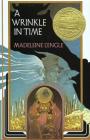
A WRINKLE IN TIME


Shop Indie Bookstores


A Wrinkle In Time, Madeleine L'Engle, Farrar Straus and Giroux, 1962, 203 pp


This classic won the Newbery Award in 1963. I just read it for the third time and discovered new layers to the story. 

In 1994, I wrote in my reading journal: "Three children travel through time and the universe to rescue their father by overcoming evil with love." A slight inaccuracy there is that he was the father of only two of the children, the third one being a friend of the kids. 

In 2010, I wrote about the Christian influence being much lighter than that in the Narnia books by C S Lewis and about how Meg, the daughter, was a fine female character right up there with Lara from The Golden Compass. I found both the parents and the children to be more true to life than those in many other Newbery winning books from earlier years.

Each time I read the book, I was enchanted by Mrs Whatsit, Mrs Whosit, and Mrs Which. Who can resist the younger brother Charles Wallace? This time I recognized him as a kid somewhere on the Autism spectrum. Also I was suddenly aware that the father had been involved in the Manhattan Project and the science behind the atom bomb. I can only assume that my reading over the past several years, including both the President Truman and the Oppenheimer biographies, gave me enough knowledge to recognize this as a concern and a manifestation of evil in 1962! And then there is the tesseract!!

I have read and loved four of L'Engle's early novels written for adults. (The Small Rain, A Winter's Love, And Both Were Young, and Camilla.) Her writing for children loses something that is especially wonderful in those novels, though some of that remains. A Wrinkle In Time saved her writing career, dying due to low sales. Even so, this children's novel requires a high reading level for 8-12 year olds.

I hadn't realized that there is a Wrinkle In Time series. I have four more books to look forward to. Then there is the movie coming out next March! 


(A Wrinkle In Time is available in paperback on the shelves at Once Upon A Time Bookstore.) 

Wednesday, August 02, 2017

AUGUST READING GROUP UPDATE


It does not usually get this rowdy at my reading groups but we do have our moments. Somehow I have five meetings to attend in August. Wait, what? I thought I was cutting down. But that is where most of my friends are, so.


Laura's Group:

Shop Indie Bookstores


Molly's Group:

Shop Indie Bookstores


Literary Snobs:

Shop Indie Bookstores


One Book At A Time:

Shop Indie Bookstores


Bookie Babes:

Shop Indie Bookstores


Is anyone attending a reading group this month? Has anyone read a book that would make for a good discussion?  

Tuesday, August 01, 2017

BOOKS READ IN JULY


I was a bit like a dragonfly in July. I darted from book to book, consuming each one and almost all of them were excellent. All but two of them were short and my total read was the highest so far this year: 13!

Stats: 13 books read. 12 fiction. 10 written by women. 3 mysteries. 3 speculative fiction. 3 historical fiction. 1 crime fiction. 1 for middle-grade readers. 1 nonfiction.

Favorites: The Essex Serpent, Pachinko, Sister Golden Hair, She Rides Shotgun
Least favorite: And Then There Were None


Shop Indie Bookstores


Shop Indie Bookstores


Shop Indie Bookstores


Shop Indie Bookstores


Shop Indie Bookstores


Shop Indie Bookstores


Shop Indie Bookstores


Shop Indie Bookstores


Shop Indie Bookstores


Shop Indie Bookstores


Shop Indie Bookstores


Shop Indie Bookstores


Shop Indie Bookstores


My August reading plan includes several long books so who knows when I will hit 13 read in a month again. I am also reading the first volume of Robert A Caro's biography of Lyndon B Johnson, at the rate of 10 pages a day. Who knows when I will finish that because it is super long. But nothing else has taken me away from the worries about the current administration like this book has. No President the United States has had was perfect and some were quite bad. We survived them all. So far.

How was your reading in July? Which were your favorites?

Happy reading in August!!

Monday, July 31, 2017

AND THEN THERE WERE NONE


Shop Indie Bookstores


And Then There Were None, Agatha Christie, G P Putnam's Sons, 1939, 252 pp


The first Agatha Christie I have read was for a reading group. I know she is considered to be one of the best mystery writers ever but the book was just not my thing.

The story was entertaining, the plot fiendishly clever, and she did create tension almost as well as Patricia Highsmith. I hated the ending, though at least we found out who did all the murders. 

The other night at reading group I learned that Christie was a somewhat wild and interesting woman. But I won't be reading her again largely because the thought of doing so makes me collapse with boredom. Give me Tana French, Sara Paretsky, Janet Evanovich, and the other female mystery writers I love. Give me Raymond Chandler; actually I have read all of his. 

I know many of you will want to tell me about all I am missing. Sorry. 


(And Then There Were None is available in paperback on the shelf at Once Upon A Time Bookstore.)


Sunday, July 30, 2017

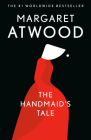
THE HANDMAID'S TALE


Shop Indie Bookstores


The Handmaid's Tale, Margaret Atwood, Houghton Mifflin Company, 1986, 311 pp


Summary from Goodreads: 
Offred is a Handmaid in the Republic of Gilead. She may leave the home of the Commander and his wife once a day to walk to food markets whose signs are now pictures instead of words because women are no longer allowed to read. She must lie on her back once a month and pray that the Commander makes her pregnant, because in an age of declining births, Offred and the other Handmaids are valued only if their ovaries are viable. Offred can remember the years before, when she lived and made love with her husband, Luke; when she played with and protected her daughter; when she had a job, money of her own, and access to knowledge. But all of that is gone now...

My Review:
The first novel I read by Margaret Atwood was Cat's Eye in 1996. Back then I was still reading trashy bestsellers but branching out and checking out more literary stuff. I don't remember how I came to read Atwood. She had already been publishing for 30 years. Once I started though she quickly became one of my top three favorite novelists. I have read all her novels and marveled at her intelligence, her clear-eyed view of the plight of women and the future.

I first read The Handmaid's Tale in 2000. At that time I wrote, "This book is not about hope. It is a given that the human spirit will fight against oppression. This book is a warning of what could happen in America if freedom is not protected."

And here we are, post 9/11, post Obama, mid Trump. Our freedoms are dwindling away, our country divided it seems more than ever, some of us fighting for freedom and justice, many of us watching what is called the American Way of Life morphing into a very different way of life, some of us oblivious or misinformed about how we got here. And so it goes.

I read it this time for a reading group and because of the series on Hulu. Again I have not yet watched the series. The book had more of an impact for me this time. Those of us who have been around for a while, who are fairly financially secure but who thought we were keeping our eye on things, are not particularly at risk, but our children and grandchildren could be, especially our daughters and granddaughters. All the elements that created the theocratic governmental control of women's lives in the novel are simmering in the background. 

I am glad to see the book have another burst of time in the spotlight. If it all goes to hell, we can't say we weren't warned. I wonder how The Handmaid's Tale will seem 20 years from now. 


(The Handmaid's Tale is available in paperback on the shelf at Once Upon A Time Bookstore.) 

Thursday, July 27, 2017

BAD FEMINIST


Shop Indie Bookstores


Bad Feminist, Roxane Gay, HarperCollins, 2014, 282 pp


Note to my blog followers: I hope I don't wear you out as I double up on posts for the rest of the month. The reason is I have been finishing so many books this month and don't want to get hopelessly behind on posting my reviews. Most of the reviews are somewhat short so there is that. Also next month's reading is going to include longer books=less books read=less posts. 


I have been reading this collection of essays over many months. I have followed Roxane Gay on Twitter for a couple years. If you have not heard of her, you live under a rock. I wanted to see what all the excitement was about.

First of all, the title is brilliant for our times when no one is sure what feminism is anymore or if anyone even needs to be a feminist these days. Having been one since about 1972, I can tell you it is a process and yes, the world is still badly in need of advocates for women. But we don't need anyone defining it for us.

I have lots of admiration for Roxane Gay, a woman of color who has overcome much adversity and with sheer hard work and no reticence about speaking out, has carved a place for herself in the world. She embodies and explicates the ambiguity and hypocrisy of the modern world.

I found the collection a bit uneven but since essays are not my go to reading genre I may not be qualified to say that. Her movie and book reviews and her takes on pop culture reminded me of James Baldwin. The female James Baldwin. Has anyone else felt that way? I have not heard that said about her.

The personal essays in which she recreates pivotal moments in life show equal parts naked self-analysis and sophisticated thinking.

I have owned a copy of her novel, An Untamed State, for a couple years. I am almost afraid to read it because of what I have heard about the rape scenes, but I know I should. For me at least, my fear of rape is stronger than my fear of death. Perhaps I will first read Ayiti, her collection of short stories set in Haiti where her family is from.

Forgive me Roxane. You are almost too much for me. You have however earned a place in my personal pantheon of bad women! 


(Bad Feminist is available in various formats by order from Once Upon A Time Bookstore.)

Wednesday, July 26, 2017

PACHINKO


Shop Indie Bookstores


Pachinko, Min Jin Lee, Grand Central Publishing/Hachette, 2017, 485 pp


I loved this saga of a Korean family spanning three generations and almost 90 years. It touched me emotionally, as both the female and male characters had to face hard challenges. It enlightened me as to Korean history and like several books I have read this year, the history is filtered through the lives of the characters. I enjoy learning this way.

If you look at a map, you see that Korea is a peninsula jutting out from the east coast of China between the Yellow Sea and the Sea of Japan. Just 120 miles further southeast lies Japan. In 1910, Japan annexed Korea, making it their protectorate. From that time until the late 1980s, Koreans were first under Japanese rule and then, after WWII, either under Soviet or Chinese influence in the North or American in the South. The Japanese ran a protracted campaign to exterminate Korea as a nation, banning the language, religion and culture. Koreans were forced to take Japanese names and to support the Japanese war effort during WWII, either providing soldiers or "comfort women" for the military.

The upshot of all this was to make Koreans into second-class citizens and causing them to live under stereotypes not unlike what African Americans are subject to in the United States. The story opens with a quick look back at the married life of a Korean fisherman and his wife, how they came to run a boarding house for fishermen, how they found a wife for their only surviving son despite his cleft palate and twisted foot. This couple, Hoonie and Yangin, lost three babies in infancy but finally Sunja, a daughter, survived, thrived, and becomes the heroine of the novel. The guiding principal was survival.

So you see that nothing came easy for anyone and the struggle continues throughout the story. Even after Sunja relocates to Japan, hardships are ever present. The women work from daybreak to bedtime, and though the saying is that women are born to suffer, the truth is that almost all Koreans suffer.

This is not however an unrelentingly sad tale due in large part to Sunja and her sister-in-law who form a strong bond and are the backbone of two famililes. Because of their position in society there are inevitable questionable connections made with the underworld and in fact one of Sunja's two sons achieves success with a chain of Pachinko parlors, where people play pinball and gamble. The son is not a gangster but Pachinko was traditionally associated with crime, so people assume the worst. When this man's son reaches adulthood he finally assimilates into Japanese culture but home, Korea, and identity are lost and gone.

Pachinko tells the history of 20th century Koreans in the far east with a sweeping style and a passionate force. I could not stop reading it once I started.


(Pachinko is available in hard cover and audio by order from Once Upon A Time Bookstore.)  

Monday, July 24, 2017

THE MAN IN THE HIGH CASTLE


Shop Indie Bookstores


The Man in the High Castle, Philip K Dick, G P Putnam's Sons, 1962, 274 pp


This was Philip K Dick's breakout novel. It won the Hugo Award in 1963. It is not science fiction but alternate history. I have read six of his earlier novels and pronounce that his writing has more polish without having lost any of his signature wackiness.

The United States in 1962 is occupied by Nazi Germany and Japan, because the Allies lost the second world war. Slavery is legal, Jews hide behind assumed names, and almost everyone consults the I Ching before making any major moves in life or business.

The country is divided into regions: Pacific States, Rocky Mountain States, etc. American handcrafts from the 1940s are collectors items and upwardly mobile Japanese purchase and display them in their homes as status symbols.

In San Francisco, political intrigue rules the day with the Japanese and the Germans in uneasy alliance. It is a convoluted story fraught with tension for each main character. The madness and fear felt not unlike the times we live in now.

I have not watched the TV series adapted from the book, mostly because I do not have TV in my house. Actually I would prefer to reread the book at some point, perhaps after Trump is no longer President. 


(The Man in the High Castle is available in various formats by order from Once Upon A Time Bookstore.) 

Saturday, July 22, 2017

THE NOISE OF TIME


Shop Indie Bookstores


The Noise of Time, Julian Barnes, Alfred A Knopf, 2016, 197 pp


Any novel about music is a novel I want to read. This one is a fictional biography of Russian composer Dmitri Shostakovich. I had planned to read it since I heard about it last year. Meanwhile, earlier this year I read Madeleine Thien's astonishing Do Not Say We Have Nothing. In that novel, the young radical Chinese musicians disdain Shostakovich because he declined to leave the Soviet Union but continued to live and compose there, compromising his integrity as an artist in order to survive. I was even more intrigued.

The Noise of Time is a novel but Julian Barnes read just about everything he could find about the composer, including the man's own memoirs. One could say that Barnes interpreted all the conflicting facts and added his own artistry, much like a performer interpreting a composer's music. Perhaps it is a justification when he says in the Author's Note: "truth was a hard thing to find in Stalin's Russia." I thought he succeeded in extracting and teasing out as much truth as possible.

Shostakovich comes across as a brilliant composer but a weak and insecure human being. The more I got to know him the more I understood the choices he made. He could not have been all that weak because he lived and worked under constant fear of imprisonment or death for decades. As long as he remained free though, he cravenly gave in to pressures from Stalin and other Soviet officials. Reading about it is heartrending. 

His first opera, acclaimed and successful, was rejected by Stalin after attending one performance. Therefore all reviewers and musicologists reversed their opinions and the composer himself was forced to issue an apology for composing "degenerate" music. What must that do to a man's soul?

The novel shows what it does in compact chapters, with humor and compassion and without missing a step as concerns the effect of power on the creative arts. Chilling! I was as absorbed as I expected to be. Despite all, the composer continued to compose and many of his works survived Communism to become acknowledged as masterpieces today.


(The Noise of Time is available in various editions by order from Once Upon A Time Bookstore.)

Tuesday, July 18, 2017

FALLEN INTO THE PIT


Shop Indie Bookstores


Fallen Into the Pit, Ellis Peters, Mysterious Press, 1951, 246 pp


Oh no! I have discovered a new (to me) mystery writer, as if I weren't already following enough of them. I blame it on My Big Fat Reading Project. It just keeps getting fatter, but better my project than me!

Ellis Peters is a pseudonym of Edith Pargeter, a British author who is best known for her Chronicles of Brother Cadfael historical mystery series. Both that series and her Inspector Felse series are set in Wales. I don't recall reading any mysteries set in Wales before.

In 1963, the author won the Edgar Award for the second book in the Felse series. Being, like my fellow blogger Dorothy, incapable of starting a series anywhere but at the beginning, I had to read Fallen Into the Pit before I read the Edgar winning Death and the Joyful Woman.

In a Welsh mining town just after WWII, a German ex-POW and ex-Nazi, a cruel coward and anti-semite, was found murdered in an area of deserted mine shafts. No one in the village is particularly sad to be rid of the man, who had never fit in there, but it was after all a murder and had to be solved. Because he was universally disliked, anyone could have been the murderer.

Sergeant George Felse must detect the murderer but since his son, 13-year-old Dominic, found the body, the boy keeps butting in on his father's investigation where he is not welcome. And that is not the only unusual aspect of this book.

It took me a good while to get into the story. Ellis Peters had been writing novels under various names since 1936, so I could not blame my reading difficulty on it being a first novel. I think it was partly the setting, not a familiar one to me except for some King Arthur novels. I also found the quite literary style of Ms Ellis's prose a bit daunting.

Eventually I was hooked and it turned out to be a good mystery. It was hard to figure out who the culprit was, the story was filled with fascinating characters and situations, and except for a slight tendency to fall into the pit of lulls in the action, it provided plenty of increasing tension.

One last unusual thing: that the murder victim was allowed to stay in Great Britain instead of being sent back to Germany once the war was over. Though that oddity fit with the time period and added to the tension in the village, I wonder if such a circumstance is historically accurate. Does anyone know?

I now look forward to the next book in the series, Death and the Joyful Woman. What a title. 


(Fallen Into the Pit is available in paperback by order from Once Upon A Time Bookstore.  It is also available in eBook form from Open Road at your favorite eBook vendor.)