Showing posts sorted by relevance for query half blood. Sort by date Show all posts

Friday, October 17, 2014

HALF-BLOOD BLUES


Half-Blood Blues, Esi Edugyan, Serpent's Tail, 2011, 319 pp


Some books I love while I am reading them but promptly forget once I am finished. Others are just so-so while I read but I think back on them with pleasure-usually because they end well. With Half-Blood Blues, it was all love, while reading and when I was finished. Now after several weeks have passed the story is still so vivid, I doubt I will ever forget it.

A group of Black American, White German, and one mixed race German musicians had a successful run as a jazz band in Berlin before World War II. They were decimated as a band by Hitler's ban on jazz after he declared it to be degenerate music made by Negroes and Jews. This novel is the story of what became of the them individually and as a group.

The writing is amazing, calling forth the life styles, the rivalries, the joys of making music, and the feel of jazz itself. Perhaps because I have spent my life surrounded by music and musicians, I fell easily into their triumphs and trials. Musicians are a special breed to me, each one being a unique combination of their artistry and a state of being "the other" to most remaining human beings. 

In this tale, hearts are broken, trust is betrayed, lives are lost, dreams die. I experienced every emotion known to man while reading it. Honestly, I don't know how the author did what she did. Esi Edugyan is one of a kind, just like her characters.


(Half-Blood Blues is available in various formats by order from Once Upon A Time Bookstore.)

Tuesday, April 16, 2019

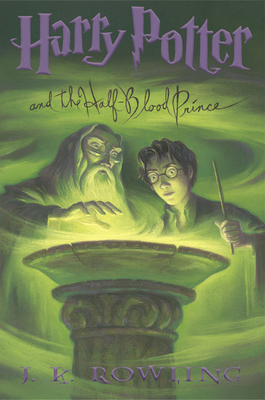
HARRY POTTER AND THE HALF-BLOOD PRINCE


Support Independent Bookstores - Visit IndieBound.org

Harry Potter and the Half-Blood Prince, J K Rowling, Scholastic Inc, 2005, 652 pp
 
I first began to read the Harry Potter series in 2000 and made it through the first three books. My granddaughter was given the first book to read by her third grade teacher who had singled her out as one of the best readers in the class. Since it was I who taught her phonics, I was proud. In fact, she has never liked reading fiction and she didn't finish the book. When I read it I thought it was pretty advanced for any third grader.
 
In 2007, when the final volume was about to be published, I was working in a bookstore with a thriving children's section. All these kids were reading the series and the level of excitement about Deathly Harrows was immense. We were having a release party at midnight on the release date which required pre-purchase of the hardcover book as admission. The event sold out weeks ahead.

I had wanted to be ready. All employees would play one of the characters at the party and I was to be Miss Trelawney. Since it had been seven years, I had forgotten most of the story. I started over at the beginning a month before the party, but only made it to HP#5, The Order of the Phoenix. I think I was pretty convincing as Miss Trelawney, dressed in flowing shawls and sitting at a table telling fortunes. I had one of the longest lines!

Books #4 and #5 were each double the length of the first three books, Harry was extremely stressed out and in a bad mood for the whole time, and time was up for me. I never went back for the final two books until last month when I needed something magical to get me through the end of my illness. 

I have liked all the books but I think Half-Blood Prince is my favorite so far. Harry is in his final year at Hogwarts, he is not longer a kid but a 17 year old teen. The content has become Young Adult, though nothing more than snogging goes on.

Anything I could relate about the plot would be a spoiler. The action is fast and shocking, even more dreadful at times than anything that came before, and I was impressed by how well J K Rowling portrayed her teenagers. Harry learns quite a bit more about who he is and what might be his destiny. I am committed to finishing the final volume soon.

I recently began following a blogger new to me. Brian has been reading the series and blogging about it as he goes at http://briansbabblingbooks.blogspot.com/. I have him to thank for the inspiration to find out the rest of Harry Potter's story.

Sunday, February 27, 2011

THE LIGHTNING THIEF


The Lightning Thief, Rick Riordan, Disney-Hyperion, 2005, 375 pp


 When I found out that my twelve-year-old granddaughter was reading and liking this book, I decided to read it also so we could discuss. I liked it too. But it kept reminding me of Neil Gaiman's American Gods.

 Percy Jackson, (the book is the first in a series called Percy Jackson and the Olympians) is the son of Poseidon and a mortal woman. He has problems (ADHD, a temper, a missing dad, a disgusting step-father) and he has been expelled from numerous private schools. Forget about public school.

  The summer he goes to Camp Half-Blood, he learns for the first time who he really is and gets sent on a quest to recover the lightning bolt of Zeus. Non-stop action, lots of funny bits, kids having to figure out things for themselves; all make it an entertaining story and I can see why it has sold gazillions, also why reluctant readers and especially boys like it.

 Riodan has cleverly combined all the elements. Camp Half-Blood is Percy's Hogwarts. He has his half-blood friends, each of whom has a Greek god or goddess for one parent. The quest. A boy wanting to please and get recognition from his absent father. Hell is entered through Los Angeles, Mt Olympus via a skyscraper in Manhattan. A Las Vegas amusement park/hotel is a locale where kids never want to leave and lose all track of time. 

 Despite all the "borrowing" this is a great way to introduce kids to mythology and is much more fun to read than The Golden Fleece.


(The Lightning Thief is available on the kid's sci-fi/fantasy shelves at Once Upon A Time Bookstore.)

Saturday, January 19, 2019

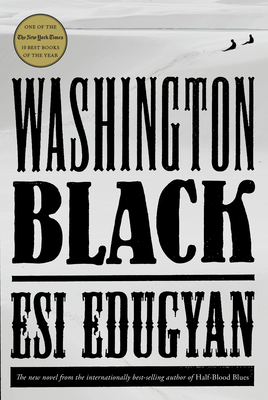
WASHINGTON BLACK


Support Independent Bookstores - Visit IndieBound.org


Washington Black, Esi Edugyan, Alfred A Knopf, 2018, 334 pp
 
 
Back in 2014 I read this author's amazing second novel, Half-Blood Blues. I said in my review that I would never forget it and I have not. With Washington Black she has outdone herself.
 
Esi Edugyan has a fine pedigree. She was born in Alberta, Canada to Ghanaian parents. Her first novel, The Second Life of Samuel Tyne, which I need to read, explores those roots. All three of her novels deal with the complex particulars of racism and their psychological effects.

Washington Black was born into slavery on a Barbados sugar plantation in the mid-19th century. All he knows is hard labor in the fields and the unspeakable brutality of the plantation owner. When he is brought into the master's house to serve the master's brother as an assistant, he experiences for the first time kind treatment from a white man. He also discovers he has an ability and passion for drawing.

Christopher, his new master, is a naturalist, inventor, and an abolitionist. The Wilde family however is full of troubled eccentrics and the safety Wash feels with Christopher is still disturbed by a constant fear of violence to himself and his people.

The plot includes the many travels of Wash with Christopher all the way through the American slave states and on to the most remote outposts of the Arctic. Wash is never secure. He is trailed by a slave catcher and then abandoned by Christopher in the Arctic. That trauma is only the beginning of his wandering and the rest of the story traces Wash's struggle to find safety for himself and his talents while he searches within himself for the reasons he has been so often abandoned.

How does the least free, the most betrayed of men find freedom? What is freedom? Can a man keep reinventing himself against all odds and find a way to heal his psyche from all he has experienced?

Esi Edugyan writes with incredible intensity and grace. Her sensitivity to human feeling is as deep as, if not deeper than, many authors I have loved. She has filled in her picaresque frame with truth and took me on another journey I will not soon forget.


(Washington Black is available in hardcover by order from Once Upon A Time Bookstore.)

Thursday, October 20, 2011

NIGHTWOODS


Nightwoods, Charles Frazier, Random House Inc, 2011, 259 pp


I love Charles Frazier. Cold Mountain, the novel, was amazing. Forget the movie. Thirteen Moons was under appreciated because Cold Mountain was so huge. He just gets to something in his characters that no one else does in quite the same way. Possibly it is a Southern thing but also it is just purely great writing from a guy who has the soul of a poet. Both of the previous novels were historical (Civil War and Trail of Tears) but I don't think it was from history that he derived his power as a writer but from the depth and breadth of his characterizations and his ability to bring the natural world surrounding those characters so vividly to life. Though Nightwoods takes place in the 1960s, he has lost none of that power.

Lit and Lola: Lit is that kind of soldier who never moves on. World War II and its grueling mix of boredom, discomfort and violence have never been matched since then for Lit, not to mention the quality of the drugs available. Lola is the teen bride and mother who would rather drink, party and fight with her husband than raise babies.

Luce and Lily: The daughters of these two, who were abandoned by their mother and neglected by their father; who grew up destined to be harmed by men.

Such potential caricatures of dysfunctional life take on roles suitable for a parable in the hands of Frazier. When Lily's husband Bud, a character straight out of Flannery O'Connor territory, kills her in cold blood, the state dumps Lily's fraternal twin youngsters on Luce. These kids have obvious signs of abuse, something to which Luce is no stranger. She herself is living practically like a hermit in a rundown former summer lodge as a nominal caretaker, wanting nothing more than to be left alone. When she learns that Bud has been acquitted of the murder, she knows such will not be her destiny.

Charles Frazier takes a good half of the novel setting this up but every few pages he drops in another startling fact. By the time it becomes clear that Bud is the psychopath bent on ruining Luce's entire family, I was so wrought up and unbalanced there was nothing left to do but read on, never knowing who would live and who would die.

The problem then was that Frazier's writing is so fine, it needs to be savored. These people are as unique as all human beings are; not one of them can be wholly admired or detested. The mountains, the weather, the flora, close around the story, as much a part of the tale as any other aspect. And those kids--my goodness.

The question in all of Charles Frazier's novels has to do with how our humanity to others can possibly survive when one insanely evil person can ruin it for everyone around him. Bud was made to go to church as a child, where his natural born criminal instincts left him open to the message that the sacred shedding of blood mattered above all else. The proffered answer in Nightwoods is that shared blood can redeem a lost soul now and then, but not always and not for good.


(Nightwoods is available in hardcover by order from Once Upon A Time Bookstore.)


Tuesday, January 06, 2015

TOP 25 BOOKS READ IN 2014


It was another tough year in my reading life. I only read 92 books in 2014. I averaged a bit less than 2 books a week, only 80 pages average a day. I read 7 books of over 500 pages and possibly more challenging books than in previous years. But the bottom line is that I missed several weeks of reading in May when I was too ill and when my cataract surgery was going on I slowed way down on reading. Then I went on the Christmas road trip and was having much too much fun with real live people and real live scenery to spend any time reading. 

It is all good. I improved my health after that wake up call in May, I have much better eyesight after the surgeries, and my personal sorrows are down to only one. Life is hard, messy, glorious, and always interesting. 

This list is in alphabetical order by title not by favorite, but are the most loved and rewarding books I read in the past year. Not all were published in 2014. I read about 2/3 in real books and the rest on various e-readers. I have posted reviews of all but two books on the list and will post those shortly.
 
JUDY KRUEGER’S TOP FAVORITE BOOKS READ IN 2014

All the Birds, Singing, Evie Wyld
Americanah, Chimamanda Ngozi Adichie
The Bird Skinner, Alice Greenway
Black Like Me, John Howard Griffin
The Blazing World, Siri Hustvedt
Boy Snow Bird, Helen Oyeyemi
The Chronicle of Secret Riven, Ronlyn Domingue
The Golden Arrow, Anna Redmond
The Golem and the Jinni, Helene Wecker
Half-Blood Blues, Esi Edugyan
If Beale Street Could Talk, James Baldwin
The Invention of Wings, Sue Monk Kidd
Little Failure, Gary Shteyngart
Long Division, Kiese Laymon
Lucky Us, Amy Bloom
The Madonnas of Echo Park, Brando Skyhorse
The Magician’s Land, Lev Grossman
Mood Indigo, Boris Vian
Mother Night, Kurt Vonnegut
My Brilliant Friend, Elena Ferrante
The Signature of All Things, Elizabeth Gilbert
Southland, Nina Revoyr
Station Eleven, Emily St John Mandel
A Tale for the Time Being, Ruth Ozeki
The Tuner of Silences, Mia Couto


Saturday, July 14, 2018

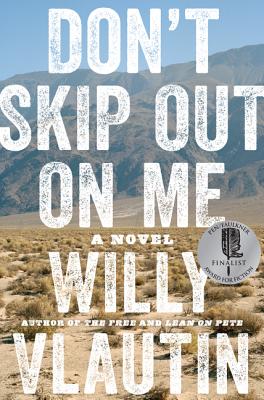
DON'T SKIP OUT ON ME


Support Independent Bookstores - Visit IndieBound.org


Don't Skip Out On Me, Willy Vlautin, Harper Perennial, 2018, 269 pp
 
 
This is such a sad story but it is so good. I might never have discovered Willy Vlautin but his latest novel was the February selection of The Nervous Breakdown Book Club, to which I have a subscription. Don't Skip Out On Me came in the mail.
 
Then Brad Listi had Willy on his Other People podcast and I got a crush on the guy just listening to him talk. He is a down-to-earth blue collar family man who writes novels, writes songs, and plays in a band.

Horace Hopper is a half-blood Paiute Native American. His mother dropped him off at his racist, Paiute-hating grandmother's when he was just a little kid and never came back for him. As a teen, he became a ranch hand for an old Nevada sheep raising couple, who made sure he finished high school and treated him like a son.

Enough damage had been done though so Horace never felt he was good enough to deserve the love and care he got from Mr and Mrs Reese. He thought he needed to be somebody first. At 21 he takes off to become a boxer. Hating the Paiute part of himself he endeavors to pass as Mexican.

Once Horace goes out on his own the story gets more sad than ever. He knows how to work hard and he gets a job and a trainer. His worst trouble is loneliness but he also gets taken advantage of by his trainer. He is good at taking abuse but the beatings he takes as a boxer on the way up are gruesome. Personally, I hate boxing.

Willy Vlautin writes in a spare, stripped-down style. I never did figure out how he made me feel so much emotion about every single character. I totally loved Horace and Mr and Mrs Reese. I think I love the book because of its perfect balance of love and sorrow.

Why should anyone read this super sad story? Well, anyone who does not like such stories should NOT read Don't Skip Out On Me. Anyone else will be amazed by how much it gets to you.

Here is what Willy has to say on the question, from an interview:
"Sometimes reading about loneliness can make you feel less lonely. And perhaps you could try to be good like Horace and learn to do the right thing. I take inspiration from him and his patience. Maybe after you read the book, you'll feel a little bit less alone."


(Don't Skip Out On Me is available in hardcover by order from Once Upon A Time Bookstore.)

Saturday, February 16, 2008

BOOKS READ FROM 1952, PART FOUR

The Grass Harp, Truman Capote, Random House Inc, 1951, 181 pp

Truman Capote is a good storyteller. So far in his books he keeps telling the same story: a young boy loses his parents and is sent to live with weird relatives. Apparently the variations on this are endless.

In this case, he is put in the care of two spinster cousins of his father's. One is a business woman who owns half of the small southern town including the sheriff. The other cousin runs the house, has a half-breed Indian/Black friend who is toothless and becomes the boy's friend, pseudo mother and spiritual adviser.

After an argument between the sisters, the boy, the dreamy cousin and her friend "run away" to a tree house. This causes an uproar in the town. The boy finally gets a friend for the first time in his life. The cousin gets a sweetheart. The "mean cousin" gets a heart. All ends well and they go back home. It is almost like the Wizard of Oz, but completely enjoyable reading the whole way.


The Natural, Bernard Malamud, Farrar Straus and Giroux Inc, 1952, 241 pp

My first experience with this author was a good one. Roy Hobbs is a country boy with a natural skill and talent for baseball. He gets discovered by Sam, a fairly washed-up alcoholic scout who takes Roy to Chicago. Roy Hobbs turns out to be a cursed man and the whole story is about his determination to make baseball history. Though he comes very close to achieving his dream, his curse gets him in the end.

The writing is very fine. Malamud portrays the characters of baseball with a sure hand, especially for a first novel, as well as the shifty, sometimes evil ways of the men with the money. His weakest point might be the female characters although they are possibly characteristic of the times.

The Natural was made into a movie with Robert Redford. My husband says it is the baseball movie of all time and that he has seen it three times. (Somewhere on the web I found that the movie changes the book quite a bit with a whole different ending and message.) The book is a classic of its time along with The Man With the Golden Arm, by Nelson Algren; Wise Blood, by Flannery O'Connor; and Catcher in the Rye, by J D Salinger; all stories about the underbelly of American life. All was not suburban peace and prosperity in the 1950s.


Player Piano, Kurt Vonnegut, Delacorte Press, 1952, 295 pp

Kurt Vonnegut's first novel is set in a postwar future where machines do all the work, engineers and businessmen rule and the haves are bored while the have-nots have lost their self respect and feel their lives have no purpose.

Dr Paul Proteus, son of one of the major developers of this machine age, has doubts about it all, despite his high position and comfortable life. When an old friend shows up and declares he has quit, they get involved with a revolutionary group that plans to wipe out the machines.

The plot is unlikely but the black humor is well done. He takes on all the issues including women, religion and the masses. I was reminded of some Edward Abbey novels and the one Stanley Elkins book I read.


Foundation and Empire, Isaac Asimov, Doubleday & Company Inc, 1952, 224 pp

This is the second in the Foundation Trilogy. It was so good that I immediately went on to the third book after finishing this one.

In Foundation and Empire, a "mutant" called The Mule, who has the ability to control and change people's emotions, begins a series of conquests in the crumbling First Empire. He throws an unknown and unexpected monkey wrench into the Foundation's plans for rebuilding the Second Empire.

How he is defeated is the story here. It reads like a combination of epic adventure and mystery. (I am beginning to see that mystery is an element of many good tales outside of the mystery genre.) Once again Asimov shows off his plotting chops as well as an impressive grasp of the ways of men, governments, science and society.


The Currents of Space, Isaac Asimov, Street & Smith Publications Inc, 1952, 172 pp

A spatio-analyst discovers that, due to certain currents in space, a planet will be destroyed. But this planet produces a commodity upon which a whole interplanetary civilization is economically dependent. Naturally the businessmen cannot have the spatio-analyst's discovery become broadly known, so they subject him to a psychic probe which wipes much of his memory.

All of that happens in the prologue. The rest of the story is about how he regains his memory and averts the annihilation of millions of people. Asimov's genius at plotting makes the story exciting on every page. He also has a range of vision about society, economics and science which is astounding and make him truly one of the greats of science fiction. Plus he produced two of these tales in one year! Now I really see what all the raving is about.

Friday, August 11, 2006

BOOKS READ FROM 1947, PART TWO

Here is the second half of the top 10 bestseller list for 1947:

The Wayward Bus, John Steinbeck, The Viking Press, 1947, 312 pp
Another good Steinbeck novel. It was the #6 bestseller of 1947. A collection of people are making a trip across California from east to west between what is now the Interstate 5 and the 101 freeway, with Los Angeles as a final destination. The story includes the bus driver, his wife, his mechanic and the waitress at the cafe owned by the bus driver and his wife. A storm comes up and causes trouble with the road as well as various reactions among the passengers.

The people on the bus are a cross-section of Americans and a study of human beings with their hopes and dreams and petty concerns. He does it well. He has created a microcosm of America.


House Divided, Ben Ames Williams, Houghton Mifflin Company, 1947, 1514 pp
This very long book was #7 on the list. It took the author 14 years to research and write it. It took me a week to read it. It is about the Civil War and a southern family who went through it. They are wealthy plantation people and own slaves.

The story of the family is good, but there is way too much about the army, the generals and the battles, for my taste. I did, however, learn much about the Civil War, its causes and why it went the way it did. A group of people who comprised the plantation and slave owners felt they had created an ideal way of life which they desired to maintain, the problem being that it could not be maintained without slaves to do the work. These plantation owners were only a very small percentage of the population of the south and it was the entire population who suffered from the war, provided the soldiers for the army, etc.

That is the way of wealth and wars. It is a bad game that gets dramatized over and over on this planet. I am quite weary of reading about it.


Kingsblood Royal, Sinclair Lewis, Random House Inc, 1947, 348 pp
At #8 on the list is another book about racism. Neil Kingsblood is a very mediocre sort of man in a northern Minnesota town. He works in a bank, is married with one small daughter and he plans to move up in the bank and in society as a good middle-class citizen. One day he finds out that he has Negro blood, only 1/32, on his mother's side and everything changes.

The story is about his decision to reveal this fact and the reactions to it all around him. The purpose is to expose racism in the North and show all the silly, crazy, false data white people operate on. I saw parallels to Gentleman's Agreement, especially showing the social struggle for people who don't want to be prejudiced. I wasn't wild about Lewis' style in this novel and the story was pretty contrived, but somehow it was still a good read.


East Side, West Side, Marcia Davenport, Charles Scribner's Sons, 1947, 376 pp
The #9 bestseller is a women's novel. Jessie Bourne is in an unhappy marriage. Her husband comes from "society" and he is chronically unfaithful to her. Jessie is half Jewish; her mother was a famous actress who got "accepted" by society, which is how Jessie made her match.

Jessie is a bit of a fool but as the story moves along she gets wiser. She meets a good man and gets up the nerve to leave her husband. Of course, she has her own money, inherited from her mother, which gives her more options than most women.

The time is just after WWII, the place is New York City. The ideas concern where the upper level of society comes from (i.e. they were mostly all poor immigrants at some time in the past); how men are stupid and heartless; how even though the war is over things are not settled in Europe. Lots of ideas in this book, but really it is a love story.

She is a good writer all around and I read the book in a day.


Prince of Foxes, Samuel Shellabarger, Little Brown and Company, 1947, 433 pp
Another great read by Shellabarger, The Prince of Foxes was #10 on the bestseller list for 1947. I enjoy reading big historical novels and am happy to see that they are coming back onto the bestseller lists in recent years. It is a great way to learn history.

Andrea Orsini, the hero of this story, was of common birth but goes under an assumed name and takes care of things for Cesare Borgia. He has a very smooth tongue, a high level of bravery and of course is very handsome. His sidekick (they all must have a sidekick) is Mario Belli, a former assasin and the ugliest man in the world. Camilla Verani is Orsini's love and the heroine. She is the wife of an elderly man who rules one of the city-states of Italy.

The story is about how Orsini, Belli and Camilla outwit Borgia. The theme is that good wins over evil by being not only good but also clever enough to match wits with evil. It was a page-turner, a thriller set in Renaissance Italy and a love story all in one. I was enchanted.

Thursday, July 06, 2017

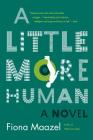
A LITTLE MORE HUMAN


Shop Indie Bookstores


A Little More Human, Fiona Maazel, Graywolf Press, 2017, 346 pp


As my fellow readers know, I like to read all kinds of books in all kinds of genres. I especially like the younger female authors who are taking on the world-in-flux where we now live. Ever since I read her second novel, Woke Up Lonely, Fiona Maazel has been right up there near the top of my list.

The Los Angeles Times reviewer of this current novel said, "Imagine a situation comedy written by Philip K Dick or a telenovela penned by Thomas Pynchon." I didn't want to write down what I thought as I read the book (she writes likes a man) because that seems so conflictedly sexist, but Jim Ruland did it for me.

Fiona Maazel does the magic trick of creating completely unlikable characters that I grow to almost love. Phil Snyder and his equally wonky and hapless wife are two of those. Phil works as a nursing assistant at his parents' bleeding edge biotech research and rehabilitation center, SCET, where wounded soldiers and sufferers of brain disease receive experimental surgeries. On the side, Phil also has a weekend gig impersonating Brainstorm, star of a movie about a telepathic crime solver. The joke is that Phil can actually read minds but he can't solve the many crimes encircling his life.

Why did his wife turn to SCET for artificial insemination without telling him? How did his mother die? Is his current BFF Ben a true friend? And how the hell did he wake up one morning on the back of a horse, hungover, and covered in blood and semen? Did he really rape a woman while drunk?

This is a deep dark thriller that mines some of the horrible crimes going on at the fringes of modern society. The humor is black. The prose is relentless, jagged as a rapier in rapid action. As in her former novel, I spent the first half of the book crippled with doubt about why I was reading it, but I finished the book in awe. On Twitter I said I was left mentally gaping. 


(A Little More Human is available in various formats by order from Once Upon A Time Bookstore.)