Tuesday, December 06, 2016

DECEMBER READING GROUP UPDATE


In December, all manner of different things take place during my reading group meetings: a special outing to a restaurant, a potluck dinner at my house, voting on our favorite book of the year, wild book exchanges, and even sometimes literary games. I have already made chocolate pie for a group this past Sunday and I am making another one for tomorrow night. Time to eat, drink, and be merrily literary! But we also read and discuss a book...usually.


Tina's Group:

Shop Indie Bookstores


Laura's Group:

Shop Indie Bookstores


One Book At A Time:

Shop Indie Bookstores


Tiny Book Club:

Shop Indie Bookstores


Are you having any bookish parties this month? 
 

Monday, December 05, 2016

THE WOLVES OF WILLOUGHBY CHASE


Shop Indie Bookstores


The Wolves of Willoughby Chase, Joan Aiken, Doubleday & Company, 1962, 168 pp


THE SUNDAY FAMILY READ


I have read 10 novels by Joan Aiken. I love both her adult stories and the ones for children. She was born in East Sussex, England, in 1924, was the daughter of the poet Conrad Aiken, and died in 2004. She wrote her first novel, The Kingdom and the Cave, when she was 17 and continued to write for her entire life. She portrays children in wondrous ways, similar to Elizabeth Goudge but with magic and supernatural elements instead of religious ones.

The Wolves of Willoughby Chase is the first in her 11 book series The Wolves Chronicles. The series is set in an alternative history of Britain, but not knowing British history well myself, that barely matters to me. What I love are the children and the story.

Two girls, one rich and exuberant, the other poor but wise, are cousins who have more exciting adventures daily than most girls have yearly. Dangers barely escaped, cruel adults outwitted, loyalty and bravery, are the keys to the tale. The parents are not neglectful, just rather oblivious in their trust of servants and governesses, but also kind and generous. A rather feral boy, reminiscent of Spiller in The Borrowers series, is their champion.

This is breathless, page turning stuff intentionally created to thrill and entertain young readers and probably laid the ground for the best in children's literature today. It makes me happy that I still have dozens of her books left to read, including retellings of all six Jane Austen novels.

The Wolves Chronicles series would make a great holiday gift for enthusiastic female young readers. 


(The Wolves of Willoughby Chase is available in paperback by order from Once Upon A Time Bookstore.)

Thursday, December 01, 2016

BOOKS READ IN NOVEMBER


Despite best intentions, November reading was doomed: election aftermath blues, Thanksgiving trip, and a couple long books. I did however like every single one I read.

Stats: 7 read, 2 by women, 7 fiction, 1 from My Big Fat Reading Project 1962 list.
Favorites: My Real Children and Into the Beautiful North
Least favorite: Something Wicked This Way Comes


Wednesday, November 30, 2016

LAST DAYS OF NIGHT


Shop Indie Bookstores


Last Days of Night, Graham Moore, Random House, 2016, 357 pp


Summary from Goodreads: A thrilling novel based on actual events, about the nature of genius, the cost of ambition, and the battle to electrify America—New York, 1888. Gas lamps still flicker in the city streets, but the miracle of electric light is in its infancy. The person who controls the means to turn night into day will make history—and a vast fortune. A young untested lawyer named Paul Cravath, fresh out of Columbia Law School, takes a case that seems impossible to win. Paul’s client, George Westinghouse, has been sued by Thomas Edison over a billion-dollar question: Who invented the light bulb and holds the right to power the country? 


My Review:
I read this excellent historical fiction because I have a bit of an obsession with Nikola Tesla. Luckily one of my reading groups picked it, meaning I read it sooner rather than later.

It is 1888 and Thomas Edison has engaged in a huge legal battle with George Westinghouse over who invented the light bulb. Electric light is just beginning to replace gas light and there is money to be made. Enter Nikola Tesla with his discoveries about alternating current, thickening the plot.

The battle is told through the eyes of Paul Cravath, just graduated from Columbia Law School and in his first year of practise as a junior partner at a small legal office. When George Westinghouse hires him to conduct a counter suit against Edison, Paul anticipates his career getting off to a great start.  

Brilliant story telling puts this untested lawyer smack in the middle of an untested legal issue. Everyone involved makes mistakes but Paul's are the most interesting since we already know how it turned out. (Well, at least I thought I did though I learned much more about the infamous rivalry.) Paul's unceasingly hard work and perpetual setbacks power the plot. Through most of the book I was as stressed out as Paul was, wondering if he would fail epically or win the day for Westinghouse. In the end, he did neither.

Reading about the intersection of science, business, and law that made the book a thriller, I was amazed both at the violence of the times and by how much the late 1800s set the stage for the oligarchy we live in today. J P Morgan gets involved as the financier. Even banking plays a role.

My favorite characters though were Tesla with his almost autistic personality and Agnes Huntington, Paul's love interest, a woman as intriguing as Lilliet Berne in The Queen of the Night.

Graham Moore is the Oscar-winning screenwriter of The Imitation Game. I predict he will go far. 


(Last Days of Night is currently available in hardcover on the shelves at Once Upon A Time Bookstore.) 


Monday, November 28, 2016

WE HAVE ALWAYS LIVED IN THE CASTLE


Shop Indie Bookstores


We Have Always Lived in the Castle, Shirley Jackson, The Viking Press, 1962, 146 pp


Summary from Goodreads: Merricat Blackwood lives on the family estate with her sister Constance and her Uncle Julian. Not long ago there were seven Blackwoods—until a fatal dose of arsenic found its way into the sugar bowl one terrible night. Acquitted of the murders, Constance has returned home, where Merricat protects her from the curiosity and hostility of the villagers. Their days pass in happy isolation until cousin Charles appears. Only Merricat can see the danger, and she must act swiftly to keep Constance from his grasp.


My Review:
This was my Halloween read. (Yes, I am a bit behind in posting reviews.) It was perfectly spooky and unsettling.

The best aspect was a steady building of creepy tension. Though that is Shirley Jackson's most notorious skill, she kicked it up a notch here in her final novel.

Mary Katherine and her older sister Constance live alone with their senile Uncle Julian in a big house on the edge of town. The rest of the Blackwood family are dead. None of the family were liked in town and Mary Katherine is the only one who ventures there for the weekly shopping. She is bullied in disturbing ways. During the course of the tale you find out the whys for all the strangeness.

It gets continuously more disturbing and there is no redemption at the end. If that bothers you, don't read Shirley Jackson, ever!

I have not read much Stephen King but now that I have read all of Shirley Jackson's novels, I believe I may be ready. She holds up a mirror to our deepest unspoken fears and desires. We all have them as well as evil thoughts we dare not act out.

I also want to read the recently published biography: Shirley Jackson: A Rather Haunted Life by Ruth Franklin. Ms Jackson gives me courage and permission to tell my own stories.


(We Have Always Lived in the Castle is available in various formats by order from Once Upon A Time Bookstore.)


Saturday, November 26, 2016

THE SLAVE


Shop Indie Bookstores


The Slave, Isaac Bashevis Singer, Farrar Straus and Cudahy, 1962, 311 pp (translated from the Yiddish by the author and Cecil Hemley)


Summary from Goodreads: Four years after the Chmielnicki massacres of the seventeenth century, Jacob, a slave and cowherd in a Polish village high in the mountains, falls in love with Wanda, his master's daughter. Even after he is ransomed, he finds he can't live without her, and the two escape together to a distant Jewish community. Racked by his consciousness of sin in taking a Gentile wife and by the difficulties of concealing her identity, Jacob nonetheless stands firm as the violence of the era threatens to destroy the ill-fated couple. 


My Review:
I have not yet read anything by I B Singer I did not love. The Slave is no exception. Singer was awarded the Nobel Prize for Literature in 1978 and always wrote in Yiddish until his death in 1991, in Surfside, FL.

After all my reading this year about slavery in America, I come to this reminder that slavery is as old an institution as prostitution. Both seem to be inherent in the human story. 

The Slave is an epic in 311 pages. Jacob was a learned and pious Jew, son of wealthy parents, who found himself a slave to a farmer in a remote mountain village. His birthplace, Josefov, was a Polish town that lay in the path of Ukrainian Cossacks in the 17th century. The ensuing massacres had cleared the town of Jews. Jacob fled, thinking his parents, wife and children dead, then fell into the hands of robbers who sold him into slavery. 

Though he desperately strove to stay true to his faith, Jacob began to love the farmer's daughter. Wanda was a step above her environment, a practically prehistoric milieu of pagan superstition, tooth and claw existence, and rural poverty. But she was a Gentile and therefore forbidden. Her passion for him finally overcame his religious scruples and they planned to escape.

Of course, that plan fell through on the first attempt. Jacob's life from then on is one of perils and his search for redemption, taking him all the way to Israel as part of the early Zionist movement, at last reuniting with Wanda, and on to his final days where he finds peace and wisdom.

Besides being a beautiful love story, the novel is also a contemplation of the place of religion in human society including the contradiction that it condemns believers who do not follow its commandments while it honors the phenomenon that spirituality can lift us above our animal nature. The result is a timeless tale.

How interesting that Singer published a novel called The Slave just as the Civil Rights Movement was catching fire in America, his adopted country since 1935.  

Sunday, November 20, 2016

ELIGIBLE


Shop Indie Bookstores


Eligible, Curtis Sittenfeld, Random House, 2016, 488 pp


This retelling of Pride and Prejudice gave me some of the most reading fun I have had this year. Paul Beatty's The Sellout and Mat Johnson's Loving Day were close runners up though based on the more serious subject of racism. Eligible is about 21st century white people behaving badly.

I don't feel any need to rehash the plot except to say that Sittenfeld hewed closely to Pride and Prejudice while cleverly recreating the major plot points to fit contemporary American society. If we found the Bennet family annoying in the original version and Darcy enigmatic, we are quite completely exasperated by these characters in Eligible. Meanwhile we are laughing all the way.

So to the naysayers out there who called the novel trashy (yes, intentional), over-the-top (yes and so was Jane Austen in her time), not what they expected (what, did you really just want to read Pride and Prejudice again?), I say I am sorry you didn't get it and if you don't think there are families like this today in America, you must be living under a rock.

This is Darcy and Liz with cellphones, reality TV, tabloids, and the insidious class consciousness still  with us. But it also shows us that people can change, terrible teens do grow up, and the parents will never understand.


(Eligible is currently available in hardcover on the shelves at Once Upon A Time Bookstore.)

Thursday, November 17, 2016

THE QUEUE


Shop Indie Bookstores


The Queue, Basma Abdel Aziz, Melville House, 2016, 217 pp (translated from the Arabic by Elisabeth Jacquette, orig pub by Dar Altanweer, Cairo, Egypt, 2013)


This was a challenging but in the end quite affecting novel. The author, an Egyptian journalist, is also a psychiatrist who treats victims of torture. Excellent credentials for writing a novel about the impact of government oppression. 

The story opens in an unnamed Middle Eastern city with Dr Tarek Fahmy reviewing the file of his patient Yehya Gad el-Rab Saeed. Said patient had come to him for the removal of a bullet in his groin, received during an uprising that has come to be known as the Disgraceful Events. 

Though the uprising failed it had an unlooked for upshot: The Gate, where citizens must go for even the most basic permissions but which never opens. A queue of petitioners grows and grows so long that one cannot see from one end to the other. In order to conceal all evidence that any civilians were shot during the uprising, Yehya must receive permission for the operation to remove the bullet, a permission that will never be granted because that would be an admission that a civilian was shot.

The queue becomes a community in itself attracting people from all walks of life. Many of them camp out there for weeks and weeks so as not to lose their place in line. I pictured something like the lines that form in America for concert tickets and such, except that in this queue the gate will never open.

I grew to admire many of the characters. Yehya, always in pain and slowly dying, is the Stoic. Amani, his girlfriend, in her attempts to help Yehya, pays a terrible price including mental torture. Um Mabrouk needs medicine for her son; her "camping spot" becomes a gathering place where she serves snacks, always has the latest news, and makes a living there instead of going to her job. Ehab is the journalist who keeps writing for the dissenting newspaper that employs him but will not always publish his articles.

When I finished the book, I had to lay on my reading futon with eyes closed and mind wandering for a good 30 minutes until the devastation wreaked on me began to fade. I felt a bit of what Amani must have felt when she was kept captive in a place of darkness, where she could not see, smell, hear, taste or feel anything.

I can't say that I found much hope in the story except from the characters who did their best to stand up to the oppression and not give in. Human beings are equally strong in cruelty and dissent. What impressed me most was the realistic portrayal of the effects of totalitarianism on the human psyche. Basma Abdel Aziz is an incredible writer.


(The Queue is available in paperback by order from Once Upon A Time Bookstore.)

Tuesday, November 15, 2016

THE ITALIAN GIRL


The Italian Girl, Iris Murdoch, Viking Press, 1964, 171 pp
 
 
Summary from Goodreads: Edmund has escaped from his family into a lonely life. Returning for his mother's funeral he finds himself involved in the old, awful problems, together with some new ones. One by one his relatives reveal their secrets to a reluctant Edmund: illicit affairs, hidden passions, shameful scandals. At the heart of all, there is, as always, the family's loyal servant, the Italian girl.
 
 
My Review:
This is Iris Murdoch's eighth novel. I have been reading her novels in order of publication and become quite a fan. She brings a philosophical bent to her fiction. Though the next book for me would have been The Unicorn, one of my reading groups picked this one so I set aside my OCD tendency and went with it. Some critics have considered it one of her weakest novels. I liked it just fine.
 
The younger son, Edmund, has come home due to the death of his mother and tells the story with wistful viewpoints of each member of the household. Lydia, the deceased mother, had been controlling and no longer interested in her husband (now deceased) once she had two sons. She was overly possessive of the boys in alternating periods. Otto, the older brother, still lives in the family home with his wife Isabel and daughter Flora, now a teenager.
 
In Murdoch's usual way, the details of the family come into focus like a developing photograph until you have a distressing picture of psychological disturbance and broken relationships. Edmund, no surprise, has trouble with females, never married, and is possibly still a virgin. Otto drinks, is vegetarian, and works unsuccessfully as an engraver, mostly making tombstones. He has always had criminal-type assistants who cause trouble and are then replaced.
 
Otto's wife, it turns out, is having an affair with the current assistant, David, who has also been sleeping with the daughter and gotten her pregnant. Otto is sleeping with David's mysterious and troubled sister. Quite a mess but this is one of Murdoch's typical families. Edmund's pathetic attempts to help these people all go awry, almost to the point of comedy. Dark comedy is another facet of Murdoch's fiction.  
 
The title is the key to this fractured family, but you don't find out the full significance of the Italian girl until the very end. All you know until then is that the family has had a series of Italian girls as servants. These girls do all the housework, raised the boys when the mother needed a break, and served as companion to mother. The mystery of this arrangement is the big reveal at the end.

I found the novel to be one of her most exquisitely written books. Each scene is carefully drawn with lovely descriptions that create atmosphere and allow you to see ever more deeply into the characters. In fact, it was adapted for the stage by James Saunders and originally performed in 1968.

In spite of there being not a single likeable character, I felt for them all. Murdoch seems to be telling us that in any family there are secrets. Secrets of the heart due to failures to connect, unawareness of what goes on, a lack of perspective caused by the claustrophobia of family. I have found that to be true in most families I know, even the good ones.


The Italian Girl is hard to find in paper; used book retailers do have it. It is also available as an ebook through Open Road.
 

Saturday, November 12, 2016

THE BIG GREEN TENT


Shop Indie Bookstores


The Big Green Tent, Ludmila Ulitskaya, Farrar Straus and Giroux, 2015, (translated from the Russian by Bela Shayeviich, orig pub in Russia, 2011) 573 pp


Summary from Goodreads: The Big Green Tent is the kind of book the  term “Russian novel” was invented for. A sweeping saga, it tells the story of three school friends who meet in Moscow in the 1950s and go on to embody the heroism, folly, compromise, and hope of the Soviet dissident experience.

My Review:
Imagine you are a boy growing up in 1950s Soviet Moscow. You are just a bit outside the norm for a schoolboy in those times, the type who is bullied, the type who has dreams about how his life might go. You find two other boys like you and form a bond that lasts for a lifetime.

Better yet, the three of you find yourselves in a class taught by a man who can bring literature alive and who takes you under his wing. You learn that not all of life needs to be lived in fear of the KGB, in lock step to Soviet rules and plans.

So do Ilya, who loves photography, Mikha and his bent towards writing poems, and Sanya, lost in the wonder of music, become touchstones for each other. Stalin dies, there is a moment of leniency when Khrushchev comes to power, and for young people the dissident life is the thing. People still betray others who are then sent to prison camps. Maybe because these things happen daily and young people often hate injustice and desire change, they believe they can make a difference.

Despite the continuing horrors of the times, this is a great novel in the tradition of great Russian literature but set in our times and written by a woman! Ludmila Ulitskaya revels in story telling and has clearly thought deeply about her country and the souls of the Russian people.

Her novel is filled with many characters, with the thrill of defying authority, with love and loss, joy and sorrow, bravery and cowardice. The pages fly by. No wonder she is one of Russia's most popular writers. 


(The Big Green Tent is available in various formats by order from Once Upon A Time Bookstore.) 

Thursday, November 10, 2016

WHAT NOW?


What Now?

I feel bad. I feel abused. I feel like taking to my bed with a bottle of vodka. I feel outraged at my country. I feel like I am suffering from a great loss and cannot think straight. I feel apathetic. I feel afraid. I feel guilty. I feel small. I feel confused.

All through this Presidential election campaign, I felt a growing awareness that the country I am living in is not the country I thought I was living in. Now I know for sure that I have not really been looking at my country as it is. I was lulled into a feeling of hope and security by evidence that change was truly happening: change for women, minorities, and the under-represented people in our society. I thought we were ready for a woman to be our President, a woman who had the experience, the courage, and the will to continue the fight for true freedom of all people in our land but who could navigate the treacherous waters of the world as it is, who could continue to redeem our country in the eyes of the world.

I did not realize the extent of the anguish many of my fellow Americans are going through everyday as they try to make a living. I did not realize how very angry are the white, straight, conservative Christian men and women of this country. How ripe this segment of our society, who are still a slim majority, were for the con game of a demagogue who has played on their fears and insecurities to advance his own hunger for power and recognition.

I could not bring myself to post a blog about a book I read three weeks ago before this rude awakening was forced on me. Even though this morning, when I checked my reading log, I see that the next book I was to post a review about is actually completely apropos: The Big Green Tent by Ludmila Ulitskaya, a novel about Soviet Russia in its latter days.

I watched Hilary Clinton’s address to her campaign team yesterday morning and once again admired her courage, her clear thinking, and all the other qualities she has for leadership. I went to my reading group last night to discuss Last Days of Night by Graham Moore, a wonderful piece of historical fiction about the early years of electric power in America; the intersection of science, finance, and the law. We discussed, we drank wine, we got to giggling about pussy grabbing. The gloom began to lift.

This morning I read a great article on Lit Hub: Literary Voices React to President Donald Trump. Again I went through the whole spectrum of emotions. I started making decisions about my future reading. At one point I decided to read only books by women of all races, creeds, and nationalities. At another point I decided to drop the blog and just work on my Big Fat Reading Project and my memoir. I jotted down a quote from Dan Peipenbring of the Paris Review: “And read as often and as violently as you can.”

As always, I was restored by writers.

Lately, in my life, I have been pondering the concept of rebalancing. It is an ecological, Buddhist, Tao Te Ching, long-view concept. Human beings get out of balance due to all kinds of factors that are part of daily life but some cosmic force works always to bring the dichotomies of life back into balance. All of those emotions I cited in the first paragraph of this essay are brought about by the terror of things getting so out of balance that life or the universe will end.

My conclusion today is that I had not totally been facing how out of balance the world and the human race truly is at this time. It is not that I did not know that. It is that I thought things were improving. And I think they are but not as much as I had thought. A huge factor in the cosmic force towards balance is sentient beings. When the storm is over, when the fire is out, when the smoke clears, it is up to sentient beings to come out of disaster mode and start thinking, planning, setting things to rights.

The best sentient beings I know are people who read and write, clearly and as truthfully as they can. That is us! Bloggers, readers, authors, publishers. We dare not give up, give in, or stay silent. We need to read it all, even the words of white male chauvinist bigots. Everyone in a free society gets to have a say, we need to know the enemy and understand him, and we need to be in conversation with him.

So, I will read, I will write, I will attempt to be in concert with the forces of balance, I will not pander, I will not be silent. I will be back tomorrow with my next review.

Thank you for visiting and reading my blog. Take heart, carry on, be the change you want to see in this world, keep the faith, and all that good stuff!

Saturday, November 05, 2016

HAG-SEED


Shop Indie Bookstores


Hag-Seed, Margaret Atwood, Hogarth Shakespeare, 2016, 283 pp


My Review (originally published on Litbreak):


-->
The fourth in the Hogarth Shakespeare Series turned out to be the best one so far. A retelling of the oft performed and retold The Tempest, this one is laid out like an intricate puzzle and seeing the pieces come together while reading it was pure enjoyment. It is another example of the brilliance that underlies all of Margaret Atwood’s writing.

For someone who has difficulty reading Shakespeare’s plays, Hag-Seed did me the favor of decoding the many layers of The Tempest. Her main character for the modern day version, Felix Philip, is the former Artistic Director of a Canadian theatre festival, whose total immersion into creativity led to his being thrown under the bus by his assistant Tony. He stands in for Prospero, Tony for the usurping brother Antonio. After malingering in a cave-like rented house for several years, his festering obsession with revenge burning a hole in his soul, he finally changes his name and takes a position teaching the Literacy Through Literature program at a nearby prison. There he will stage his version of The Tempest, the one he never got to put on at the festival.

The prison becomes Prospero’s island for Felix. His methods for teaching Shakespeare to mid-level criminals are inspired. I enjoyed reading about that almost as much as anything else in the novel. He gets beyond the low literacy level of some of his actors and stage crew by forming them into teams that help each other “get it.” He channels their antisocial predilections and develops a method for casting the play that manages to side step the daily potential for violence. For example, he asks them to find all the swear words in the play and then allows only those to be used in class. No f-word, no s-word, just whoreson, plaguey, pied ninny, etc.

Beyond the well-rounded characters of the various prisoners, there were two more that captured me. Miranda is all over the story. One of the reasons Tony was able to outwit Felix was that the Director lost his daughter, named Miranda of course, when she died of meningitis at age three. During his self-imposed exile she reappeared as a ghostly imaginary friend and he conjured a whole life for her as the years went by. For the prison production of The Tempest, not one inmate would agree to play a girl, so Felix located the original young woman he had cast as Miranda in the aborted Festival version of the play,  convincing her to brave the dangers at his current job and take the part. Anne-Marie Greenland was my favorite character: preternaturally creative but tough, full of fun, and a kick-ass dancer. Of course the prisoner who plays Ferdinand falls for her, hard. She also embodies some of the best characters from earlier Atwood novels, especially Grace Marks from Alias Grace as well as Ren and Toby from the Maddaddam trilogy.

Finally comes the revenge. Tony moved on to politics after usurping Felix and visits the prison performance with his new buddies. They intend to shut down the Literacy Through Literature program. Felix and his students manage to get these fellows into a position where he can get back at Tony and save his current job. The scenes where that revenge takes place are over the top, clever, and suspenseful, but require a large suspension of disbelief by the reader. It had to be part of the novel but I was not completely convinced by that section.

These are only the highlights of what made Margaret Atwood’s retelling so dramatic. Not a page is without surprises and treats for the reader. It is as if she is Prospero herself, rendering an entertainment for her captive audience, that being any reader who opens the book. Not only is Felix’s story a retelling of the play, The Tempest is also performed in full, making the entire production the original play within a new play. 


(Hag-Seed is available by order from Once Upon A Time Bookstore.)
 

Thursday, November 03, 2016

NOVEMBER READING GROUP UPDATE


Reading group activity always winds down at this time of year due to the holidays. Fine with me because it gives me a shot at all those books I meant to read this year but haven't gotten to yet. Only three meetings this month and I have already read Vinegar Girl. It is all good.


Laura's Group:

Shop Indie Bookstores


Bookie Babes: 

Shop Indie Bookstores


One Book at a Time:

Shop Indie Bookstores


Since this is the month for giving thanks, I would like to give thanks to all the wonderful readers in my reading groups, to all the outstanding authors I have read this year, and to you who follow and read and comment on this blog. All of you are the shining center of my life (along with my husband, ha ha, but he reads also.)


Tuesday, November 01, 2016

BOOKS READ IN OCTOBER


I had a stellar reading month in October! 

Stats: 13 books read. All fiction. 8 written by women. 2 historical fiction. 1 children's lit. 1 drama. 2 retellings of classics. 3 translated. 4 from My Big Fat Reading Project 1962 list.

Favorites: Commonwealth, Hag-Seed, The Big Green Tent, Eligible, The Wolves of Willoughby Chase.
Least favorite: Pale Fire


Shop Indie Bookstores


Shop Indie Bookstores


Shop Indie Bookstores


Shop Indie Bookstores


Shop Indie Bookstores


Which were your favorite books read in October? Did you read any you did not like? My Halloween read was We Have Always Lived in the Castle. Did you have a Halloween read?

Sunday, October 30, 2016

PALE FIRE


Shop Indie Bookstores


Pale Fire, Vladimir Nabokov, G P Putnam's Sons, 1962, 301 pp


Summary from Goodreads: An ingeniously constructed parody of detective fiction and learned commentary, Pale Fire offers a cornucopia of deceptive pleasures, at the center of which is a 999-line poem written by the literary genius John Shade just before his death. Surrounding the poem is a foreword and commentary by the demented scholar Charles Kinbote, who interweaves adoring literary analysis with the fantastical tale of an assassin from the land of Zembla in pursuit of a deposed king.  


Foreward to my review: I almost did not post these thoughts about Pale Fire. It is not really a review. It is me whining. Then I thought that most avid readers are at one time or another defeated by a novel. Whether we soldier on to the end or DNF, it can be a blow. Whether we blame the author or ourselves, it is a discouraging experience. So I post this as a tribute to readers who go outside their comfort zones and try other types of books.

My Thoughts:
I was nearly defeated as a reader by this book. I read it, off and on, for several weeks. It is the most oddly constructed novel I have ever come across: An Introduction in the Everyman's Library edition I read, written by someone else; a Foreward by the narrator Charles Kinbote; a poem in Four Cantos by the fictional poet John Shade; a lengthy commentary by Charles Kinbote who fancies himself to be John Shade's friend and the editor of his poem, deconstructing the poem almost line by line.

I skipped the Introduction, as I usually do, saving it to read after finishing the book, because Introductions often contain spoilers. On the advice of several reviewers, I attempted to read the poem and the commentary simultaneously, flipping back and forth between the two. I do not advise this method.

I could tell that Nabokov was at his satirical and literary nadir but I could not quite get a grasp of what he was trying to do. In fact, though I have read and liked some of his other novels, I grew to hate him for being unnecessarily obtuse, for making me feel he was mocking the reader, and for making me feel stupid.

Finally, I went back and read the poem all the way through, then picked up the commentary where I had left off and struggled through to the end. I figured out that Charles Kinbote was the ultimate unreliable narrator and that the satire was working on various levels. 

I have read almost all of the Goodreads reviews of Pale Fire and several others from legitimate newspaper reviews. Anyone who liked the book raves about its "ingeniously constructed parody," its wild inventiveness, wit, suspense, literary one-upmanship, political intrigue, perfect tragicomic balance.

I will grant that Nabokov did all that. I will admit that I was woefully under-prepared as a reader to even remotely appreciate it.  I doubt I ever will be prepared enough, but someday when I have read another 2000 books (the number of books I have read since 1991 when I decided to move on from reading trashy bestsellers and become "well read") I may give Pale Fire another shot.

After finally reaching the end and then reading the Introduction, still feeling like I did not get the joke, I found a review by Mary McCarthy, one of my favorite super smart female writers, and she explained everything I didn't get. "Bolt From the Blue". Despite my reading friends telling me I have read everything, I have not, but already in 1962 Mary McCarthy had.

What Vladimir Nabokov and Pale Fire did for me was restore my humility and make me more determined than ever to read all I can for the rest of my life, from ancient to modern, in all genres. Still, I reserve the right to maintain my current opinion that Mary McCarthy's review is more entertaining than Nabokov's Pale Fire. 

Afterword:
So please my blog followers and Goodreads friends, tell me: what books have defeated you as a reader? How did you feel? Did you finish those books or throw them against the wall? What have you learned by reading stuff that is over your head or outside your favorite reading categories? Let me know I am not alone!

Wednesday, October 26, 2016

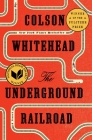
THE UNDERGROUND RAILROAD


Shop Indie Bookstores


The Underground Railroad, Colson Whitehead, Doubleday, 2016, 306 pp


Summary from Goodreads: Cora is a slave on a cotton plantation in Georgia. Life is hellish for all the slaves but especially bad for Cora; an outcast even among her fellow Africans, she is coming into womanhood - where even greater pain awaits. When Caesar, a recent arrival from Virginia, tells her about the Underground Railroad, they decide to take a terrifying risk and escape. Matters do not go as planned and, though they manage to find a station and head north, they are being hunted.

In Whitehead's ingenious conception, the Underground Railroad is no mere metaphor - engineers and conductors operate a secret network of tracks and tunnels beneath the Southern soil. 

My Review:
I liked this novel very much and I admired several things about it. It is the story of a runaway slave in pre-Civil War times and follows her journey to freedom, a journey she has not fully completed by the end of the book.

The stages of her escape and her continuous flight from the slave catcher who pursues her are harrowing. They also reveal the stages a person who has been enslaved might go through to overcome the effects of that enslavement, to find a sense of self, and to learn how to live with more freedom than ever experienced before. I was impressed by the way Cora's journey paralleled the experience of African Americans over the last 200 years or more, including the reality that the social journey is also still incomplete.

Making the Underground Railroad an actual train that runs underground works on so many levels. I am sure I am not the only school child to have originally imagined it that way.

Cora, the runaway, is a great character. She is tough and vulnerable at the same time. She learns from experience, learns to read, and uses the survival skills attained as a slave, while carrying in her heart both the pain and the pride of the knowledge that her mother ran away before her and was never found. 

However, I did not totally love this novel. In interviews, the author says that he read every slave narrative he could get his hands on before writing it. Having read a couple of those myself, including Twelve Years A Slave, I felt that many of the scenes in this book were familiar. His research showed in the writing a bit too obviously. I don't know how else he could have done it and it is important that he is bringing these stories to new readers and keeping them alive. It just bothered me.

Sometimes I lost track of the reality of Cora as a character and felt I was hearing the author's voice more than hers. I think this is Colson Whitehead's first foray into historical fiction and I have found that quibble in other first historical novels before.

Everyone in my reading group was positive about the book, and this is a group that is usually widely divided about anything we read. So that is an indicator that Whitehead has the ability to reach white, middle-aged women on a topic that is full of negatives. Believe me, that is no small feat!  


(The Underground Railroad is available in various formats by order from Once Upon A Time Bookstore.) 

Monday, October 24, 2016

COMMONWEALTH


Shop Indie Bookstores


Commonwealth, Ann Patchett, Harper, 2016, 322 pp


Summary from Goodreads: One Sunday afternoon in Southern California, Bert Cousins shows up at Franny Keating’s christening party uninvited. Before evening falls, he has kissed Franny’s mother, Beverly—thus setting in motion the dissolution of their marriages and the joining of two families.

Spanning five decades, Commonwealth explores how this chance encounter reverberates through the lives of the four parents and six children involved. Spending summers together in Virginia, the Keating and Cousins children forge a lasting bond that is based on a shared disillusionment with their parents and the strange and genuine affection that grows up between them.


My Review:
Ann Patchett's new novel!! All I want to do is gush but I will try to say something intelligent.

The story opens at a christening party. It is a family of Catholic cops and the Deputy DA shows up uninvited for reasons that are not clear to anyone. By the end of that first chapter you don't quite know what you have just read about but you do know it was unsettling and fun at the same time.

That is how it goes for pretty much the whole novel except quite a bit of sadness gets added to the mix.

Two divorces, six siblings and half-siblings shuffled back and forth between two sets of parents, unreliable adults, kids left to their own devices. It is tragic, sometimes humorous, and you cannot look away.

Never for one minute do you doubt that this is Ann Patchett. She has performed this trick for novel after novel. Not sentimentality, not sensationalism, and just a bit off from what we like to think about humanity and family and relationships and love.

She has a unique proprietary recipe for writing novels. Even as she exposes us for the moral weaklings that we are, she still gives us hope and reasons to believe that love is the answer. 


(Commonwealth is currently available in hardcover on the shelves at Once Upon A Time Bookstore.) 

Thursday, October 20, 2016

THE ENGLISH ASSASSIN


Shop Indie Bookstores


The English Assassin, Daniel Silva, G P Putnam's Sons, 2002, 383 pp


Summary from Goodreads: When art restorer and occasional Israeli agent Gabriel Allon is sent to Zurich, Switzerland, to restore the painting of a reclusive millionaire banker, he arrives to find his would-be employer murdered at the foot of his Raphael. A secret collection of priceless, illicitly gained Impressionist masterpieces is missing. Gabriel's handlers step out of the shadows to admit the truth-the collector had been silenced-and Gabriel is put back in the high-stakes spy game, battling wits with the rogue assassin he helped to train. 

My Review:
In his second book of the Gabriel Allon series, Daniel Silva takes us to Switzerland. Gabriel has been sent on a supposed art restoration assignment to the home of private banker Augustus Rolfe in Zurich, only to find the man dead. As it turns out, Rolfe had requested the Israeli espionage office to send him a representative, so Gabriel had been dispatched by his longtime handler Shamron, the ruthless spymaster who calls on Allon when he needs something particularly dangerous carried out.

Gabriel lands in a Swiss jail, breaking the foremost rule: "Don't get arrested!" Soon enough he is embroiled in a case of stolen Jewish art, with a crooked Swiss cop and another crazed assassin as his enemies. Of course, Rolfe has a daughter, a world famous concert violinist, whom Gabriel must protect.

The English Assassin gets off to a much quicker start than the first book, The Kill Artist. I suppose this is because Gabriel's backstory is already known to anyone who has read the former book. However, that backstory is lightly filled in so this one could be read alone.

One reason I like spy thrillers is for the knowledge I get about history and political issues that are not always found in history books or the news. I of course knew that the Nazis had stolen money, jewels, and art from Jews during WWII. What I learned in this novel was the extent to which Swiss bankers were implicit in these crimes. In addition, the private Swiss banking system works on another more secretive and well-protected level which still obstructs the recovery of these thefts.

This was a suspenseful read. So much so, that I had to keep reminding myself that there are 14 more books in the series, meaning that Gabriel must have lived through all the scenes in which I was certain he would not survive.

One more surprising aspect was the way several characters changed throughout the story and committed acts of atonement. Appropriate reading for the period of Rosh Hashana and Yom Kippur during which I read it. 


(The English Assassin is available in various formats by order from Once Upon A Time Bookstore.)

Tuesday, October 18, 2016

A SUMMER BIRD-CAGE


A Summer Bird-Cage, Margaret Drabble, William Morrow & Company, 1962, 224 pp
 
 
One of the pleasures of the 1962 list in My Big Fat Reading Project has been reading first novels by authors I have always wanted to read or authors whose later novels I have read.

Examples: Cover Her Face by P D James, In Evil Hour by Gabriel Garcia Marquez, Letting Go by Philip Roth, Love and Friendship by Alison Lurie.

Margaret Drabble is the sister of A S Byatt. In the usual way of the media, much has been made over the years about their sibling rivalry. Actually both women have been outspoken about this in interviews and though both are highly acclaimed British novelists still publishing novels, they still don't get along. I get it. I have such a sister.

Another theme in novels by women published in 1962 is a growing awareness of a woman's place in society and in marriage, which would eventually become the Feminist movement, although that question has come up sporadically in novels I have read from earlier years.

Examples: The Golden Notebook by Doris Lessing, Love and Friendship by Alison Lurie, An Unofficial Rose by Iris Murdoch.

A Summer Bird-Cage falls into both categories. Sarah, the main character, is a recent Oxford graduate who is working out for herself how to fit her high level of intelligence into adult life. She can't settle on a career, she can't find a man to love, and she is watching other women for clues. Her older sister Louise has always been a torment to her.

As the novel opens, she has been called home for Louise's wedding. All the years of enmity are still there. Louise got the beauty, Sarah the brains. Puzzling to Sarah is why her sister is marrying an older successful novelist who is also a rather despicable man. Did she marry him for his money?

Over the course of a year, she sees the marriages of both her best friend and her sister fall apart as she grapples with her own identity as a woman and as an aspiring writer. The shift of power between the sisters is the most fascinating aspect of the story.

I have read countless novels about this very thing and usually find them good because the relationships between women and sisters are interesting to me and resonate with my experience. What I found exhilarating in this one was the excellent writing. Drabble (only 25 when this first novel was published) is unabashed when it comes to demonstrating her own intelligence. The tone of the writing is modern with an emphasis on dialogue that reads the way people actually talk. 

I want more of Margaret Drabble!


(The Summer Bird-Cage is out of print but can be purchased as a used book or an eboook. I found my copy at the library.)


Sunday, October 16, 2016

EPITAPH


Shop Indie Bookstores


Epitaph, Mary Doria Russell, Ecco, 2015, 577 pp


This is the sequel to Doc and my reading group were unanimous on it being a great read, even though it is a Western, a genre we have never read in all the 15 years I have been a member of the group! No one even complained about the length.

Mary Doria Russell set out to tell the truest story she could about the shoot-out at the O K Corral in Tombstone, AZ. Her goal was to dispel the myths that have grown up about Wyatt Earp. She accomplished both, including taking the tale all the way to Earp's death many years later, delineating how those myths came about. One member of the group felt sad to learn that this hero of hers was not the wonderful man she had always revered. A peril of reading good literature, I guess.

The novel packs a lot of history and I felt I had learned more than I ever knew before about that time period in America. Somehow, though I grew up with Wyatt Earp as one of my heroes, I had never realized that the O K Corral incident occurred in 1881, just twenty years after the Civil War began. Though the Eastern part of the country was quite civilized at that time, the West was still wild, violent, and only slightly lawful.

Life for women in those Western towns was especially brutal. Most single women who found themselves there were forced to turn to prostitution to survive. Only one of the Earp brothers was married to his woman, though they were mostly faithful. But mining of gold, copper, and other minerals brought businessmen from the East and made them rich and influential. The enmity between the North and the South was still a driving social and political force with deep divisions between the two. In fact, it was politics and money that created the conditions leading up to the massacre that lasted only thirty seconds and left everyone involved either dead or scarred for life.

It is truly a monumental read and gives much food for thought. In light of our current Presidential campaign, please read and ponder the Author's Note found at the beginning of the novel:

"The poles of American politics have been stable since the presidential election of 1800. A federalist party proclaiming, 'We are a nation of laws' has always been opposed by a 'Don't tread on me' party that resists regulation in the name of personal liberty. Since the passage of the 1964 Civil Rights Act, they've been called the Democratic and Republican parties, respectively. Please note that in the 1880s, those labels were reversed."


(Epitaph is available in various formats by order from Once Upon A Time Bookstore.)