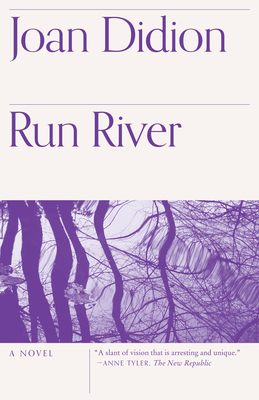
Run River, Joan Didion, Ivan Obolensky Inc, 1963, 264 pp
I first read Joan Didion in 2000. Play It As It Lays, published in 1970, was her second novel. I grabbed it off a library shelf because I had heard of her, had heard it was a classic LA novel, but I was in no way prepared for what I found, except maybe by the seven Joyce Carol Oates books I had read by then. That disturbing tale of a woman's descent into madness as she compulsively drove the freeways of Los Angeles kept me from falling asleep after I read it in one evening.
Since then I have read her memoirs, The Year of Magical Thinking, about the death of her husband, and Blue Nights, about the death of her daughter.
Joan Didion is a great writer. Her precision reminds me of Nadine Gordimer, her incisive intelligence reminds me of many of my favorite female intellectual writers, and her ability to plunge into the murky depths of the human psyche is the JCO connection for me.
Run River was her first published novel, though she had already been an editor at Vogue Magazine and went on to write articles for many publications. It is set in her hometown of Sacramento, CA, and features two families, descended from pioneers, whose rural ranches are falling into ruin.
The novel explores a troubled marriage, an insular community, and their roots in California history. Lily is a serial adulteress and her husband Everett is a bitter, failing, though still wealthy rancher who nevertheless loves the fragile Lily and their children. In his own uncommunicative way, he tries to protect his family and his wild sister. The book opens on the final tragedy of their lives, then goes back to show how they got there.
In some ways it was similar to many of the bestsellers I have read from the 1940s and 1950s about wealthy dysfunctional families. Though it has the hallmarks of a first novel, of its being derivative, those qualities of Didion that have gained her critical acclaim in both fiction and nonfiction are all on display.
Last month I watched The Center Will Not Hold, a documentary of Joan's life. It can be seen on Netflix streaming. I was enthralled by this look into her life, her writing and the way she feels about it all looking back from the age of 83.
Nine days later I read Run River. Not every reader falls under this woman's spell but I have, with every book I read. My life has been tame in comparison, though never boring or even calm, but she speaks to my experience as a woman coming up in the late 20th century and trying to make sense of the 21st.
(Run River is available in paperback by order from Once Upon A Time Bookstore.)