Tuesday, February 27, 2018

V.


Support Independent Bookstores - Visit IndieBound.org


V., Thomas Pynchon, J B Lippincott Company, 1963, 492 pp
 
Summary from Goodreads: Having just been released from the Navy, Benny Profane is content to lead a slothful existence with his friends, where the only real ambition is to perfect the art of "schlemihlhood," or being a dupe, and where "responsibility" is a dirty word. Among his pals--called the Whole Sick Crew--is Slab, an artist who can't seem to paint anything other than cheese danishes. But Profane's life changes dramatically when he befriends Stencil, an active ambitious young man with an intriguing mission--to find out the identity of a woman named V., who knew Stencil's father during the war, but who suddenly and mysteriously disappeared.
 
My Review: 
So I made it through the first novel by Thomas Pynchon, also the first I have read of his novels. If you have never read it and you look at the Goodreads summary above, it looks straightforward enough. It is not!
 
I felt lost for quite a while; lots of characters and two time lines that pay little attention to letting you know what happened when. There are a ton of wikis for V. on the web but I did not use them that much. After all, a new reader in 1963 had no wikis, so I pretended I was one of them. Eventually I fell into whatever groove there was to be had and went along for the ride.

The parts about Benny Profane and the Whole Sick Crew take place mostly in New York City in 1955. All very beat sensibility and Cold War ennui. Quite an unsavory bunch they are. Even though the European/North Africa parts were way more confusing, I liked those parts better. They had a spy thriller essence to them and several incidents took place in Alexandria, a city I have a fondness for from reading Lawrence Durrell's Alexandria Quartet. It is nice to have somewhere to feel at home when one is reading a chopped up, confusing story.

In the end, I felt it had been worth my time to read such an iconic book by an author revered by so many. I am actually looking forward to reading more Pynchon. His style reminded me of Michael Chabon whom I love. Also I found echoes of certain Beat authors I read in my 1950s lists.

One other thing: I was reading V. concurrently with Norman Mailer's Presidential Papers. Both were published in 1963 and the parallel ideas and sentiments and views about America at that time in both books were startling. I don't know if the two knew each other or ever hung out, but for sure they were reading the same stuff and thinking along the same neural pathways.

I have about 10 books left on my 1963 reading list and I am getting weary of the year, but V. was a breath of fresh air and a harbinger of things to come. The same thing happened when I was reading the 1940s and 1950s lists. About midway through each decade, I began to feel a shift with the older styles falling away the new ideas and concerns popping up.

I created My Big Fat Reading Project with the idea that I could learn about the whole big picture of the years I have lived by reading the important books of each one. I am thrilled over and over as I keep finding this turning out to be true.


(V. is available as a Perennial Classics paperback reprint by order from Once Upon A Time Bookstore.)

Monday, February 26, 2018

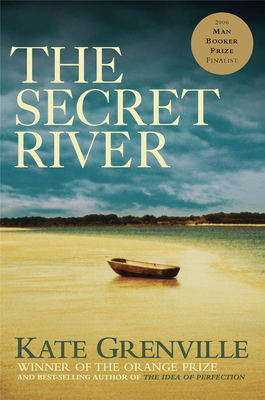
FIRESTORM


Support Independent Bookstores - Visit IndieBound.org


Firestorm,  Nevada Barr, G P Putnam's Sons, 1996, 307 pp
 
 
This is the fourth book in Nevada Barr's mystery series, all set in US National Parks. I am reading the series because they are well done and because it is my puny attempt at activism in these times when our parks are at risk.
 
Firestorm was especially timely after the horrendous fire season we had in California last fall. In fact, it is set in Northern California's Lassen Volcanic National Park, home to jagged peaks, meadows, lakes, volcanoes, and steaming fumaroles (openings in or near a volcano through which hot sulfurous gases emerge.)

Anna Pigeon, park ranger, has been sent to Lassen as a camp medic and security officer to join the team fighting the Jackknife Fire. (According to the author's website, this is a fictional fire based on one she once worked in her park ranger days in Idaho.) As Anna treats the crew in the medic tent, you get minute knowledge about what these firefighters suffer while battling huge fires. You also learn about the various characters on the team, their talents and their grudges.

After several days of this, a cold front moves in with snow following. The camp is demobilized and all personnel begin to move out, trusting the weather to finish their job. But Anna and her crew are delayed due to the last minute rescue of a firefighter with a broken leg.

Within a couple hours, the erratic winds of a thunderstorm preceding the blizzard turn the ravine where they were stationed into a firestorm. As it explodes in flame, this crew of eight is trapped with only little individual tent-like fire shelters to protect them.
 
Many hours go by until the fire passes and that is when you learn what it is like to be dependent on these little shelters to stay alive while feeling like one is being baked to death. As Anna and her team members emerge one of them is found dead from a knife stabbed into his back.
 
At that point the story grows from an extreme adventure tale into a desperate race to determine who committed the murder. There they are in a tiny cabin, with the snow and the cold and no food for over 48 hours before a rescue crew can get to them. Anna is still being the medic but also relentlessly pursues her detective work as security officer. Danger, privation, and fear do their work on them all but of course Anna solves the crime while the clues are fresh just before their rescue arrives.
 
Great mystery fiction with a fearless heroine alongside the gritty realities of firefighting. When we had the fires last fall I remained glued to the videos and updates from the news and the Fire Department feeds on Twitter, but now I know much more about what really goes on! 


(Firestorm is available in paperback by order from Once Upon A Time Bookstore.)
Friday, February 23, 2018

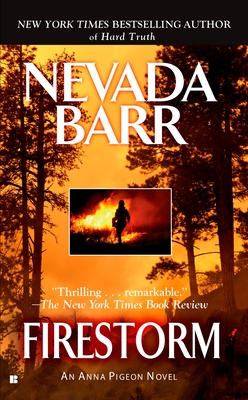
THE SECRET RIVER


Support Independent Bookstores - Visit IndieBound.org


The Secret River, Kate Grenville, Canongate Books, 2006, 334 pp
 
 
There is a trend happening among some of the bloggers I follow involving either reading books one already owns from our groaning shelves and/or getting around to books on our TBR lists. On New Year's Day as I was considering my reading plans for 2018, I created a combination of both. I went back through 12 years of my TBR lists and selected one book from each of those years, 2006-2017. From these 12 books, some of which I already own, I made a list, one to be read in each month of 2018. How geeky is that?
 
From my 2006 list I chose The Secret River for January. I have always wanted to read it since I first saw a review. I also particularly love Australian authors and have now found in Kate Grenville a new one to love.

The Secret River is historical fiction set in the years when Great Britain began shipping off their criminals to New South Wales, a land recently discovered by the famous explorer James Cook. Makes sense right? Why build more prisons when you can get good cheap slave labor to build up a new colony? 

William Thornhill in 1806, a dirt poor illiterate bargeman on the River Thames, shoring up his meager income with petty crimes, is finally caught. His sentence could have been hanging but instead he is deported to New South Wales and takes his new spunky, literate wife Sal with him.

Once in their new city, Sydney, they begin the long and challenging climb from convict to pioneer. Sal has babies, works hard and smart to increase their fortunes, but is never reconciled to staying. Her dream is to take their new found riches back to London.

William becomes a boatman on the Hawkesbury River and finds a lust for having his own land. Eventually he gets it and a host of new troubles. The indigenous peoples have no concept of private property. While they are not innately hostile, the settlers manage to arouse their anger. As you can imagine, or may have read about, it gets ugly.

William Thornhill is one of the last to agree with violence as a solution but eventually has no choice if he wishes to realize his dream. So this is a cautionary tale about the necessary evils inherent in dreams.

The novel was a complete page turner, written with a sure hand, propulsive story telling and fully fleshed out characters. I want to read both sequels and also was inspired to learn more about Captain Cook, who it seems unwittingly opened up the world to the colonial ambitions of the British Empire.


(The Secret River is available in various formats by order from Once Upon A Time Bookstore.)
Thursday, February 22, 2018

THE PRESIDENTIAL PAPERS


Support Independent Bookstores - Visit IndieBound.org


The Presidential Papers, Norman Mailer, G P Putnam's Sons, 1963, 335 pp
 
 
I don't know for sure why I read this except that I have a fascination for Mailer. I don't particularly recommend it to the general reader but I am glad I read it. The book is a collection of articles originally written by Mailer for various magazines and newspapers between June, 1960 and August, 1963. In collecting these writings for book form, Mailer added later comments and did some revisions. On publication day John F Kennedy was still alive.

Throughout Mailer rails about American society and politics, as only Mailer could do. He includes a couple pieces written about the Democratic Convention that nominated Kennedy, another about the Kennedy campaign, and one with thoughts about Jackie Kennedy. Thus the title.

Since I have read a full biography of JFK and am currently on the third volume of Robert A Caro's huge biography of Lyndon B Johnson, this was a good companion piece for me. I would recommend the collection for those interested in that period of American history.

I don't necessarily agree with all of Mailer's viewpoints but I have to admire his style, his nerve, and his stances on what was happening to America in those years. I even have to admire his huge raging ego. New fact to me: he was a co-founder of The Village Voice!


(A 2012 reprint of The Presidential Papers is available in paperback by order from Once Upon A Time Bookstore.)

Tuesday, February 20, 2018

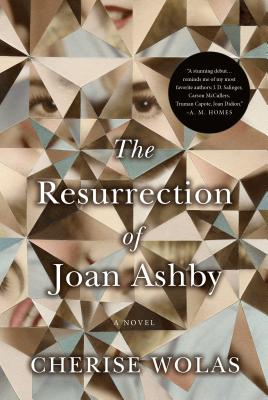
THE RESURRECTION OF JOAN ASHBY


Support Independent Bookstores - Visit IndieBound.org


The Resurrection of Joan Ashby, Cherise Wolas, Flatiron Books, 2017, 531 pp
 
 
I tore through this long novel in two and a half days. Another novel that had so much relevance to my life, I wondered if Cherise Wolas knew me.
 
Joan Ashby, our heroine, was already a successful and much loved writer in the eyes of both critics and readers. Her two short story collections were best sellers and she had traveled the world doing readings. She had money. She had planned to remain single, childless, and to continue writing and publishing for the rest of her life.

Just as she began writing her first novel, she met and fell in love with Martin Manning, an up and coming surgeon. She told him, "There are two things you should know about me. Number one: My writing will always come first. Number two: Children are not on the table. I possess no need, primal or otherwise, for motherhood."

Reader, she married him. She got pregnant. She had the baby. A couple years later she had another. Within a short time her writing came last. It would be 28 years before she published again. And this novel is that story.

The writing is excellent and pulled me along like any of the novels I have loved. The construction of the story is daring, including excerpts of Joan's short stories and flashbacks to her life before marriage and children. The characters are wonderfully fleshed out.

Finally, after writing secretly for all those years, after performing motherhood and wifehood to the best of her ability, after Martin has betrayed her in so many ways, after her sons have demanded more of her than she could have imagined, she breaks away and engineers her own resurrection.

This novel has been compared to Fates and Furies by Lauren Groff. Not everyone loved that novel but I did, unconditionally. The Resurrection of Joan Ashby is no less wrenching a portrayal of the harm done to women, but somehow it feels milder. I loved Groff's literary prose. In fact, I was amazed by it. Cherise Wolas writes with assurance in this first novel but the book felt more commercial to me, more consciously designed to be a page turner and to avoid offending readers. When Joan escapes to India and begins to learn meditation and make new nourishing female friends, the book takes a turn into Eat Pray Love territory. I loved that book also though not everyone did, but it was way more twee than Fates and Furies. The Resurrection of Joan Ashby falls somewhere in between.

My conclusion is that women's stories are many and varied, though the theme remains constant. They all need to be told and I for one need to read them. I find that I can compare and contrast these different versions but my judgement is clouded by all the emotion and betrayal most women have experienced. We ask for it in many ways, we are perhaps too trusting, we surely love too much. In any case, Joan Ashby's story is one among the best versions of our tale.


(The Resurrection of Joan Ashby is available in hardcover on the shelves at Once Upon A Time Bookstore.)

Monday, February 19, 2018

THE GAME-PLAYERS OF TITAN


Support Independent Bookstores - Visit IndieBound.org


The Game-Players of Titan, Philip K Dick, Ace Books, 1963, 215 pp
 
 
Reading Philip K Dick, for me, is like hanging out with a super odd friend and just marveling at how very odd he is. This is the ninth book I have read by him. I am reading his books roughly in the order he published them though I have skipped a few. He was very prolific at the beginning and it seems I can only take so much of his clunky prose.
However, he was so prescient, perhaps the most of all speculative writers ever and that is why he fascinates me and many other readers. 

In this one, Earth is ruled by an alien race that presents as amorphous blobs. The human race is dying off due to a low birth rate. The remaining adults are obsessed with Bluff, a game in which they gamble for cities and spouses, while drinking heavily.

It is funny in a black humor way. All the characters are unlikable. Everything changes every few pages. The set piece is a game of Bluff on the alien planet Titan, with the two races competing for Earth.

Read it at your own risk!


(The Game-Players of Titan is mostly out of print. Try your library or favorite used book seller.)

Friday, February 16, 2018

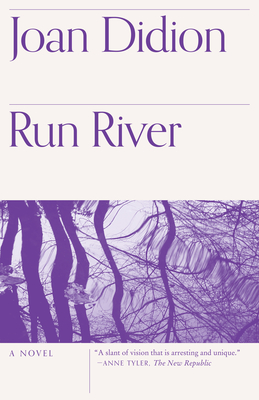
RUN RIVER


Support Independent Bookstores - Visit IndieBound.org


Run River, Joan Didion, Ivan Obolensky Inc, 1963, 264 pp
 
 
I first read Joan Didion in 2000. Play It As It Lays, published in 1970, was her second novel. I grabbed it off a library shelf because I had heard of her, had heard it was a classic LA novel, but I was in no way prepared for what I found, except maybe by the seven Joyce Carol Oates books I had read by then. That disturbing tale of a woman's descent into madness as she compulsively drove the freeways of Los Angeles kept me from falling asleep after I read it in one evening.
 
Since then I have read her memoirs, The Year of Magical Thinking, about the death of her husband, and Blue Nights, about the death of her daughter.

Joan Didion is a great writer. Her precision reminds me of Nadine Gordimer, her incisive intelligence reminds me of many of my favorite female intellectual writers, and her ability to plunge into the murky depths of the human psyche is the JCO connection for me.

Run River was her first published novel, though she had already been an editor at Vogue Magazine and went on to write articles for many publications. It is set in her hometown of Sacramento, CA, and features two families, descended from pioneers, whose rural ranches are falling into ruin.

The novel explores a troubled marriage, an insular community, and their roots in California history. Lily is a serial adulteress and her husband Everett is a bitter, failing, though still wealthy rancher who nevertheless loves the fragile Lily and their children. In his own uncommunicative way, he tries to protect his family and his wild sister. The book opens on the final tragedy of their lives, then goes back to show how they got there.

In some ways it was similar to many of the bestsellers I have read from the 1940s and 1950s about wealthy dysfunctional families. Though it has the hallmarks of a first novel, of its being derivative, those qualities of Didion that have gained her critical acclaim in both fiction and nonfiction are all on display.

Last month I watched The Center Will Not Hold, a documentary of Joan's life. It can be seen on Netflix streaming. I was enthralled by this look into her life, her writing and the way she feels about it all looking back from the age of 83.

Nine days later I read Run River. Not every reader falls under this woman's spell but I have, with every book I read. My life has been tame in comparison, though never boring or even calm, but she speaks to my experience as a woman coming up in the late 20th century and trying to make sense of the 21st.


(Run River is available in paperback by order from Once Upon A Time Bookstore.)


Tuesday, February 13, 2018

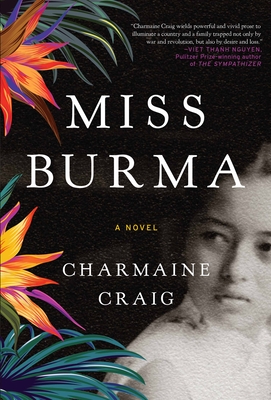
MISS BURMA


Support Independent Bookstores - Visit IndieBound.org


Miss Burma, Charmaine Craig, Grove Press, 2017, 355 pp
 
 
This astounding novel was such a worthwhile read. All I knew of Burma, now called Myanmar, was that in recent years it has been ruled by an oppressive military junta, closed off from the world. My clearest impression was of the time in 2004 when the country refused any foreign aid after the Indian Ocean earthquake and tsunami. Just the other day they were in the news as the genocide of minorities continues there.
 
So what happened in that poor tortured country? Charmaine Craig is the daughter of Louisa Benson, who rose to fame in Burma and the world when she began winning beauty contests and eventually became a contestant for the Miss Universe Beauty Pageant. This novel is the story of the author's mother and her grandparents, but it is also a history of Burma from WWII onward.

I call the book astounding because of the way it entwines the personal lives of her family with the tumultuous political upheavals of their country. It covers colonial abuse and then neglect by the British Empire, bitter enmity between ethnic groups as well as intermarriage between the groups, and the horrific human rights abuses that have gone on. The incredible bravery and resistance of the author's mother and grandmother and their fight for freedom as members of the Karen people, the most despised minority of Burma, makes that political history come alive.

It is a lot to take in. Love between husband and wife, parents and children, siblings, is almost impossible to maintain in such situations. The suffering of these people challenged my imagination. The question is, aside from the right and need for people to tell their stories, do you want to read and know about it if you are one of the more privileged members of the human race. As a reader, that is your choice and you have the right to choose.

At this point in history it often seems that mankind will never change. The powerful will always suppress the weak and nearly always win. The news will either upset or soothe, depending on the outlets we choose to read. Reading historical novels like this, especially when based on real people, inspires me. Sometimes the apparent weak are stronger than it appears and that urge for freedom and justice does have an impact.


(Miss Burma is available in various formats by order from Once Upon A Time Bookstore.)

Sunday, February 11, 2018

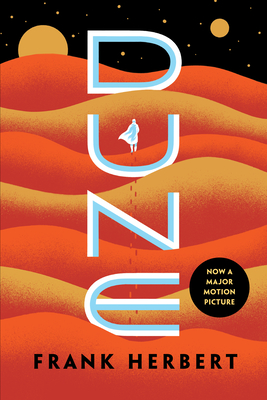
DUNE


Support Independent Bookstores - Visit IndieBound.org


Dune, Frank Herbert, Chilton Books, 1965, 473 pp
 
 
Brief Summary from IndieBound: Set on the desert planet Arrakis, Dune is the story of the boy Paul Atreides, who would become the mysterious man known as Muad'Dib. He would avenge the traitorous plot against his noble family--and would bring to fruition humankind's most ancient and unattainable dream. 
 
 
My Brief Review:
I have finally read this iconic book, winner of both the Hugo and Nebula awards. I thought I was possibly the last person on earth to have not read it before, but at our reading group meeting, out of five attending, only two of us read it for the first time.

Anyway, it was just as great as all its champions say. So much of what influenced my worldview in the 1960s is encapsulated in the story: ecology, the dangers of big corporations to both the planet and society, the evils done to native populations when empires come to colonize. Then there is religion, fantasy, witchcraft, and even quite an exploration of hero worship and cult-like communal social groups.

I think if anyone in publishing read the above paragraph, eyes would roll and scoffing would take place. Who does this guy Frank Herbert think he is kidding? He was not kidding. He really did have the knowledge of history and the writing chops to pull it off.

I am so glad I read it. I loved every page. Thanks to the member of Molly's Group who convinced us to choose it. I am also glad I bought my own copy. It is a book worth rereading.


(Dune is available in paperback by order from Once Upon A Time Bookstore. I ordered my copy there and it arrived in three days.)

Friday, February 09, 2018

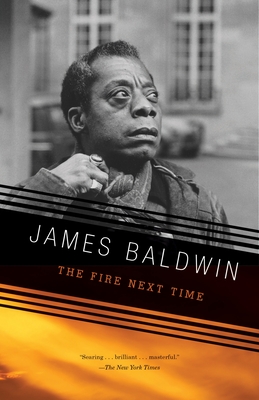
THE FIRE NEXT TIME


Support Independent Bookstores - Visit IndieBound.org


The Fire Next Time, James Baldwin, The Dial Press, 1963, 106 pp
 
 
This man was so eloquent, his mind so capacious, his ability is to present ideas imbued with emotion but with such clarity. In this slim volume he both stirred me up and calmed me down. It has two parts.
 
The first, My Dungeon Shook: Letter to My Nephew on the One Hundredth Anniversary of the Emancipation Proclamation, a mere eight pages is just that, a letter. I read somewhere, but can't find it now, that this letter inspired Ta-Nehisi Coates to write Between the World and Me. Baldwin is advising his nephew to be strong, assuring him that he is, and recommending a path for the future he will face.

"And if the word integration means anything, this is what it means: that we with love, shall force on our brothers to see themselves as they are, to cease fleeing from reality and begin to change it." (He is talking about their white brothers.) "We cannot be free until they are free." That advice requires almost inhuman or above human strength and a whole lotta love.

Approximately 53 years later on, Coates was not so full of that love. Too many great leaders slain, too many more black sons slain or imprisoned. Quite a bit more anger and fear than Baldwin was showing in 1962 when he wrote his letter. 150+ years since one of our greatest Presidents issued that proclamation is a long time to wait for the change that was supposed to come. Five generations of waiting.

I found the second much longer section more interesting: Down at the Cross: Letter from a Region in My Mind. It is James Baldwin losing his religion and yet not really. I knew something of Baldwin's religious life, told as fiction in Go Tell It On The Mountain. In this version he deconstructs it further. A lot happened to him in ten years.

He tells of returning to America after living abroad, of witnessing the cruelties laid on Blacks who followed Martin Luther King's non-violent methods of protest, of befriending Malcolm X, of meeting Elijah Muhammad.

Finally he pulls it all together as really only James Baldwin can do and explains what it would really take to put an end to racism in America. In those words I heard the echos of the truth at the heart of any of the world's religions: the ability to love ourselves and our fellow man is the key to a more just world. He admits to how hard that is for any human being. Then he ends with a prophecy that has come forth from any religion's story of the flood, in the words of a slave song: "God gave Noah the rainbow sign, No more water, the fire next time."

I can't say that this brought me hope. I don't think Ta-Nehisi Coates operates from a place of hope. The fire does approach more closely everyday. In some areas of the world it has arrived. Is this ancient dream of peace, justice and brotherhood only that? A dream? Is that why so many write, read, and discuss? Can it ever become reality?

What I do recognize is that James Baldwin, along with many other people of good will, found that dream in a church of some kind. The truly brave and tough people of good will walk out of church into the world to participate in realizing the dream. No matter what name those people give to this spiritual practice, they are my people.


(The Fire Next Time is available in paperback by order from Once Upon A Time Bookstore.)
Tuesday, February 06, 2018

FEBRUARY READING GROUP UPDATE


I am a little bit late posting this. I can't seem to keep up with blogging because I am having such a great time reading. Terrible problems I have, right?

Reading groups are a bit quiet this month. The One Book At A Time group never met in January due to rampant flu-not me thank goodness. So we will discuss Miss Burma this month. Laura's Group went on hiatus for the holidays and has so far not been resurrected. And the Tiny Book Club also had a member down with two bouts of flu. To date we have not discussed The Wreath from January as a group and have not got a new book picked. Did you really want to know all of that? Well, now you do.
 
Here's more: Some of you wanted to know how my groups did with the fantasy novels last month. Well, it was all a great success. In Molly's Group three of the five attending had already read Dune but reread. Molly and I were new readers of the sci fi classic. We all were totally thumbs up on the book and had a rousing discussion. 
 
I had been quite worried that my recommendation to the Bookie Babes that we read The Fifth Season would end in disaster, since some of them had never even read fantasy before. Well, we had two haters, one of whom said she kept wondering what was wrong with her because she couldn't understand the story at all. But the rest, 7 out of 10, either admired the imagination at work or completely loved the story, the characters and the challenge. One member had already finished the second book in the trilogy by the time we met and was well into the third. Our motto at Bookie Babes is "take a chance on a book" and last month we lived it!


Here is the line-up for February. I am excited to discuss all three:
 
 
One Book At A Time:
Support Independent Bookstores - Visit IndieBound.org
 
 
Tina's Group:
Support Independent Bookstores - Visit IndieBound.org
 
 
Bookie Babes:
Support Independent Bookstores - Visit IndieBound.org
 
 
What are your groups discussing this month? Has anyone newly joined a reading group lately? 


Sunday, February 04, 2018

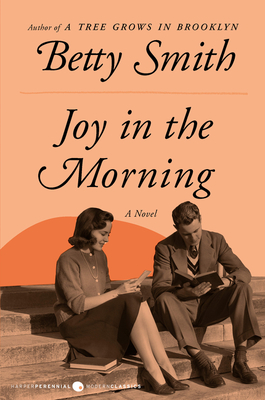
JOY IN THE MORNING


Support Independent Bookstores - Visit IndieBound.org


Joy in the Morning, Betty Smith, Harper & Row, 1963, 294 pp
 
 
Sometimes even a reader such as myself needs a heartwarming book. The good thing about Betty Smith is that her version of heartwarming is always peppered with enough realism about the way life goes that she, narrowly, avoids sentimentality.
 
I have read her most famous novel, A Tree Grows in Brooklyn, several times. I will probably read it again someday. Joy in the Morning was her last novel. After reading it I learned that she devoted much of her writing life to plays. In fact Annie, the heroine of this novel, is a budding playwright and overcomes anything in her way to become one.

It is 1927 when Annie leaves her Brooklyn home at the age of eighteen, against her mother's advice, to marry Carl. They had met in Brooklyn but Carl went off to a mid-western university to study law. Soon Annie followed. Carl's mother also opposed the marriage.

The early years of any marriage always involve adjustments, especially in the days when couples did not live together beforehand and had rarely had sex. Often a young couple is not financially secure. All of this is the case for Annie and Carl and this story is full of hardship. Then comes the Depression and the first pregnancy.

If there is one thing Betty Smith knows about life it is how women in those days provided the stability that makes a family, both emotionally and in the day to day practical matters. Annie is as dreamy as any young woman but she also has grit, a huge heart and a good sense of humor.

So she uses her imagination to outwit adversity and her stubbornness to keep writing those plays. Add to that her wisdom in how to keep Carl somewhat settled down when he (as we say in our house) "gets like he gets," and you can't deny she is a wonder.

I must say that all of Annie's lovely and admirable qualities do strain a reader's credulity but somehow I never care when reading Betty Smith. She just gives me hope and makes me feel happy. We all need that sometimes, right?


(Joy in the Morning is available in paperback by order from Once Upon A Time Bookstore.)
Thursday, February 01, 2018

BOOKS READ IN JANUARY


Here in Los Angeles we had a few cold days, a couple rainy days, a mudslide down our street, but all in all fairly mild weather compared to much of the rest of the country. The peacocks were happy. So was I since I set an ambitious reading goal for 2018, not because I want to compete with anyone but because I have recommitted to my writing and have a lot of books to get through. I was happy to have made my goal of 12 books read and I liked every one!

Stats: 12 books read. 10 fiction. 7 written by women. 5 by authors new to me. 2 historical. 1 Nobel Prize winning author. 1 translated. 1 mystery. 3 speculative. 2 non fiction. 7 for My Big Fat Reading Project.
Favorites: Miss Burma, The Resurrection of Joan Ashby, The Secret River.
Least favorite: none


Support Independent Bookstores - Visit IndieBound.org


Support Independent Bookstores - Visit IndieBound.org


Support Independent Bookstores - Visit IndieBound.org
 
 
Support Independent Bookstores - Visit IndieBound.org 


Support Independent Bookstores - Visit IndieBound.org


Support Independent Bookstores - Visit IndieBound.org


Support Independent Bookstores - Visit IndieBound.org


Support Independent Bookstores - Visit IndieBound.org


Support Independent Bookstores - Visit IndieBound.org


Support Independent Bookstores - Visit IndieBound.org


Support Independent Bookstores - Visit IndieBound.org


Support Independent Bookstores - Visit IndieBound.org


I am way behind on writing my reviews of these books and posting them here but hope to get caught up soon plus make my reading goal for next month. 

How was your reading in January? Do you have any recommendations for me?


Tuesday, January 30, 2018

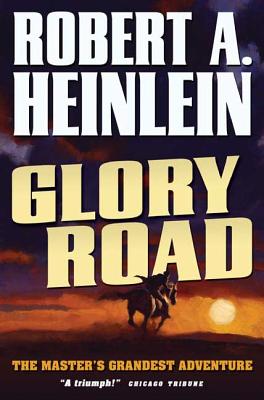
GLORY ROAD


Support Independent Bookstores - Visit IndieBound.org


Glory Road, Robert A Heinlein, G P Putnam's Sons, 1963, 288 pp
 
 
Notice:
I am afraid you who follow my blog are going to be reading about a larger number of old books this year. I have committed myself to a firmer push to get through the lists of My Big Fat Reading Project, to reading 4 a month from those lists rather than 2 a month as I did last year. Seriously, if you want to get the flavor of a year from your past, there is no better way than to read the literature. Of course, if you are not as ancient as I am, 1963 might have been a past life for you!
 
Review:
This is the 14th book I have read by Heinlein. I decided to follow him in my project because he was one of the science fiction greats but also because he became a controversial figure as his politics evolved. Being controversial seems to go hand in hand with the speculative fiction writer territory.
 
The guy wrote in a variety of voices and from a variety of viewpoints. In Glory Road he uses his fast-talking, strutting his stuff voice for the main character Scar and his adventure yarn style.

Scar Gordon is a disillusioned army veteran in the Cold War years. Of course, being a Heinlein hero, he has almost superhuman abilities as a soldier. Now he is faced with either making a life in some soulless suburb or looking for adventure.

While chilling in some unnamed beach town, waiting for developments, he meets "the most stare-able woman" he has ever seen and ends up becoming her professional "hero" for hire. Off they go on what she calls "the glory road." Traveling through space, on a quest against strange foes, they adventure on strange planets and through time warps. Scar's personal quest is to win this woman for his wife.

He does and it turns out to be a mixed blessing. Thus in addition to being a rip-roaring yarn, the novel also becomes a meditation on love and marriage when a man has met more than his match.

Ha! I loved it.


(Glory Road is available in paperback by order from Once Upon A Time Bookstore.)
Saturday, January 27, 2018

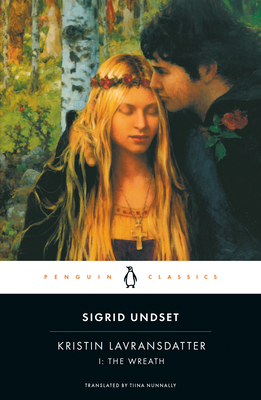
THE WREATH


Support Independent Bookstores - Visit IndieBound.org


The Wreath, Sigrid Undset, Penguin Classic, 2005 (originally published in 1920, translated from the Norwegian by Tina Nunnally, 1997) 291 pp
 
 
The Wreath, written by 1928 Nobel Prize winner Sigrid Undset, was published in Norway in 1920. It is the first of a trilogy called Kristin Lavransdatter, set in 14th century Norway. I read it for my Tiny Book Club. First translated into English by Charles Archer in 1923, a new translation by Tina Nunnally published in 1997 is now considered a much improved rendering of the book into English.
 
I liked The Wreath but I did not love it. Kristin herself is one of literature's great bad women. She had been betrothed by her father to a man who would bring land, wealth and stability into the family, as was the custom in the 14th century. Before the marriage can take place, Kristin falls passionately in love with a fallen knight, Erlend Nikulausson. They consummate their passion when a young Kristin is spending a year in a convent, supposedly to calm her down before her marriage. By the time she manages to convince her family to release her from the betrothal and allow her to marry Erlend, she is secretly pregnant.

The Wreath introduces the wild and beautiful world of Norway at that time. When the story opens Kristin is seven and goes on her first journey outside the valley where she was born. She adores her father and he her. Lavrans Bjorgulfson and his wife Ragnfrid had lost child after child, leaving Ragnfrid permanently depressed. When Kristin came along and managed to live, Lavrans became besotted with his daughter but Ragnfrid could never dare to give her love to another child she might lose.

Hard as it is to imagine being a daughter in such an almost primitive culture, the author makes sure you experience all of it. I kept thinking of Heidi while I read. Also Hild by Nicola Griffith. Religion plays a huge role with Christianity and ancient pagan beliefs competing daily in the lives of these people.

Despite all of it entrancing elements, I was not wholly won over. Even after discussing the book with my book club members. The Middle Ages comprise 1000 years of not one thing good for women. Compared to then we have indeed come a long way. The only thing easier for a woman then was to become a fallen one and the repercussions were dire in the extreme.

Sigrid Undset certainly brings to life all the subjection but she also has a rather too obvious mission that included ideas such as passion trumps all and women are people too. Kristin suffers unbelievably in this tale though she does finally marry her true love. I was not completely convinced by this character. It is so clear that marriage to Erlend is only going to bring her more suffering that I do not feel at all compelled to read the second book in the trilogy, The Wife.
 
If I had read The Wreath back in the 1980s when I first read The Mists of Avalon, I think I would have loved it and gone on to finish the trilogy. Sometimes, timing is everything. I have to credit Sigrid Undset for taking on a subject that before 1920 had mostly always been written about by men in Western Europe.
 
 
(The Nunnally translation of The Wreath is available in paperback by order from Once Upon A Time Bookstore.)
Thursday, January 25, 2018

MR STONE AND THE KNIGHTS COMPANION


Mr Stone and the Knights Companion, V S Naipaul, Penguin, 1963, 160 pp
 
 
V S Naipaul is one of the authors I am following in My Big Fat Reading Project. His fifth novel marks a change in his life but maintains the themes of his first four novels which were set in Trinidad, where he was born as a descendant of people brought there by the British from India and indentured to fill certain positions. This novel is set in London.
 
What I have liked about Naipaul so far is his incisive, mostly uncomplimentary approach to characters, society, and politics. I will see as I continue to read him, but I suspect it is that quality which garnered him the Nobel Prize. It certainly applies to his 1963 novel.
 
Mr Stone is so very British, so much so that he is almost a caricature. I felt that Naipaul created him out of a foreigner's viewpoint which indeed he was when he came to Oxford for his university education in the early 1950s. I also felt that he was probably trying to imitate some of the more renowned British writers of those times.

A long-time bachelor in a lowly job, nearing retirement, Mr Stone suddenly marries a widow, the former Mrs Springer, whom he met at a party. A year of adjustment follows in which she takes over his household. One night in his study, he is pondering his approaching retirement and another sudden change comes over him. He creates the idea of the Knights Companion, a sort of fraternal organization of which the members will go about visiting and giving aid to retired men.

After a fevered few nights writing up his idea, he presents it to the head of his company as a program to bring goodwill to the business. He is promoted, becomes a department head with his own staff, and the plan is a huge success. Of course there are still bumps in the road; certain upsets and dishonest actions he must smooth out and a public relations man who tries to and in the end does steal his thunder.

I say that Naipaul's themes remain because once again he has created a hapless male, alternately puffed up and failing, insensitive to and troubled by women, who tries to buck an entrenched system. He is still incisive and tragicomic.

Naipaul in later years has suffered from the ravages of public opinion, labeled as racist and misogynist. I don't doubt the charges. I read him because I am female and he is male. He shows me a male viewpoint of a certain stripe and I find it fascinating no matter how off-putting it may be.


Tuesday, January 23, 2018

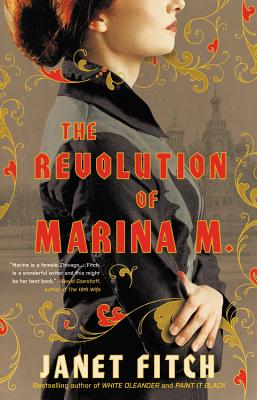
THE REVOLUTION OF MARINA M.


Support Independent Bookstores - Visit IndieBound.org


The Revolution of Marina M., Janet Fitch, Little Brown and Company, 2017, 800 pp
 
 
Do you love Russian literature? Do you think an American can measure up in writing a book of historical fiction set in Russia? I am here to tell you, she can!!
 
So many things made this one of the best books I read in 2017. It is a story of the Russian Revolution told through the eyes and heart and mind of a budding teenage poetess. I don't think that has been done very often, if ever. It is Janet Fitch's homage to Tolstoy, Pushkin and Russian poets.

Marina M! What a character. She explodes and emotes throughout the novel. It is as though Astrid from White Oleander and Josie from Paint It Black were merely writing exercises to prepare for the creation of Marina. You will either love her to distraction or find her annoying beyond belief. She is Bella from Twilight, Katniss from The Hunger Games, torn between two men but with the intellectual and political soul of the Russian greats. She is a poet, dangerously sensuous, daring, plucky, and ultimately as brave and resourceful as any male hero. She is only 16 at the beginning of the story and 19 at the end.

There is much more to this novel though than romance and heroics. It is a study in revolution with all its counterparts: idealism, too rapid change, violence, suffering, political infighting. The age old conundrum of how to upset a fixed order, how to create a just society, what it actually takes to run a country and a society, freedom, oppression, and all those gray areas where crime takes advantage of disorder to profit. All told from the viewpoint of one of "the people," not the leaders.

Although I suppose I knew better, I realized that all my life I have thought of revolution as an event that takes place over a few days. I realized that, like getting the news from sound bites and twitter posts, revolutions are taught by means of the "definitive event." The Boston Tea Party, The Storming of the Bastille, The Abdication of Czar Nicolas II, etc, etc.

In fact, a revolution takes years. As does a revolution in one's personal life. There is the day you walk out, of a family, a job, a marriage, but the new life you are trying to build takes years to come about and your former life trails you like a ghost or a nightmare.

There were countless women who participated in the changes from the Czarist autocracy of Russia to the Communist regime of the Soviet Union. There were as many female poets in 1917 as there were male. The story we have always gotten though is primarily male, from the leaders to the poets to the writers. Of course! Janet Fitch has elevated herself, in my opinion, to the ranks of those women who tell their own stories and the stories of their female predecessors. Like Svetlana Alexievich (Voices From Chernobyl), Simone de Beauvoir (The Second Sex), and so many more. With this novel she shows the truth about the personal being the political.

I don't predict that many men will read The Revolution of Marina M, or that those who do will totally get it. I sincerely hope that many women will read it. Even if they find stuff to criticize (and being women they will-:) we all know this is a story for us, that gets to the heart and mind of the second sex, that shows the consequences of freedom for us but also for all of humanity.

I know. It is 800 pages and is only part one of a two volume tale. That's fine. Do yourself a favor. Take a week off and read it. This is an extremely subversive work.


(The Revolution of Marina M is available in various formats by order from Once Upon A Time Bookstore.)

Saturday, January 20, 2018

RECKLESS DAUGHTER, A PORTRAIT OF JONI MITCHELL


Support Independent Bookstores - Visit IndieBound.org


Reckless Daughter, A Portrait of Joni Mitchell, David Yaffe, Farrar Straus and Giroux, 2017, 376 pp
 
 
Joni Mitchell's first album was released in March, 1968. I was an off and on student at the University of Michigan in Ann Arbor, dropping out and then enrolling again. I was also singing in various spots around campus, covering songs recorded by Judy Collins, Joan Baez, and Bob Dylan, already playing Judy Collins' version of "Both Sides Now." So of course, I bought the album the minute it came out and listened to it daily. Eventually a couple friends of mine helped me figure out her open tunings and how to finger the chords.

I finally saw her perform live in the very coffeehouse where I met my first husband and where we would get married in April, 1969. She played "Little Green." Nervous and tongue-tied, I went down to the dressing room and asked her if "Little Green" would be on her upcoming album.

I cannot describe how much all of this influenced my life. Reading this account of her life, which has its problems but is the best biography about Joni so far, was such a personal experience for me that I find it hard to fully express all that it meant to me. I finished it a few weeks ago and am still processing all the memories and feelings stirred up.

If I ever get to that part of my own memoir, having read this year by year, album by album account will help immensely. Thank you David Yaffe.

So I will only say that if you were a woman of heart and mind from the late 60s onward and at any point fell in love with Joni, you will want to read this book. Especially if you lived a life of conflict between your dreams for yourself and the demands made on you as a woman, you will find much to ponder. It is all here.


(Reckless Daughter is available in hardcover by order from Once Upon A Time Bookstore.)
Thursday, January 18, 2018

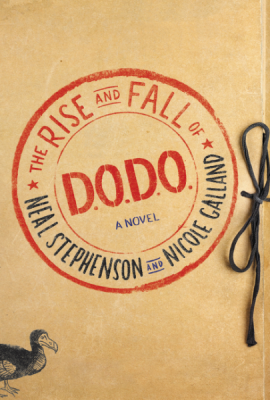
THE RISE AND FALL OF DODO


Support Independent Bookstores - Visit IndieBound.org


The Rise and Fall of DODO, Neal Stephenson & Nicole Galland, William Morrow, 2017, 742 pp
 
 
First thing first: DODO is an acronym for the Department of Diachronic Operations, a fictional US government department of the CIA. It uses witches and time travel to discover how magic disappeared from the world and how to bring it back. Its purpose is to influence world affairs and help keep pace with the country's enemies.
 
Second things second: Who is Nicole Galland and why did Neal co-write a novel with her? She is a historical novelist and had worked with Neal and a horde of others on his series, The Mongoliad (I have not read that). When Neal asked her if she would like to write DODO with him she said yes. In an interview with the two authors she said, "I think I said yes while he was still asking the question."

It turned out to be a match made in speculative/historical fiction heaven. Not that Neal has any trouble writing rip-roaring stories, but Nicole came up with some of the best female characters in the book and, in my opinion, added a certain zing to every aspect of the story.

The plot is so intricate, the book is so delightfully long, that I am not going to attempt a summary. None of the ones I have looked at have begun to capture it. All I will say is that if you love Neal Stephenson, witches, magic, humor, adventure and satire, the time it takes to read The Rise and Fall of DODO will be time well spent.

It reads like a fast paced thriller, is only mildly confusing (on purpose, I think), and all is made clear eventually. I read it in five days during my days of reading whatever I wanted in December. Neal will make you feel smart, as he always does, and Nicole will make you fall in love with all the characters, even the bad ones!


(The Rise and Fall of DODO is available in various formats by order from Once Upon A Time Bookstore.)

Wednesday, January 17, 2018

GREEN GIRL


Support Independent Bookstores - Visit IndieBound.org


Green Girl, Kate Zambreno, Emergency Press, 2011, 250 pp
 
 
I read this novel in the last month of 2017 for two reasons. One is that it had sat, all that year, in a pile of unread books I own; a pile named in my mind Books I Want To Read Soon. The other reason is that in my memoir I am working through my teen years. Oh, what a murky area that is in my mind. Reading novels about teenage girls in the current century helps me recapture those times of confusion, urgency and uncertainty in my own life.
 
Ruth is a girl on the cusp of womanhood, right about where I was in my college years. She is an American who escaped the downward swirl of her first romantic heartbreak by moving to London. She works as a shop girl in "Horrids," as she calls that famous department store. Her job is to offer samples of a perfume called Desire, a marketing device for an American teenage pop star. She has not resurfaced from the downward swirl but she is trying.

Ruth is beautiful, slender, with long blonde hair. She roams the city feeling the eyes upon her, wondering who she really is. She parties, acts out, makes consecutive bad choices. If you were her mother you would be horrified, anxious, protective, maybe controlling. I am not her mother. I was her in Ann Arbor, MI, pretending to be a college student, partying, trying out different versions of myself, making consecutive bad decisions, some of which I still suffer from today.

The writing is evocative and disjointed. The tone is existential. The images are photographic, like stills from a movie. I felt many emotions, all at war with each other, as I read. 

I recalled writers I have read like Clarice Lispector, Sylvia Plath, Lidia Yuknavitch, and many more. Women who explore and express the tangled, grasping, hesitant poetics of desire while creating a self no one in the modern world can give them because she has not existed before.

I am glad I read it.


(Green Girl is available in paperback by order from Once Upon A Time Bookstore.)