Monday, October 01, 2018

BOOKS READ IN SEPTEMBER


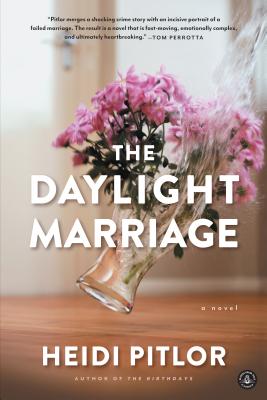
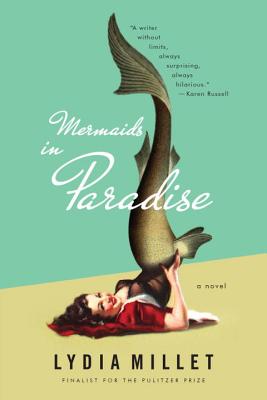
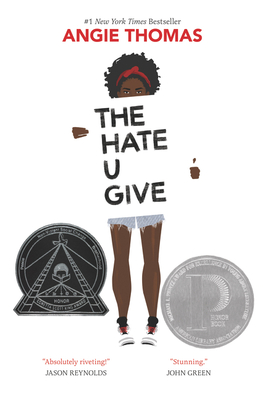
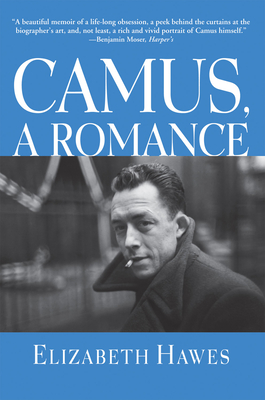
Once again, by a simple twist of fate, I read 13 books last month. When I finished the W B Yeats poetry collection, after reading it for years, I got a bonus book. Now I am two books ahead on my challenge to read 12 books a month all year. I call that insurance because my reading often gets interfered with by the holidays.

The places I went: Great Britain, Russia, Morocco, France, Ireland, Chile, Brazil, Guatemala, Wales, the Caribbean, and USA.

Authors new to me: Elizabeth Hawes, W B Yeats, Heidi Pitlor, Angie Thomas

Stats: 13 books read. 11 fiction. 9 written by women. 4 for my Big Fat Reading Project. 2 translated. 2 speculative fiction. 1 fantasy. 1 mystery. 1 biography. 1 poetry. 1 Young Adult

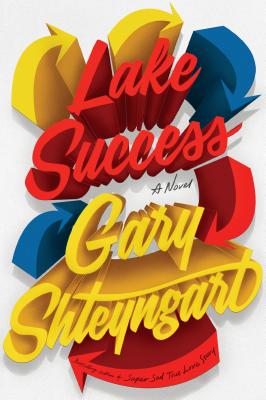
Favorites: Spinning Silver, Camus A Romance, Lake Success, Mermaids in Paradise
Least favorites: none


Support Independent Bookstores - Visit IndieBound.org


Support Independent Bookstores - Visit IndieBound.org


Support Independent Bookstores - Visit IndieBound.org


Support Independent Bookstores - Visit IndieBound.org


Support Independent Bookstores - Visit IndieBound.org


Support Independent Bookstores - Visit IndieBound.org
 
 
Support Independent Bookstores - Visit IndieBound.org
 
 
Support Independent Bookstores - Visit IndieBound.org
 
 
Support Independent Bookstores - Visit IndieBound.org


Support Independent Bookstores - Visit IndieBound.org
 
 
Support Independent Bookstores - Visit IndieBound.org 


Have you read any of these books? How did your September reading go?


Sunday, September 30, 2018

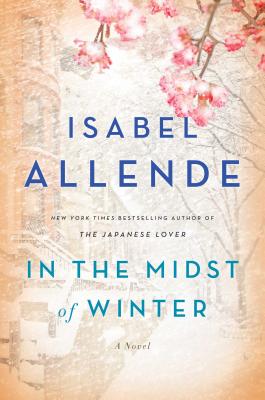
IN THE MIDST OF WINTER


Support Independent Bookstores - Visit IndieBound.org


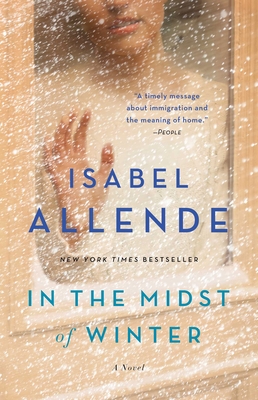
In the Midst of Winter, Isabel Allende, Atria Books, 2017, 340 pp (translated from the Spanish by Nick Caistor and Amanda Hopkinson)
 
 
Isabel Allende's latest novel was a pick for my One Book At A Time reading group. I always love her novels and this was no exception.
 
Three people are brought together during a blizzard in Brooklyn due to an automobile accident. The only things they have in common are Central/South America and trauma due to loss.

Richard, a repressed professor, plows into a car driven by undocumented immigrant Evelyn. A dead body in the trunk sends Evelyn to seek Richard's help. Lucia, a tenant in Richard's house is called in by him to assist in calming Evelyn.

As the three set out in the snow and wind on a desperate scheme to deal with Evelyn's dead employer, their back stories come to light. All of them spent the 1970s in the politically turbulent times that plagued many Central and South American countries. Each one suffered in horrendous ways.

Some reading group members complained about the shifts in time and location throughout the novel. Sorry to be cranky but it wasn't that hard to follow. One just had to pay attention and remember a few extra names. I found the back stories even more compelling than the current one. Allende creates great suspense and I was invested in each character because of the way she constructed her story.

I admire how this author has kept moving her novels along towards the present day. In her body of work she has put the historical events of the lower Americas' countries in terms of personal stories while showing how North America has become so diverse. Instead of click bait about immigration disasters and walls, she has taught me about the ways in which colonialism and our government's interference with Central and South American politics brought us to where we are today.

I also love her unique blend of romance, magic and human connection, always combined with strong female characters in the forefront of her stories. Despite all, people do take care of each other in ways we don't always recognize, they do sometimes recover from trauma, and they do find redemption.

By the way, the title of this novel is a quote from Albert Camus: "In the midst of winter, I finally found there was within me an invincible summer." The wonders of reading. I had finished reading Camus, A Romance just eleven days earlier. Gave me a chill in the midst of the last week of summer!


(In the Midst of Winter is now out in paperback and is available by order from Once Upon A Time Bookstore.)

Friday, September 28, 2018

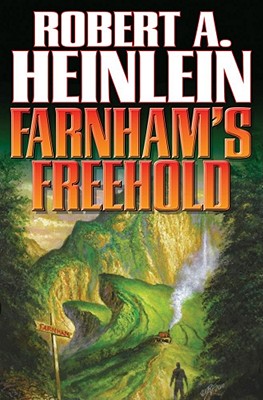
FARNHAM'S FREEHOLD


Support Independent Bookstores - Visit IndieBound.org


Farnham's Freehold, Robert A Heinlein, G P Putnam's Sons, 1964, 315 pp
 
 
Summary from Goodreads:
Hugh Farnham was a practical, self-made man, and when he saw the clouds of nuclear war gathering, he built a bomb shelter under his house, hoping for peace and preparing for war. What he hadn't expected was that when the apocalypse came, a thermonuclear blast would tear apart the fabric of time and hurl his shelter across two thousand years into a future both strange and appallingly familiar. In the new world order, Farnham and his family, being members of the race that had nearly destroyed the world, were fit only to be slaves. After surviving a global nuclear war, Farnham had no intention of being anybody's slave, but the tyrannical power of the Chosen Race reached throughout the world. Even if he managed to escape, where could he run to?


My Review:
In this fairly wacky tale Heinlein manages to combine nuclear war, a bomb shelter, racism, and time travel. If that is not enough to give a reader literary indigestion, I don't know what is. He made it work though and I read the book quickly and with enjoyment.

Of course his protagonist is a bossy, know-it-all man as usual but there are a few worthy female characters. After the time jump, he creates a scenario where the blacks have the power and the whites are the slaves. I found his views on racism to be quite sane and even advanced for 1964.

The purpose behind My Big Fat Reading Project is to trace through the fiction of the years I have lived and notice the cultural shifts, both positive and negative, as they occurred. Then to ponder how those shifts have influenced me and the life I have made in the world. In 1964 I was a junior in high school and just becoming aware of the civil rights movement, of people in my town who actually built bomb shelters, of the fact that economic and racial inequality combined with the threat of nuclear war were all so deeply ingrained in the politics of the time.

Thus it was both jarring and cool to come across all of that in a science fiction novel published in 1964. Heinlein must have been thinking about all that stuff for some time and while he was writing it.

Wednesday, September 26, 2018

SELECTED POEMS, W B YEATS


Selected Poems, W B Yeats, Penguin Books, 1991, 224 pp


I have not been a poetry reader much before. I was required to read some in school of course, but except for one or two poets, it never clicked with me. A few years ago a young woman I admire told me Mary Oliver was a beloved poet of hers, so I bought a copy of A Thousand Mornings. Reading a poem a day turned out to work well for me.

After finishing that collection I went to my paltry poetry shelf and found this collection of poems by W B Yeats, probably the best known Irish poet. I had bought it years ago during a trip to Ireland, in Sligo, after visiting Ben Bulben. The Penguin Classics edition I have was published in London in 1991. It contains over 200 poems spanning Yeats's publishing history from 1888-1939.

I found poems I did not understand in the least, though the notes in the back of the book were helpful in those cases. I found poems that just sang to me. It seems that the poet poured into his poetry all his wide range of learning, his romantic life, his political views, and his love of Ireland.

It was fascinating to see the man change, age and grow in wisdom. W B Yeats has influenced many writers. His 1920 poem "The Second Coming" provided the title for Things Fall Apart by Chinua Achebe, the title for Slouching Towards Bethlehem by Joan Didion, and was set to music by Joni Mitchell on her Night Ride Home album. "Under Ben Bulben," 1938, gave Larry McMurtry the title for his first novel, Horseman, Pass By.

I enjoyed my time with Yeats. Because I did not always read a poem everyday, I have had him with me for over two years. I would like to read a biography of this man who also wrote plays and essays and who influenced Ireland so intensely.

I also want to thank two bloggers I follow: Dorothy from Houston, TX, The Nature of Things and Edith from Austria, Edith's Miscellany. Both post a poem every week and have encouraged me to continue my pursuit.

Please help me out by leaving a comment on your favorite poets.

Tuesday, September 25, 2018

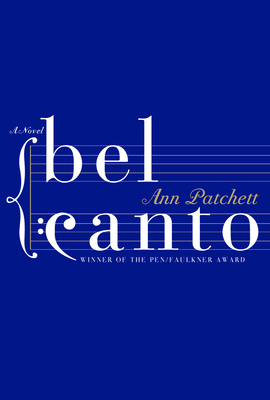
BEL CANTO: NOVEL AND MOVIE


Support Independent Bookstores - Visit IndieBound.org


Bel Canto, Ann Patchett, HarperCollins, 2001, 318 pp
 
 
I first read Bel Canto in 2004, before I was blogging though I was keeping a fairly thorough reading log. The novel was my introduction to Ann Patchett and I have since read almost every one of her books.
 
This is what I had to say about Bel Canto back in 2004:
"An international opera star, a Japanese businessman, his interpreter and others are taken hostage in the home of a South American Vice President. 

The power of music transforms all these people. The hostages as well as the terrorists (who are poor people from the jungle) all undergo changes. Several people fall in love across political and national and even language barriers. It has a surprise ending.

Much of what happens is fairly improbable but it is that which makes the book so charming. It is purely a work of imagination. The writing is beautiful with a nice light touch. Completely a pleasure."

I still find that a correct assessment. In 2004 I read it for a reading group discussion at my local library. This time I reread the book for Molly's Group. At my suggestion we made an event out of our meeting. We went together to watch the movie, then gathered at Molly's mom's home to discuss.


Most of us loved the book. Rereading it, I loved it even more. Also most of us felt the movie fell far short of Ann Patchett's exploration of the inner lives of the characters. I however, was entranced throughout the film and merely dubbed in what the characters were thinking and feeling because the novel was still brilliant in my memory.

Julianne Moore was excellent as the opera singer, though being a singer myself I was not convinced she was actually singing. She was not. She was lip synching to Renee Fleming who almost made me like opera.

In summary, if you liked the novel I recommend the movie despite it shortcomings. It is showing only in a limited number of theaters in Los Angeles so I predict it will not stay for long, possibly not past this Thursday. It is not nearly as bad as the negative reviews would lead you to believe.

Saturday, September 22, 2018

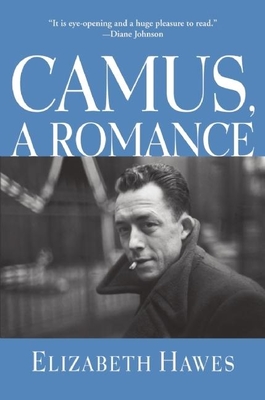
CAMUS, A ROMANCE


Support Independent Bookstores - Visit IndieBound.org


Camus, A Romance, Elizabeth Hawes, Grove Press, 2009, 289 pp
 
 
During the course of My Big Fat Reading Project I have read the three novels Albert Camus published during his life: The Plague, The Stranger, The Fall. I did not read them in order and all I really knew about him is that my father revered him. I wanted to know more.
 
Albert Camus also wrote plays and essays. He came to fame in the 1940s in Paris where he was initially close with Simone de Beauvoir and Jean Paul Sartre. He was awarded the Nobel Prize in 1957. Three years later he died in an automobile accident. Each of his novels left a big impression on me.

I bought this biography when it was first published but never got around to reading it. Now that I am writing about 1960 in my own autobiography I decided the time had come.

Camus, A Romance is unique as biographies go because Elizabeth Hawes weaves in a memoir of her own. She covers her first infatuation with Camus's writing when she was a college student. She also recounts her journey, her research and her experiences in writing the book over nine years.

Naturally I learned much about the man, his times, his triumphs and his troubles. I discovered for myself why his novels had moved me so profoundly. Best of all I found the political philosophy that most closely aligns with my own. 

I closed the book wishing we had someone these days to explicate so well what is going on. Lacking that, even from the grave this man brought me understandings I needed. He has much to say about terrorism and its causes. It was apt that I finished the book on September 11.


(Camus, A Romance is available in paperback by order from Once Upon A Time Bookstore.)

Thursday, September 20, 2018

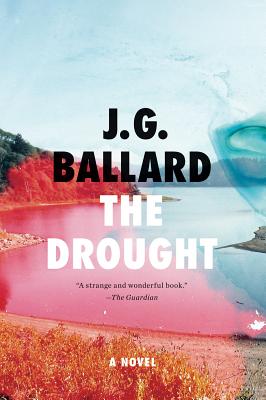
THE DROUGHT


Support Independent Bookstores - Visit IndieBound.org


The Drought, J G Ballard, Berkley Books, 1964, 192 pp
 
 
Do you realize that authors have been writing climate fiction for a long time? J G Ballard was one of those authors. I have read three of his, The Wind From Nowhere, The Drowned World, and now I have read The Drought. All were classified as science fiction in the 1960s but these days would be practically contemporary fiction.
 
The Drought was originally titled The Burning World when first published in 1964. Ballard then expanded the story and retitled it The Drought. No rain for years, shrinking rivers and shorelines, and the resultant fires, violence and insanity provide the milieu. 

The main characters are residents of one neighborhood in one city and their reactions to the burgeoning catastrophe provide the plot. As you might expect, no one behaves well but Ballard seems always to provide at least one rugged or determined character who one way or another prevails.

The cause of the drought is industrial waste changing the atmospheric conditions over the oceans. In actual fact that implicates most of humanity. In our current times, over 50 years later, this is the worst it has ever been, if you believe science. I do. If you have ever wondered what it would be like to run out of water, Ballard makes it quite real.

Basically a whole lot of people die along with animals and plants, the rest fight over shrinking food supplies, hoard water or go quietly insane. I suppose this type of story would not appeal to many readers but it made me consider how I would conduct myself in such a scenario.

Someone on Goodreads complained that J G Ballard's writing is hysterical. That is what I like about him. Anyone who lives in this world and does not get hysterical from time to time is barely alive!

For further related reading try The Water Knife by Paolo Bacigalupi and Gold Fame Citrus by Claire Vaye Watkins, both of whom get hysterical!!


(The Drought is available in paperback by order from Once Upon A Time Bookstore.)

Tuesday, September 18, 2018

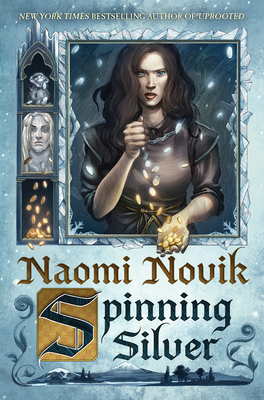
SPINNING SILVER


Support Independent Bookstores - Visit IndieBound.org


Spinning Silver, Naomi Novik, Del Rey, 2018, 466 pp
 
 
Two years ago I read Uprooted by Naomi Novik and liked it so much I kept an eye out for her next book. Spinning Silver was just as great.
 
The story is loosely based on the Grimm's fairy tale Rumplestiltskin. Miryem, daughter and granddaughter of Jewish moneylenders in a place similar to medieval Russia, becomes so frustrated with her father's failure to collect on the money he has loaned that she sets out to collect it herself. She proves to be so good at it that she attracts great danger to herself, her family and her town.

The small village where they live is on the edge of a magical forest ruled by the Ice King of the Staryk, who have the power to create winter year round if they wish. It is not long before Miryem is captured and held by the Ice King because she can change silver into gold.

Miryem is just one of three brave women, all of whom discover powers they had not known they had. Irina, married off to the current Tsar, and Wanda, daughter of a drunken peasant who owes Miryem's father. Both become inextricably tangled with Miryem's fate. Between the three of them they overcome the Ice King, a demon who inhabits the Tsar, and Wanda's father. In doing so, each young woman finds her heart's desire.

This is a complex and magical tale involving duty, love and sacrifice. The characters are so wonderfully wrought and the dangers so frightening, I was swept up by the story and held captive myself.

I loved how each young woman walked the knife edge between desire and family obligation; how doubt of success and fears of betrayal required their courage; and especially how each one found that courage within herself.

This is what we get when women write our fairy tales!


(Spinning Silver is a staff pick and is on the shelves at Once Upon A Time Bookstore.)

Saturday, September 15, 2018

THE SOUND OF GRAVEL


Support Independent Bookstores - Visit IndieBound.org


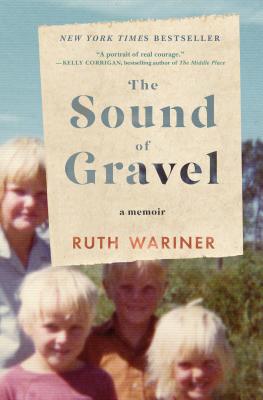
The Sound of Gravel, Ruth Wariner, Flatiron Books, 2015, 336 pp
 
 
This memoir was the January, 2016 selection of The Nervous Breakdown Book Club. The author grew up in a polygamist Mormon family. I listened to her interview on the Otherppl Podcast back in 2016 and wasn't sure I wanted to read another "I escaped from a cult" book.
 
I have read stories about Mormons before and become aware that the fundamentalist sector of that religion is truly a cult, that the polygamy is pretty wacked, and that for its members having kids is more important than caring for or raising them. 

The preaching in Ruth's childhood church was that "God will punish the wicked by destroying the world and that women can only ascend to Heaven by entering into polygamous marriages and giving birth to as many children as possible." (Quoted from the book cover flap.)

It is all quite gruesome but Ruth Wariner is a good writer. She loved her mother, she hated her step-father, she did her best to protect her siblings. When she finally broke away she took as many of those siblings as were left with her and made a good life for all of them. She does not whine, she is not a victim. She is a bright, smart survivor filled with a positive approach to life. In the interview I learned that it took quite some therapy to get there but she did.

I have had my own brushes with cults so whenever I read a book like this, I ponder about how many "cults" can be found in life, both religious and societal. Keeping one's mind and spirit free is possibly life's biggest challenge. It has been the reading of books, both fiction and non-fiction, that saved me.


(The Sound of Gravel is available in both hardcover and paperback by order from Once Upon A Time Bookstore.)

Tuesday, September 11, 2018

MEMENTO PARK


Support Independent Bookstores - Visit IndieBound.org


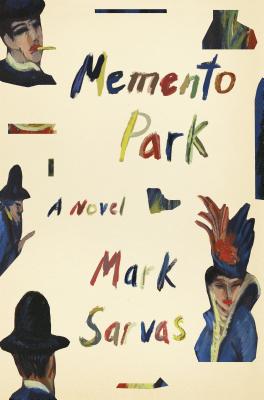
Memento Park, Mark Sarvas, Farrar Straus and Giroux, 2018, 271 pp
 
 
I read this novel because Mark Sarvas used to have a wonderful literary blog called The Elegant Variation. It was one of the first blogs I followed back when book blogging was a new fresh thing and a big deal. He inspired me to start my own blog.
 
Memento Park is the story of a 21st century man descended from Hungarian Jews. Matt Santos is a B-list actor. He has steady work doing bit parts on TV shows and is engaged to a beautiful, not Jewish, blonde fashion model. Then a painting comes into his life, a masterpiece by a deceased Hungarian modernist believed to have been looted from Matt's parents' home in Budapest during WWII.

Like a wish granted in a fairytale, the painting could make him a rich man but brings with it a curse. Matt has a fractured relationship with his father, a distant connection with his mother, and a deep aversion to his family's past.

In truly beautiful prose layered with the contemporary glib conversations of Hollywood, Matt's journey to acceptance and awareness unfolds. On his journey he loses almost everything: his fiancee, his job and very nearly his sanity. Though there are scenes of levity and wit, a darkly emotional atmosphere wraps this tale.

Somehow I never tire of stories where a secret and murky past involving immigrants who deny that past in order to make a good life in America, comes back to haunt their children. When the story is written as masterfully as Memento Park is, I feel honored just having read it.

Last night I met Mark Sarvas in person for the first time at a writer's event held in the Echo Park branch of 826LA, where he read a passage from the book. He is a husband and father now, he teaches novel writing at UCLA, and has moved on from blogging.

I got to tell him how much I loved his novel and why. He thanked me several times for coming out but seemed conflicted about being in the public eye. He is at work on a new novel that he said harks back to the comedic mode of his first novel, Harry, Revised, which I never read. I was a fan of his blog and now I am a fan of his fiction. I will read the first novel while I await the third.


(Memento Park is available in hardcover by order from Once Upon A Time Bookstore.)

Sunday, September 09, 2018

CLANS OF THE ALPANE MOON


Support Independent Bookstores - Visit IndieBound.org


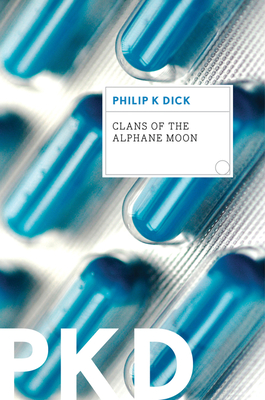
Clans of the Alphane Moon, Philip K Dick, Ace Books, 1964, 251 pp
 
 
You may wonder why I am reading all of Philip K Dick's novels for My Big Fat Reading Project. Sometimes I wonder myself. I am fascinated by his writing though and by the fact that he was somewhat of an outlier in the early Sci Fi world. I have read that he became extra strange at some point, some say insane, and I want to spot when or how that happened. Most of all I like how he embraces absurdity since life is indeed absurd.
 
Alpha III M2 is a distant moon of the planet Alphane. It had been a dumping ground for psychotics some generations ago but they now rule the moon, having been liberated from the mental wards. The differently diagnosed psychotics band together in various conclaves though they have a Supreme Council and agree on one thing: they are not going back to being hospital patients.

There are the paranoid Pares, the manic Mans, the depressive Deps, the schizophrenic Heebs, and so on. Danger is approaching in the form of Mary Rittersdorf, a psychiatrist and her husband Chuck, a CIA agent. Mary and Chuck are on the verge of divorce and therefore on opposing sides when they reach the moon. 

Then there is the famous TV comedian Bunny Hentman, who has secret monetary connections on Alphane and is looking to grow his audience. This story starts crazy and ends just a little less crazy, which may be the hope factor in the tale.

The other day a friend of mine said she does not like science fiction because it isn't real. I told her if you read science fiction from 60 or so years ago, you notice that a lot of it is real now.

Clans of the Alphane Moon turned out to be pretty thought provoking in these days where crazies and criminals appear to be running our government and where we who have been reduced to constant anxiety must somehow band together to save our country, maybe even the world.


(Clans of the Alphane Moon is available in paperback by order from Once Upon A Time Bookstore.)

Thursday, September 06, 2018

BELLMAN & BLACK


Support Independent Bookstores - Visit IndieBound.org


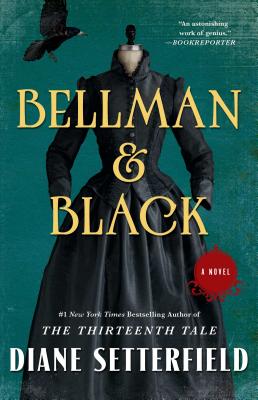
Bellman & Black, Diane Setterfield, Atria Books, 2013, 328 pp
 
 
Some of the most exciting news lately, for me, is that Diane Setterfield has a new novel coming out in December of this year. The title is Once Upon A River.
 
Along with almost every other reader I know, I read her first novel, The Thirteenth Tale, soon after it was published in 2006. I loved it unconditionally and was looking forward to more novels by Ms Setterfield. It was a long wait.
 
When Bellman & Black was finally going to be published in 2013, I nabbed an advance copy but fell prey to the many lukewarm and even negative reviews. I should have known better but I never read it. After learning about the new book, I made Bellman & Black the August selection for my Read 12 Books From My TBR Lists project. It is a spectacular novel.
 
William Bellman is ten years old when the story opens. He and his friends are playing with his new slingshot and he bets them he can hit a bird in a tree far across the meadow. It is an almost impossible shot but the young rook, another name for crow, falls dead.
 
William lives alone with his mother in a 19th century English mill town. His father was of the wealthy mill owning family, a man who had no interest in the mill, who defied his father by marrying a lower class woman, and then deserted her and their son. The boy knows he is not accepted by his grandfather.
 
In truth, he feels he may be somehow to blame, as deserted children often do. The killing of the rook becomes entangled in his mind with his guilt about his father but he manages to forget the incident completely.
 
As years go by, William grows into a bright, hardworking young man. He gets a job at the mill and is so clever, so full of curiosity and understanding about it operations, that he comes up with many good ideas for solving its problems. He becomes his uncle's right hand man.
 
He ends up managing the business and marries a woman for whom he has a great love. They have several children. Tragedy strikes in the form of a fever that kills his wife and all but one child. From that point the story takes on the Gothic feel of the first novel.
 
An elusive gentleman turns up in the graveyard just when his remaining daughter seems about to succumb to the fever. William thinks of him as Mr Black. When he opens a stupendously successful business in mourning services (apparel, coffins and burials) he names it Bellman & Black. In the depths of his psyche, William feels he made some kind of bargain with Mr Black in exchange for his daughter's life.
 
Many reviews and even the publisher call this a ghost story. If the mysterious Mr Black is the ghost of the murdered crow, I can see how that could make it so. I found it more of a descent into madness tale or a psychological thriller in the form of a haunting.
 
There are crows in abundance, graveyards, funerals and a lot of black. William has a Midas touch when it comes to business but he is driven by guilt and other haunted thoughts. What I loved most in The Thirteenth Tale, the creepiness, the growing tension, the fear of something that cannot be clearly discerned, is just as masterfully done in Bellman & Black.
 
I can't quite see why so many readers were disappointed. Did they expect the author to write another book just like her first one? In some ways she did though with a male protagonist and in an earlier century. I can hardly wait for December. 

Tuesday, September 04, 2018

SEPTEMBER READING GROUP UPDATE


Another light month for reading groups in September but I am happy that the quality of our selections remains high and our discussions deep. 

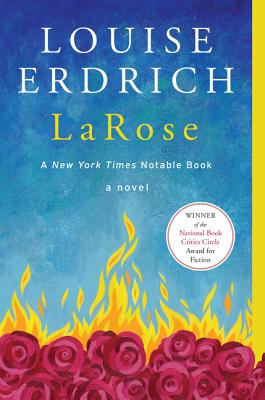
To recap August, we had a teen at our discussion of Turtles All the Way Down at Molly's group which made it so special. Straight Man brought tons of giggles and laughter at One Book At A Time where we also celebrated the four August birthdays of group members with plates of flan (we meet at a Mexican restaurant.) I felt a bit lonely at Tina's Group discussing White Houses because I adored the book but most of the others didn't seemed to get it. Bookie Babes all raved about La Rose and well they should. I reread the book for the meeting and if anything, it was even more stupendous than the first time.

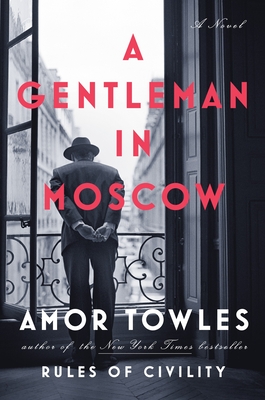
September will have some fun involved. The movie version of Bel Canto is being released on September 14, so we will read the book (another reread I will happily do), see the movie together and then go discuss over snacks and wine! I have already read and discussed A Gentleman in Moscow for two other reading groups but am happy that new readers will be introduced to a good read. I guess Isabel Allende got some lukewarm reviews for In the Midst of Winter but I love her unconditionally so am looking forward to that one.


Molly's Group:
Support Independent Bookstores - Visit IndieBound.org
 
 
One Book At A Time:
Support Independent Bookstores - Visit IndieBound.org
 
 
Bookie Babes:
Support Independent Bookstores - Visit IndieBound.org
 
 
Have you read or discussed any of these? If you are in a reading group what are you discussing in September?

Sunday, September 02, 2018

STRAIGHT MAN


Support Independent Bookstores - Visit IndieBound.org


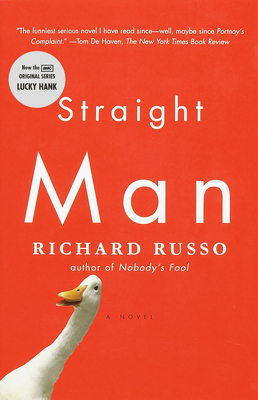
Straight Man, Richard Russo, Random House, 1997, 391 pp
 
 
This reading group pick is Richard Russo's fourth novel. William Henry Devereaux, Jr is the chairman of the English department at a small Pennsylvania university. Campus politics, budget issues and changing mores should make Will's job stressful but he appears to be above it all with his witty, carefree but rebellious manner. Is he though?
 
He wanted to be a novelist yet only has one slim book from his younger years to his credit. He has huge daddy issues, a detachment from his grown daughters, and a philosophical attitude toward his wife of many years.

When the wife goes out of town for a week, Will's life begins to spiral downward. The novel takes place over those seven days. In our house, the gag is that my husband of almost 39 years needs supervision. Things go wrong when I am away. So I found that aspect of the novel quite hilarious.

Some, no many, of the incidents in which Will finds himself border on slapstick. Russo got lots of laughs out of me. In the end though, I felt that while I was entertained I never cared that much what might happen to a man who was not quite in touch with himself or with others. Mostly he got by on luck.

The reading group members liked it and we had more laughs discussing it. 


(Straight Man is available in paperback by order from Once Upon A Time Bookstore.)

Saturday, September 01, 2018

BOOKS READ IN AUGUST


Somehow in August I read 13 books, so I am one ahead of my challenge to read 12 books a month. It helped that I had two short children's books on the list for the month. I have not read any translated literature for a while and plan to correct that in September. 
 
The places I went: Wales, the fictional planet called Darkover and a fictional moon by the name of Alphane, England, Hungary, Mexico and various locations in the United States.

Authors new to me: Richard Powers, Lloyd Alexander, Mark Sarvas, and Ruth Wariner.

Stats: 13 books read. 12 fiction. 6 written by women. 2 for children, 1 Young Adult, 4 for My Big Fat Reading Project. 4 Sci Fi/Fantasy. 1 memoir.

Favorites: The Overstory, White Houses, La Rose (which was a reread), Bellman & Black.
Least favorite: All Clear


Support Independent Bookstores - Visit IndieBound.org


Support Independent Bookstores - Visit IndieBound.org


Support Independent Bookstores - Visit IndieBound.org


Support Independent Bookstores - Visit IndieBound.org


Support Independent Bookstores - Visit IndieBound.org


Support Independent Bookstores - Visit IndieBound.org


Support Independent Bookstores - Visit IndieBound.org


Support Independent Bookstores - Visit IndieBound.org


Support Independent Bookstores - Visit IndieBound.org


Support Independent Bookstores - Visit IndieBound.org


Support Independent Bookstores - Visit IndieBound.org


Support Independent Bookstores - Visit IndieBound.org

I hope you enjoyed your August reading. Which books were your favorites?

Wednesday, August 29, 2018

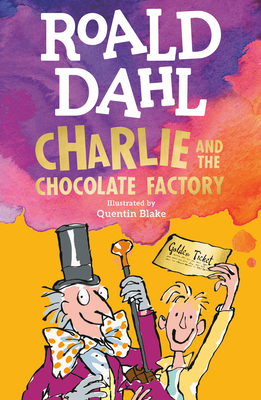
CHARLIE AND THE CHOCOLATE FACTORY


Support Independent Bookstores - Visit IndieBound.org


Charlie and the Chocolate Factory, Roald Dahl, Random House, 1964, 155 pp
 
 
I really do not know why I have eight children's books on my 1964 list. I am not sure why I included Roald Dahl in My Big Fat Reading Project. I have grave doubts about what this author was up to. He is one of those morally ambiguous English dudes and I feel queasy about such men who write for children.
 
Charlie and the Chocolate Factory is the story of a poor boy, so poor that he only gets one candy bar a year, who obtains one of five golden tickets to a tour of Willy Wonka's chocolate factory. According to a few of my reading group friends, Dahl's books for children were read to them by their mothers and they loved them.

I have a complicated relationship with sugar in general, chocolate in particular. It is one of my addictions though I have learned to manage it. I had a birthday this month and allowed myself several pieces of chocolate cake. I was just as happy as Charlie when I was eating it but felt horrid for a few days afterwards.

Four of the five kids who get to tour Willy Wonka's factory are horrid little buggers and they each get what is coming to them. Charlie gets to stay and inherits the factory.

The story contains a good amount of preaching against bad behavior, being spoiled, and especially the dangers of television. Nevertheless, everyone eats sugar and chocolate exclusively for the whole day. I know, I know. That was my dream too as a kid, growing up in a home where sugar was tightly restricted.

There have been two movies: one in 1971 for which Dahl wrote the screenplay and one in 2005 directed by Tim Burton and starring Johnny Depp. I think I have seen the later one.

So now you know all about the book and a little about me and chocolate.

Have you read this book? Did you read it to your kids? Have you seen either movie? Please, weigh in!


(Charlie and the Chocolate Factory is available in paperback on the shelves in the children's section at Once Upon A Time Bookstore.)

Monday, August 27, 2018

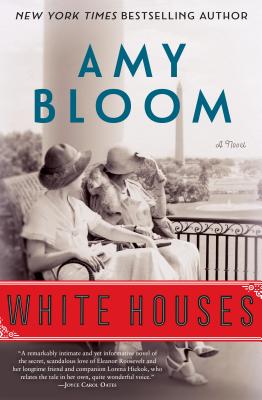
WHITE HOUSES


Support Independent Bookstores - Visit IndieBound.org


White Houses, Amy Bloom, Random House, 2018, 213 pp
 
 
I love Amy Bloom. I have read all three of her earlier novels, Love Invents Us, Away, Lucky Us. She always surprises me. She writes stories that no one else does, about finding love in the most unexpected places.
 
In this, her latest novel, an impoverished and abused girl from South Dakota scrabbles her way to New York City and becomes the most prominent woman reporter in depression era America. Lorena Hickock meets the rich and privileged Eleanor Roosevelt in 1932 while reporting on FDR's first presidential campaign. Lorena and Eleanor fall in love.

This story is told by Lorena, as it would have to be. She was the one who saved all their letters, bequeathing them to the Roosevelt Library on her death with the instruction that they not be opened for 10 years.

A relationship so deep, that brought both women the love they had each despaired of ever finding, was doomed from the start. Amy Bloom read the letters and wrote her fictional account to show how love can be made almost impossible by differences, in background and the culture which surrounds it and the duties and freedoms neither woman could ignore.

It is a heartbreakingly beautiful story. There are possibly readers who cannot bring themselves to picture Eleanor Roosevelt as she is presented. I found a couple at the reading group where we discussed the novel.

I know from her novels that Amy Bloom can picture anyone in the most exceptional ways. I loved White Houses as much as each of her earlier novels.


(White Houses is available in hardcover by order from Once Upon A Time Bookstore.)

Saturday, August 25, 2018

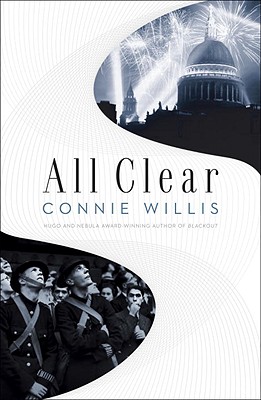
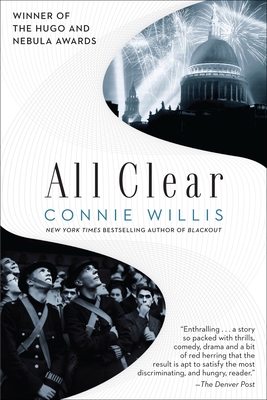
ALL CLEAR


Support Independent Bookstores - Visit IndieBound.org


All Clear, Connie Willis, Ballantine Books, 2010, 641 pp
 
 
A couple weeks ago I read Black Out by Connie Willis. It ended abruptly because it was actually half a book. The other half is All Clear, so I squinched it into my reading plan for August lest I forget the story and the characters.
 
After finishing this volume, though I found out how the story ended, I was still uncertain about how and why these time traveling historians from 2060 Oxford to the London of WWII ended up with some still trapped in 1940 while others made it back to the future.

The major concern of the tale is whether or not time travelers change the past. The obvious answer would be, how could they not? The book's answer seems to be yes and no.

While I was fairly well entertained throughout both books, I am not satisfied with such ambiguity after reading 1132 pages. I have looked at many reviews and most of them have various guesses as to what Connie Willis was intending to suggest.

I am happy to have become acquainted with this author but am not sure I will read her again.


(All Clear is available in paperback by order from Once Upon A Time Bookstore.)

Thursday, August 23, 2018

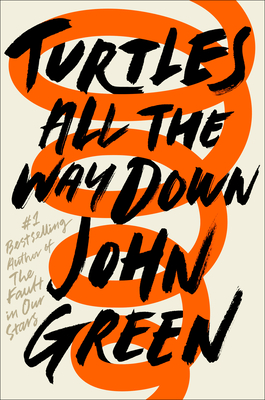
TURTLES ALL THE WAY DOWN


Support Independent Bookstores - Visit IndieBound.org


Turtles All the Way Down, John Green, Dutton Books, 2017, 286 pp
 
 
I read this young adult novel for Molly's reading group. We chose it because Molly's teenage daughter had it assigned for her summer read by her school. She attended our meeting and it was just the best thing to have her input. Whenever I read YA lit, I wish I knew some young adults to talk with about the book.
 
Two teens renew their friendship, originally formed when they met as kids at "sad camp," where they were sent because they had each lost a parent. Aza had lost her dad, Davis his mom.

Aza suffers from OCD. She falls into compulsive thinking due to a fear of a certain bacteria, Clostridium difficule.

"I have these thoughts that Dr Karen Singh (her therapist) calls 'intrusives,' but the first time she said it, I heard 'invasives,' which I like better, because like invasive weeds, these thoughts seem to arrive at my biosphere from some faraway land, and then they spread out of control."

When these thoughts arrive they spiral endlessly, the spiral tightens, and Aza practices behaviors which are harmful but she can't not do them. John Green describes all this so well. It turns out that he has had OCD all his life and has been helped by medication and therapy to manage his condition.

When Aza and Davis meet again, his billionaire father has disappeared. A reward for information leading to his whereabouts gets Aza's best friend, who writes Star Wars fan fiction, excited. Daisy is from a low income family but desperately wants to go to college.

Trouble starts when Aza and Davis begin to fall in love. So much trouble: between Aza and her mom, between Aza and Daisy, between Aza and Davis. How many love triangles can one girl have?

I didn't love the book with my whole heart but I did like it quite a bit and I learned a lot. John Green is an excellent writer and he gets teens. These kids in the story are smart, compassionate, and all three do their best to navigate the many issues in their lives. They do their homework and get top grades. I am pretty sure not all teens are like this but many are.

The ending was the only part that bothered me. Too abrupt and too neatly tied up. I have to admit though that Aza, Daisy and Davis all deserved a break and a happy ending.


(Turtles All the Way Down is available in a hardcover signed edition on the shelves at Once Upon A Time Bookstore.)

Sunday, August 19, 2018

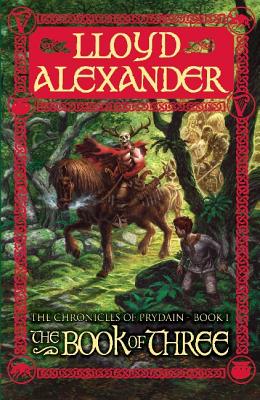
THE BOOK OF THREE


Support Independent Bookstores - Visit IndieBound.org


The Book of Three, Lloyd Alexander, Henry Holt and Company, 1964, 186 pp
 
 
THE SUNDAY FAMILY READ
 
 
This is the first of yet another series of books for young readers I am now following in My Big Fat Reading Project. I read it because the final book in the series, The High King, won the Newbery Award in 1969. I wanted to read the books leading up to that.
 
The series is set in an imaginary kingdom, Prydain, inspired by Wales and Welsh legends. Some of the inhabitants are drawn from these legends which were collected in the Mabinogion: the hero Gwydion, the evil Lord of Annuvin, and an oracular pig named Hen Wen. The author invented two young people: Taran, the Assistant Pig-Keeper and his feisty female companion in the adventure, Eilonwy.

When Hen Wen suddenly takes off into the forest one day, Taran sets off to find the pig he is responsible for only to find himself in one dangerous situation after another. After a long arduous journey across the mountains and valleys of Prydain, Taran grows from a fumbling aspiring hero into a real one. Eilonwy keeps him from too many ill-advised decisions.

I enjoyed the story and look forward to the rest of the series.
 
 
(The Book of Three is available in paperback by order from Once Upon A Time Bookstore.)


Saturday, August 18, 2018

THE BLOODY SUN


The Bloody Sun, Marion Zimmer Bradley, Ace Books, 1964, 372 pp
 
 
This is the third book in Marion Zimmer Bradley's very long Darkover series. It follows The Planet Savers and The Sword of Aldones which I read last year. According to the author's introduction in the edition I read, she rewrote the novel is 1979, but she still recommended reading the series in order of original publication. All a bit confounding though I am following her advice to consider The Bloody Sun as #3 in the series, reading the book as part of my 1964 list though it is the updated edition. If you are a fan of this series you know what I am saying here.
 
Darkover is a planet with two cultures: one is indigenous and ancient, run on myth and magic. The other culture is a colonizing conglomerate of a space federation bent on mining and accumulating riches through science and interstellar conquest.

With its huge red sun, its four differently colored moons, and its ruling class of empaths, Darkover's indigenous culture is steeped in tradition but beginning to question some of those old practices as the empaths are dying out while the Terrans are gaining power.

There has been intermarriage between Darkoverans and Terrans. Jeff Kerwin, an orphan, son of a Darkover mother and a Terran father, has returned to Darkover after growing up on Earth and serving in the Terran space force. He is conflicted about who he is. He wants desperately to learn about his parents. He has some strange abilities he doesn't understand and carries only dreamlike memories of the planet along with a Darkovan matrix jewel.

Before long Jeff finds the sacred council of Comyns, their mysterious Tower and enigmatic Keeper. He is tested and accepted into the council where he mostly feels at home for the first time in his life. As he learns the techniques of their secret powers he also finds conflict and unsettled issues within the council.

Jeff falls in love with the woman most forbidden to him, breaking several taboos. When he is subsequently accused of betraying the Darkovans to his Terran masters, his life becomes more desperate than ever. Choices must be made.

The Bloody Sun was not only a thrilling tale. The whole subject of empathic and telepathic communication, laid out so well by the author, intrigued me. My top two favorite tropes in science fiction and fantasy are time travel and telepathy. Even in the 21st century, there is a branch of psychotherapy that recognizes empaths with their special sensitivity and deals with the phenomenon that can be both a gift and a curse.

Basically I am more excited than ever to continue reading the Darkover books.

Tuesday, August 14, 2018

THE OVERSTORY


Support Independent Bookstores - Visit IndieBound.org


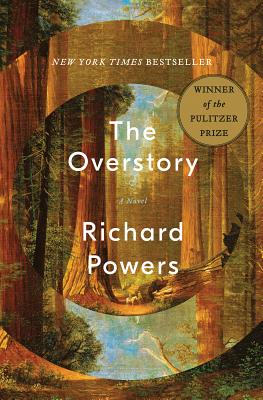
The Overstory, Richard Powers, W W Norton & Company, 2018, 502 pp
 
 
I was going to say this is the best book I have read so far this year but I looked back and saw that I have read many great books in 2018. I will say it is near the top of the best five. It was so great that I could not read anything else for a couple days.
 
The main characters are trees. They are not given dialogue but Richard Powers and one of his other main characters speak for them. Four main characters come to awareness about trees and their role in the eco-system of planet earth: a female scientist who discovers the trees communicating with each other, a soldier from Vietnam saved by a banyan tree, an artist whose life has been shaped by the dying of the American chestnut, and a college coed brought back to life by what she perceives as creatures of air and light.

These four humans plus five others are, in various ways, summoned by the trees which are dying at a fantastic rate in this era of clear cutting and climate change. Most of them meet up during the eco-terrorist protests in the late 20th century American northwestern redwood forests. Remember the tree sitters in Humboldt County, CA, in 1997? Did you ever read The Monkey Wrench Gang by Edward Abbey? Yes, protesters like that.

The five other individuals also connect with or are influenced by the main four through the ways strangely serendipitous communications sometimes occur between people. These connections are similar to the ways trees communicate, at least they are made similar by the author.

Richard Powers is as lush as an Amazonian rain forest in his writing. He tells the back stories of all nine people, he draws a quantum mechanics/multiverse type literary diagram in stories. He describes the natural world like the scientist he is. If this sounds complex, it is, but not hard to follow or understand. In fact, this is a page turner extraordinaire. 

As wonderful and amazing as these characters are, the trees (their roots, understory, trunks, branches, and overstory) are the heroes of this tale. As when I read Braiding Sweetgrass by Robin Wall Kimmerer, I came to see the natural world in a new light, to be made certain that I am part of it in a complete symbiotic relationship. The major difference between the natural world and humans is that it always knows what it is doing and we hardly ever really do.

Did I feel hopeful after finishing The Overstory? Yes and no. I felt hopeful for the natural world but not for the human race. After we as a species have met our demise, the natural world will recover.

If you read this novel and it doesn't change you, you are either already more enlightened than most or you are part of the problem.


(The Overstory is available in hardcover on the shelves at Once Upon A Time Bookstore.)

Sunday, August 12, 2018

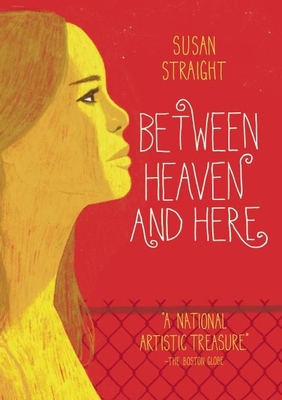
BETWEEN HEAVEN AND HERE


Support Independent Bookstores - Visit IndieBound.org


Between Heaven and Here, Susan Straight, McSweeney's Books, 2012, 234 pp
 
 
I love Susan Straight. She is California born and raised, literary, a creative writing professor at UC Riverside and she straddles cultures. Her novels deal with the ethnic mix of her particular home turf in Riverside. She writes about families, mothers, kids and how they protect each other in the dangerous racial climate of 21st century America. She is a master novelist and I cannot imagine why she has not won a Pulitzer or National Book Award.
 
I had read seven of her eight novels. Back at the end of 2010, I binge-read four of them in a row and came away feeling I had been to a sort of literary religious revival. Those three were Blacker Than A Thousand Midnights, The Gettin Place, A Million Nightingales, and Take One Candle Light A Room. 
 
In 2012 she published Between Heaven and Here. I bought it right away but ended up hoarding it until I was pretty sure another book was on the horizon. I found an interview from 2016 where she said she was finishing a novel so I took the plunge. I made Between Heaven and Here the July selection for my 2018 Read 12 Books From My TBR Lists project.
 
This short, rich, searing novel takes place in time between A Million Nightingales and Take One Candle Light A Room. The three books form a trilogy. Glorette, the most beautiful yet most damaged daughter of the extended family who people the three novels, has been found dead in a shopping cart. It is August, the ground is too hard and dry for digging a grave. If the police are brought in her memory will be made ugly and her son Victor will be too traumatized, not to mention probably becoming Social Services bait.
 
So the body is brought to the family compound in the orange groves. Victor is found and brought to his grandparents. Glorette's uncle Enrique goes in search of the killer. Out come the pickaxes, the shovels and the soaking hose to soften the ground. A grave is prepared.
 
Perhaps because the two earlier novels softened the hard dry hearts of her readers, we who think we have read it all, the succinct power of these 234 pages is all the stronger. When a troubled member of a large family dies, there are many viewpoints on the tragedy, varied reactions and anxieties. One whom the family has failed to protect has gone down. In flashes of incident, in memories, in the poetry of emotion, Glorette's short life is drawn for us. 

I love Susan Straight even more now and if that new novel doesn't come soon, I may just have to go back and read the first eight books again.


(Between Heaven and Here is available in paperback by order from Once Upon A Time Bookstore.)

Thursday, August 09, 2018

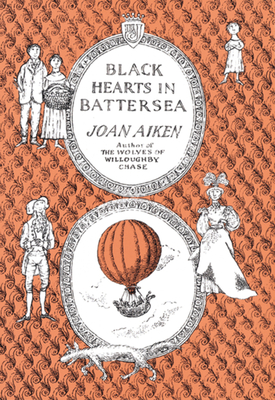
BLACK HEARTS IN BATTERSEA


Support Independent Bookstores - Visit IndieBound.org


Black Hearts in Battersea, Joan Aiken, Houghton Mifflin Company, 1964, 233 pp
 
 
This book for middle grade readers is the second volume in Joan Aiken's Wolves Chronicles. The Wolves of Willoughby Chase came first, published in 1962, and I loved it. Black Hearts grew on me but had a slow start and features a minor character from the first book whom I did not remember.
 
Simon, who grew up in an orphanage near Willoughby Chase, has arrived in London, planning to study painting with Dr Field, an old friend from the orphanage. Dr Field is not at the address he had given Simon in a letter. In fact, he has disappeared but Simon manages to rent his rooms.
All is confusion for Simon but he is plucky. He finds the school where Dr Field had taught and gets a job in a stable yard. He also acquires Dido Twite, the annoying daughter of his landlord, who later proves to be a stalwart friend.

Meanwhile, in Aiken's alternate history, there is afoot a fiendish plot to overthrow the current King by a group of Hanoverians. The house where Simon is staying appears to be a sort of headquarters for the insurrectionist group.

Once the story got going it was non-stop, involving many versions of mistaken identity including the origins of the orphan Simon. There is even a thrilling escape in a balloon!

Joan Aiken has written many novels both for children and adults. She creates wonderful child characters. I was struck, as I was in the Newbery winner for 1964, It's Like This, Cat, how children in those older stories made their way about the cities where they lived. I think I carried that kind of confidence in my ability to roam my town growing up (with plenty of warnings not to talk to strangers or get into a car with a man I did not know) and it gave me a good start in life. 

After two books I am hooked on the series with its Victorian setting and Charles Dickens feel. If you know a reader aged 8-12 who likes historical stuff, these books would fit the bill. 


(Black Hearts in Battersea is available in paperback by order from Once Upon A Time Bookstore.)